contact@haitiwonderland.com+509 36184317

Discover

Shopping Cart

Flag Day: Celebration of Freedom and National Identity in Haiti

Flag Day: Celebration of Freedom and National Identity in Haiti

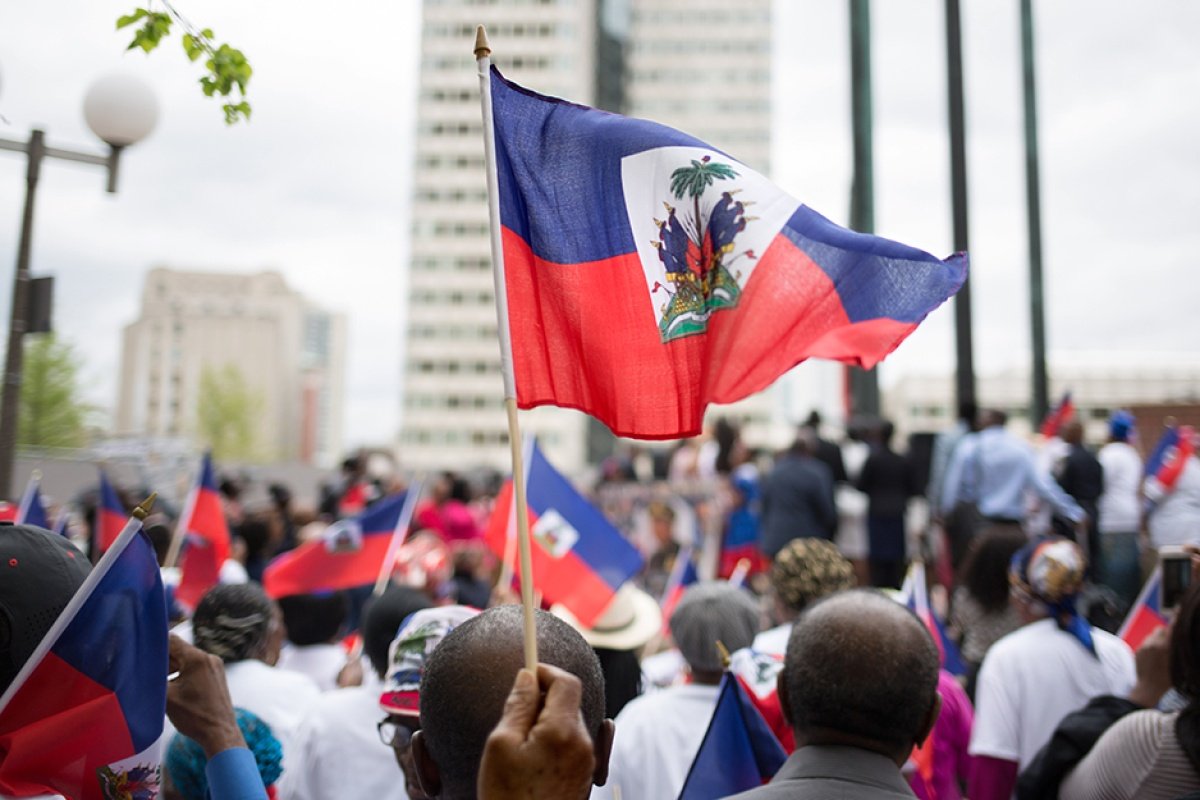
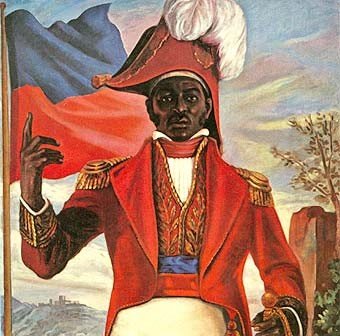
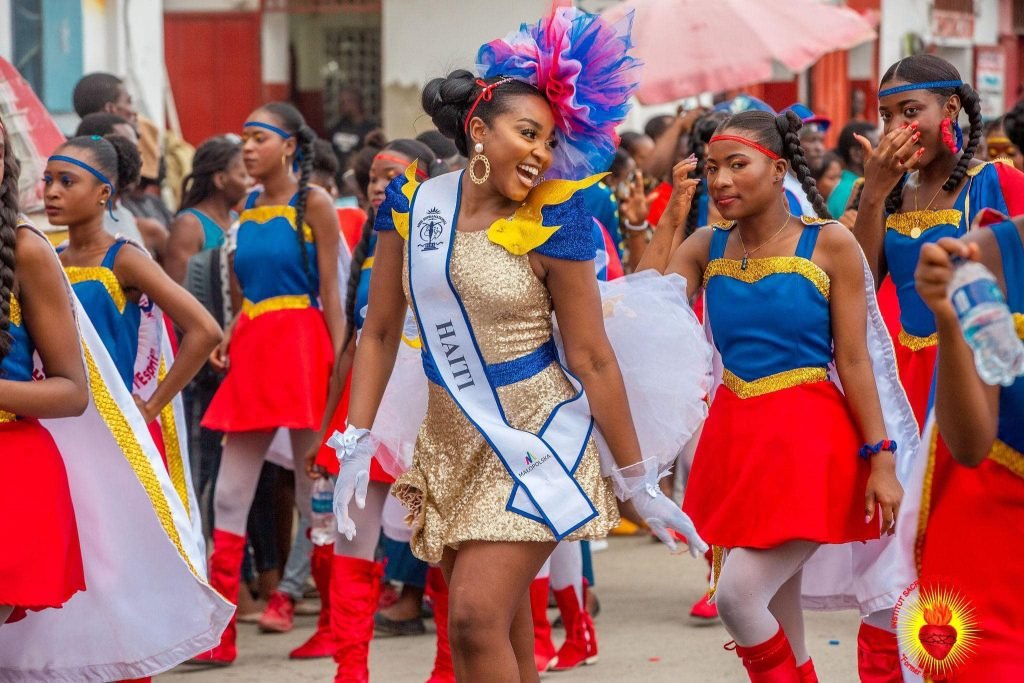
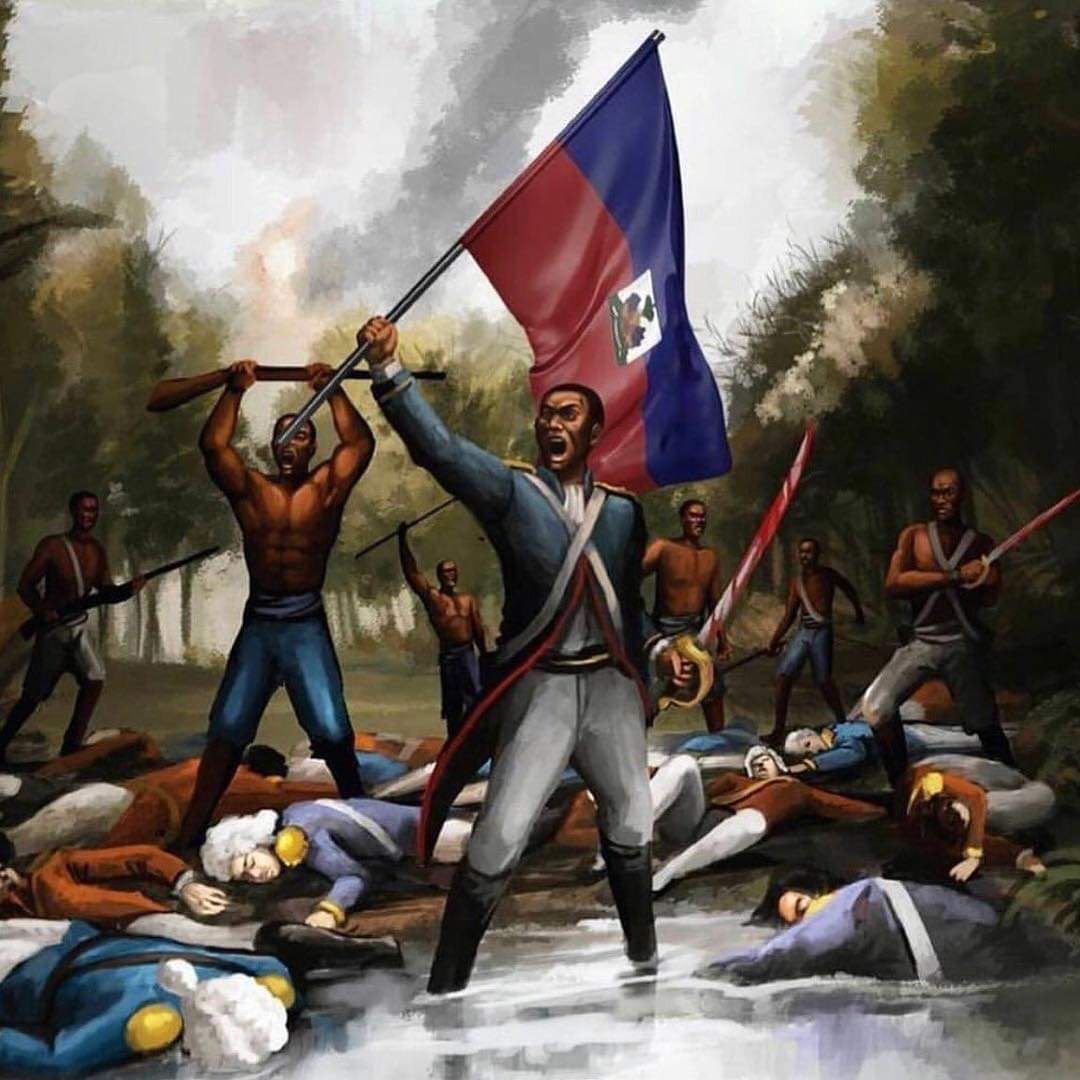
On May 18, Haïti celebrates "Flag Day", a public holiday marking the creation of the Haitian flag in 1803. Displayed for the first time in Arcahaie by Jean-Jacques Dessalines, this national symbol results from the fight for independence against slavery and French domination. Established in 1926 by Timothée Paret, then Minister of Justice under the presidency of Louis Borno, this celebration took on a particular dimension in the midst of American occupation and remains as a tradition. Haitians honor this day with school parades, musical groups in the streets and patriotic songs, recalling the union and solidarity of ancestors. The “Flag Festival” is an opportunity to reflect on the values ​​of freedom and determination which continue to forge the Haitian national identity.

Haitian flag day
Haitian flag day
Haitian flag day

Origin and creation of the Haitian flag

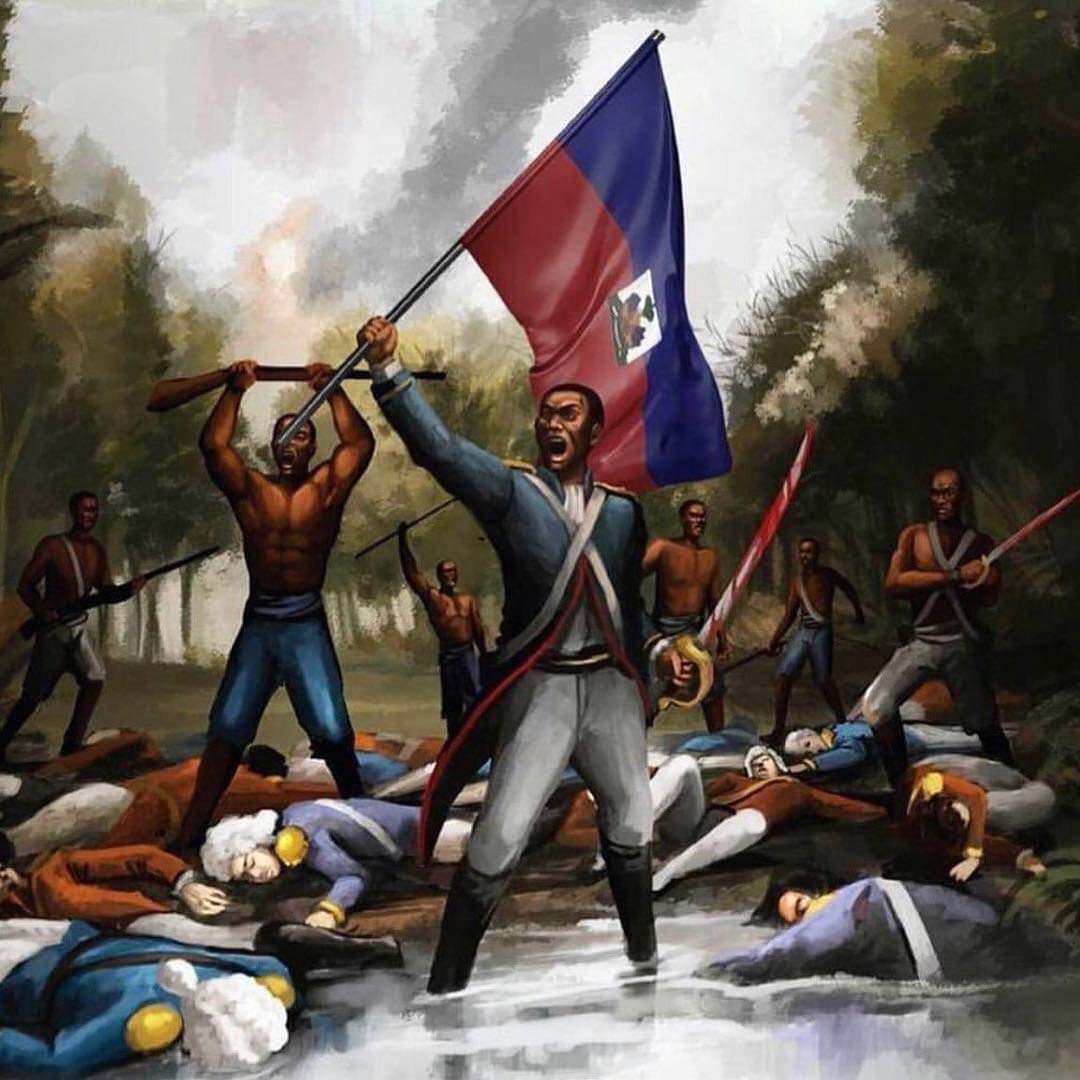
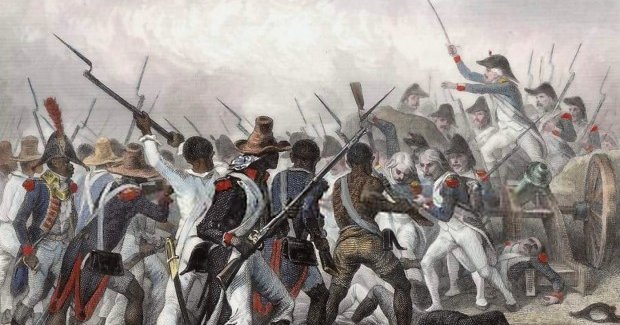
The design of the Haitian flag is attributed to Jean-Jacques Dessalines, one of the leaders of the Haitian revolution. According to historians, Dessalines tore up the French tricolor flag, removing the white band symbolizing loyalty for the French, the white for the Saint-Domingues and reuniting the remaining blue and red bands. This bold gesture gave birth to the two-tone flag, representing the union of blacks and mulattoes in the fight for independence.

Haitian flag day
Haitian flag day
Haitian flag day

Evolution of the Haitian flag

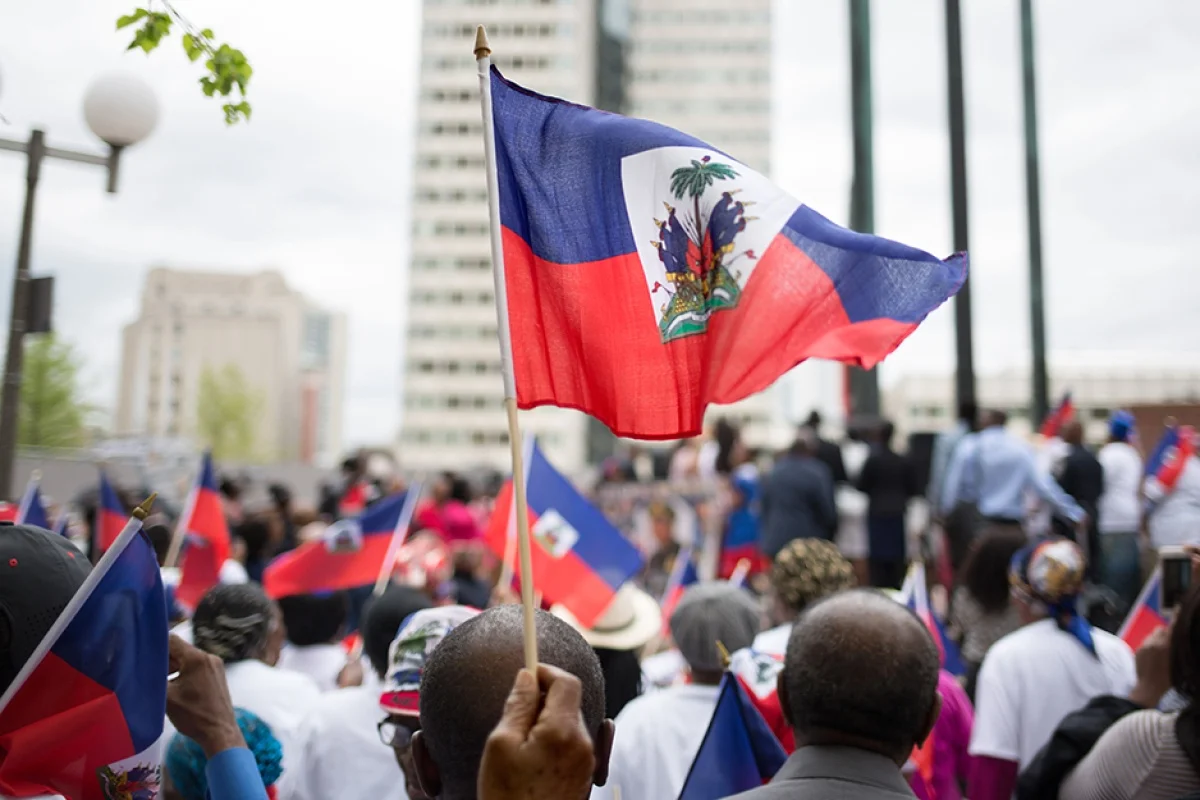
The blue and red of the Haitian flag carry great meaning. Blue represents Haiti’s black population, while red symbolizes Mulattoes. Together, they illustrate the unity and solidarity of the country’s different ethnic groups in the quest for freedom.
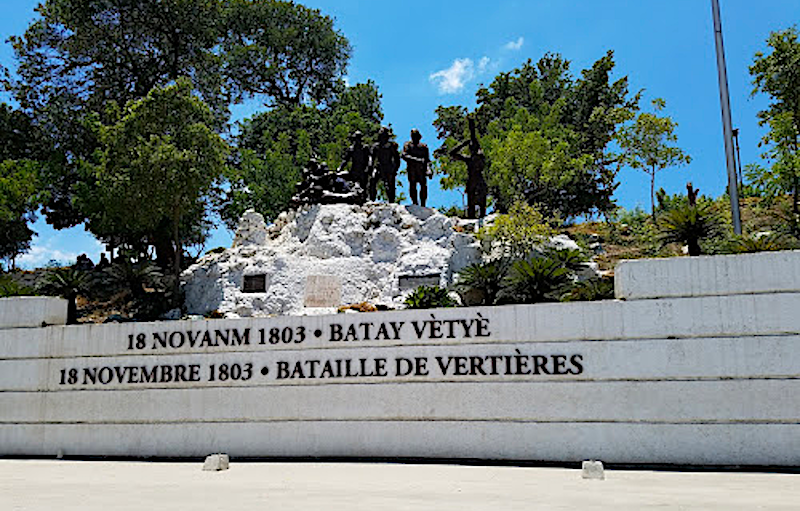
The flag has undergone several modifications over the years. Around the 1790s The French flag flew over Saint-Domingue until February 1803, when Jean-Jacques Dessalines and Alexandre Pétion, leaders of the black and mulatto insurgents, decided to break with France. In May 1803, Dessalines created the first Haitian flag by removing the white stripe from the French flag to symbolize the union of blacks and mulattoes in the fight for freedom. After the victory over the French in November 1803, Haïti declared its independence on January 1, 1804 and adopted a horizontal two-color flag, confirmed by the Constitution of 1843 later in article 192. Dessalines proclaimed himself emperor in October 1804 and established a flag black and red in 1805. After his assassination in 1806, Alexandre Pétion redesigned the flag in blue and red with the arms of the Republic. Henri Christophe, who became king in 1811, modified the flag for his kingdom. In 1822, Jean-Pierre Boyer annexed the Spanish part of the island, known today as the Dominican Republic, which, a few months earlier, on November 30, 1821, proclaimed its independence from Spain under the name "Republica del Haïti espanol" "Republic of Spanish Haiti" and at the same time, its union with Gran Colombia. The flag of the Spanish Republic of Haïti was raised in the first weeks of 1822 but it was the flag of Gran Colombia at the time. In 1847, Faustin Soulouque was elected president and in 1849, proclaimed himself emperor under the name of Faustin I (1849-1859). In his Constitution of 1849, he adopted the blue and red flag but replaced the coat of arms with a crest. The Empire of Faustin I ended on January 15, 1859 and the arms of the Republic returned to their initial place, in the center of the flag. In 1964, François Duvalier established a black and red flag, but after his departure in 1986, Haïti readopted the blue and red flag which was ratified a year later, on March 29, 1987, during the plebiscite on the 1987 Constitution.

18 Mai Haïti
18 Mai Haïti
18 Mai Haïti

May 18: celebration of freedom and identity of Haitians

Today, in Haiti, May 18 is celebrated as “Flag Day,” a public holiday that embodies national pride and recognition of the heritage left by ancestors. Established in 1926 by Timothée Paret, then Minister of Justice under the presidency of Louis Borno, this celebration is of particular importance. It was established in full occupation of the country by the American army, thus marking a powerful symbolic act of resistance and patriotism.
The “Flag Festival” commemorates the creation of the Haitian bicolor on May 18, 1803, during the Congress of Arcahaie. On this occasion, Jean-Jacques Dessalines, one of the leaders of the struggle for independence, made the historic decision to remove the white stripe from the French flag, a gesture symbolizing the union of blacks and mulattoes in their fight for freedom. Afterwards, he ordered Catherine Flon to sew the two remaining strips, blue and red, to form the new Haitian flag, carrying the motto “Liberty or Death”.
Every year, on this date, Haitians gather to honor this symbol of their independence and their struggle for freedom. Parades of schools and various musical groups fill the streets, singing anthems such as the Hymn to Youth and other songs that reflect Haitian pride and nationalist spirit. Parades, speeches and ceremonies are organized across the country to recall the importance of national unity and the sacrifices made by ancestors to achieve independence. Public and private institutions as well as local, national and even Haitian communities abroad actively participate in these celebrations, demonstrating their attachment to this symbol.

Discover the history of Haiti: A fascinating story to explore! : https://haitiwonderland.com/haiti/histoire/decouvrez-l-histoire-d-haiti--un-recit-fascinant-a-explorer/81

This day is much more than just a historical commemoration. It represents a moment of reflection on the values ​​of freedom, solidarity and determination which have forged the Haitian nation. It is also an opportunity for each Haitian to renew their commitment to their country and to show their gratitude for this heritage transmitted by the ancestors. By celebrating May 18, Haitians honor their past while affirming their hope and determination for a better future.

Haiti: A Little-Known Pillar of World Independence

Haiti: A Little-Known Pillar of World Independence

Haiti, the world’s first independent black republic, played an exceptional role in the quest for independence for other nations. Although often overshadowed by other historical events, Haiti’s contribution to the liberation of other countries was significant and deserves to be highlighted. b~The Haitian Revolution~b At the turn of the 19th century, Haïti threw off the chains of slavery and achieved the impossible by freeing itself from French colonial rule. In 1804, the country proclaimed its independence, ushering in a new era for oppressed peoples around the world. b~Inspiration for Latin America~b The Haitian Revolution was a major source of inspiration for independence movements in Latin America. Iconic figures such as Simón Bolívar and Francisco de Miranda recognized the courage and determination of Haitians as a driving force for their own struggles. By materially and ideologically supporting these movements, Haïti contributed to the emergence of several independent nations in South America. b~Influence in Africa~b Beyond the Americas, Haïti also played a crucial role in the quest for independence in Africa. African leaders have left a legacy that has inspired entire generations of freedom fighters on the African continent. The idea that oppressed people could rise up against their oppressors found a powerful echo in the struggles for independence in Africa. b~Support for Liberation Movements~b Throughout its history, Haïti has provided substantial support to liberation movements around the world. Whether through troop dispatches, financial resources or active diplomacy, the country has demonstrated its solidarity with those fighting for their autonomy. Haiti’s contributions have often been discreet but crucial. Haiti, as a pioneer of independence and freedom, has left a lasting impact on the world stage. His legacy resonates across continents, reminding the world that the quest for freedom is universal. By recognizing and celebrating Haiti’s role in the independence of other nations, we not only honor its history, but we also commit to promoting a future where all people have the opportunity to shape their destiny.

Share
About the Author
Jarule Laguerre
Jarule Laguerre
Jarule Laguerre

    laguerrejarule916@gmail.com

    See other articles from Jarule Laguerre
    Kenia Jean

    Bon travail

    October 31, 2024 - 07:46:52 AM
    Leave a comment

    Recently Posted

    Newsletter

    Subscribe to our newsletter to stay informed of all our activities and news on Haiti.

    Petit-Goave, Haiti: Decryption of the 3rd rara weekend!

    It is more and more obvious that in Petit-Goave the media space is absorbed by the rivalry between Ratyèfè, triple champions and lambi gran lambi dlo, a former champion. The past weekend was once again irrefutable proof of the media tension over these two rival bands. With a carnival-like appearance, the fan club of the first dressed in a white shirt, short orange-yellow skirt, purple tie, black boot; the other dressed in a traditional hat, yellow jersey, red pants, red or yellow tennis shoes. This marriage of colors with the taste of carnival is the expression of cultural diversity as La Fontaine said in his book tales and short stories "diversity is my motto." This formula can adapt well to the rara. If it is true in Léogane this marriage of color has existed for ages. It is no less true that this was the case in Petit-Goave because we had to wait for the strong return of Ratyèfè in 2018 to see the rara fan clubs dress differently each new weekend. Last Saturday more than one expected a new face to face between Lambi gran dlo and Ratyèfè because the latter weighed anchor in the direction of the 2nd plain and the latter, in the direction of the city center. Less than in any other circumstance, this duel at the top was obvious. If for some comments it was a favorable opportunity for Lambi to take his revenge on his rival compared to the previous weekend because he had done the profile although he had the advantage because he was two against one. (Lambi,chenn tamarin vs Ratyèfè). This enormous advantage did not work in their favor because the hours that had passed worked against them, as proof they had gone to sleep while ratyèfè remained to play for at least 30 more rounds. Surprisingly but not surprisingly during the meeting long awaited by less than one, at the Acul not far from the Saint Jean-Baptiste church, lambi had decided not to play anymore. However, according to the customs and costumes of the rara when there are two bands, the one who stops playing first, shows weakness and surrender. Consequently, the other who is opposite out of decency and good morals has no other choice to do the same. It follows that for the umpteenth time the great power formation (lambi grand dlo) was unable to take revenge on its rival. For many cultural journalists who were present to witness this event did not have their tongue in their pocket to give their impression of Ratyèfè’s monster performance. This is the case for Brignol, a cultural commentary which wondered if Ratyèfè had the devil in his body so that the most incredulous were in their feeling of joy. On Sunday evening this monster of animation once again made its mark in the art of its know-how. This is what explains the almost unanimity among the cultural journalists of Petit-Goâve in granting first place to this band for its performance and its musical discipline. So, for this weekend according to the circle of cultural journalists of Petit-Goave and with the approval of many other cultural comments. We have the following classification: 1st Ratyèfè 2nd Grap Kenèp 3rd Orgueil de la jeunesse

    Christmas in Haiti: Between Magic, Discoveries and Delicacies

    The joyful ringing of bells echoes through the streets of Haïti as the holiday season approaches. Christmas is a magical time when the streets light up, families gather and a warm atmosphere invades the island. Between traditions, cultural discoveries and gourmet feasts, Christmas in Haïti promises a unique experience. b~The Magic of Lights and Decorations~b From the beginning of December, Haïti is adorned with sparkling lights and festive decorations. The markets come alive with shimmering garlands, twinkling stars and ornate fir trees. The streets of Port-au-Prince in Jacmel shine with a special magic, inviting locals and visitors to immerse themselves in the festive spirit. b~Haitian Traditions at Christmas~b Christmas in Haïti is celebrated with a unique combination of religious traditions and local customs. Midnight Mass is a deeply rooted tradition, drawing worshipers to churches to celebrate the birth of Jesus in a vibrant atmosphere of song and prayer. A popular tradition is the "Dawn Mass" which takes place at dawn on December 25. The faithful gather to welcome Christmas Day with special fervor, testifying to the deep spirituality that permeates the festivities. The festivities are not limited to churches. Street parades, folk dances and concerts are commonplace, creating a joyful atmosphere throughout the country. Traditional Haitian music, such as direct compass and voodoo, adds a special dimension to these celebrations. b~Cultural Discoveries: Haitian Crafts~b Christmas is also an ideal opportunity to discover unique Haitian crafts. Christmas markets offer a variety of handicrafts, such as wooden sculptures, vivid paintings, wrought iron items and traditional jewelry. These works of art reflect the artistic talent of the Haitian people and provide unique and meaningful gifts. Local markets, such as the Ferrier market in Cap-Haitien and the Jacmel market, are essential places to discover the authenticity of Haitian crafts. These purchases also help support local artists and the community economy. b~Gourmet Feasts: Christmas Cuisine~b Christmas in Haïti is also a gastronomic celebration. Families gather around festive tables laden with traditional culinary delights. “Joumou soup”, a pumpkin soup, is an essential specialty of the holiday season. Pork, lamb and chicken dishes are also common, accompanied by rice and local vegetables. Traditional desserts, such as “Pen patat” and “Tablèt Pistach,” add a sweet touch to the celebration. Tropical fruits, such as mangoes and bananas, are also often present on Christmas tables, recalling the richness of Haitian biodiversity. Christmas in Haïti is a vibrant celebration that blends the magic of lights, religious traditions, local crafts and delicious cuisine. It is a time when joy and generosity are in the spotlight, and when Haitians open their hearts to share the magic of the season with the world.

    Recently Posted

    History

    History

    First black nation to free itself from slavery and gain independence from France in 1804 and influenced other liberation movements around the world, inspiring struggles for freedom and equality.

    Natural beauty

    Natural beauty

    Haïti is blessed with spectacular natural landscapes, including white sand beaches, mountains and rich biodiversity.

    Heritage

    Heritage

    Haïti has a rich historical heritage, including sites like the Citadelle Laferrière and the Sans-Souci Palace, listed as UNESCO World Heritage Sites.

    Culture

    Culture

    Haïti has a rich and diverse culture, influenced by African, European and indigenous elements. Haitian music, dance, art and cuisine are celebrated around the world.

    • +
      • Post