contact@haitiwonderland.com+509 36184317

Discover

Shopping Cart

The enrichment of France at the expense of Haiti, a History of Injustice and Exploitation

The enrichment of France at the expense of Haiti, a History of Injustice and Exploitation

In 1804, Haïti emerged from the flames of revolution as the world’s first independent black republic, but its freedom would come at a steep price. France, a former colonial power, orchestrated an unprecedented economic revenge, weaving a web of exploitation and injustice that would hamper Haiti’s development for generations. This toxic relationship, marked by extortion and violence, not only shaped the destiny of one nation but also filled the coffers of another, leaving deep scars that persist to this day. Immerse yourself in this story, a gripping tale of colonial greed and resilience, which reminds us of the importance of never forgetting the injustices of the past and their lasting impact on our world today.

Haïti
Haïti
Haïti

Colonization and exploitation

The colony of Saint-Domingue (present-day Haiti) was one of the richest French colonies in the 18th century. Through the production of sugar, coffee, indigo and cotton, Haïti was a major source of wealth for France. This prosperity was made possible by the brutal exploitation of African slaves, who worked in inhumane conditions to generate colossal profits for the French colonists.

Haïti
Haïti
Haïti

The Haitian Revolution and independence

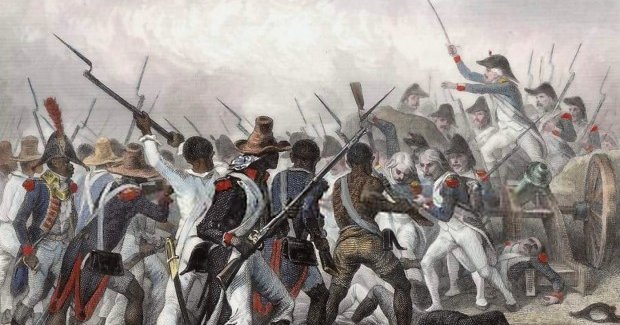
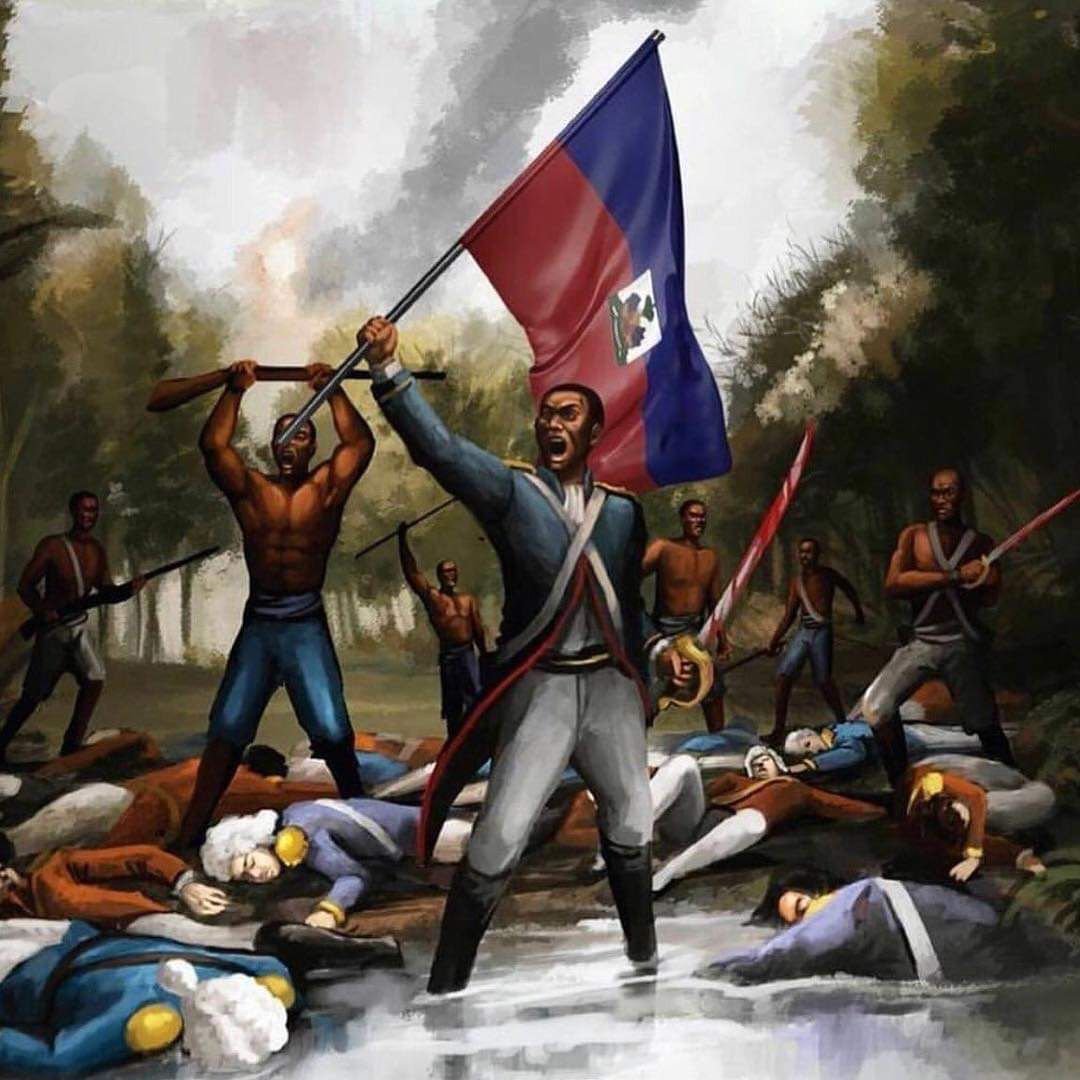
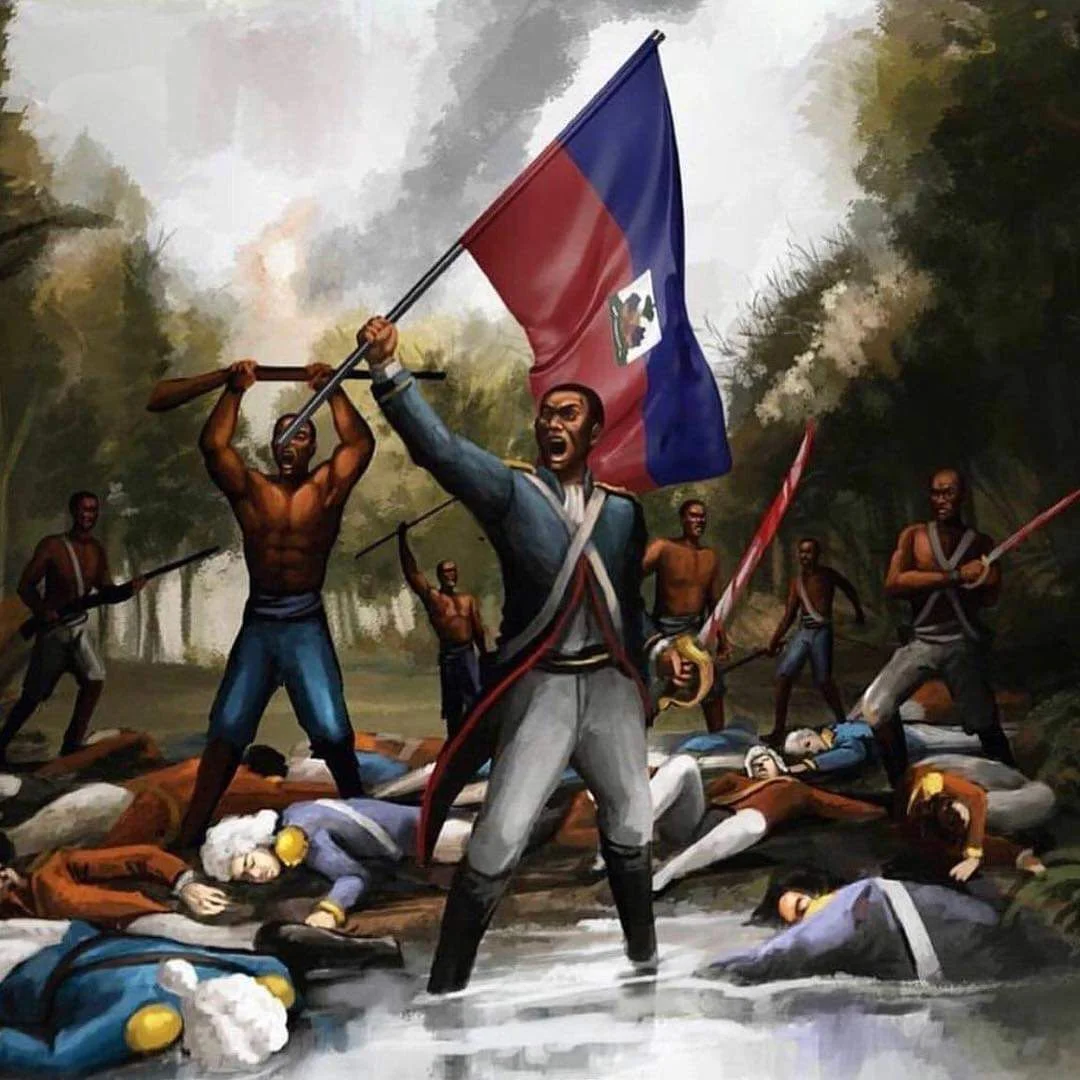
The Haitian Revolution, which took place from 1791 to 1804, is a major event in world history. It began as a slave revolt in the French colony of Saint-Domingue and evolved into a struggle for independence that changed the course of history.

Inspired by the ideals of the French Revolution and guided by charismatic leaders like Toussaint Louverture and Jean-Jacques Dessalines, the slaves and freedmen of Saint-Domingue rose up against the brutal colonial system. The revolt quickly grew in strength, challenging not only French authority but also invasion attempts by the Spanish and British.

On January 1, 1804, after years of bloody fighting, Jean-Jacques Dessalines proclaimed the independence of Haiti. This historic moment marked the birth of the world’s first independent black republic and the only nation founded by former slaves.

The Haitian Revolution had a profound impact on the Atlantic world. It shook the foundations of the slave and colonial system, inspiring liberation movements across the Americas. For the first time, the principle of racial equality was enshrined in a country’s constitution.

However, Haiti’s victory also aroused fear and hostility from the colonial powers. Diplomatically and economically isolated, the young nation faced immense challenges from its first days of independence.

Discover the history of Haiti: A fascinating story to explore! : https://haitiwonderland.com/haiti/histoire/decouvrez-l-histoire-d-haiti--un-recit-fascinant-a-explorer/81

Haïti
Haïti
Haïti

The price of independence: economic extortion

France, humiliated by its military defeat, orchestrated a devastating economic revenge. Under threat of invasion and an international blockade, Haïti was forced to pay an astronomical "indemnity" to its former colonizer. This debt, intended to compensate for the loss of the colony and its slaves, amounted to 150 million gold francs - the equivalent of tens of billions of euros today.

The payment of this debt had devastating consequences for the Haitian economy. Haïti had to borrow at high interest rates from French banks to pay this colossal sum. This financial burden weighed down the Haitian economy for decades, preventing it from developing its infrastructure and institutions. Meanwhile, France used this money to strengthen its economy and finance its own colonial ambitions elsewhere in the world. Additionally, annual debt payments have siphoned off much of the country’s economic resources, thereby enriching France and its banks.

Haiti, dream space.
Haiti, dream space.

Haiti, dream space.

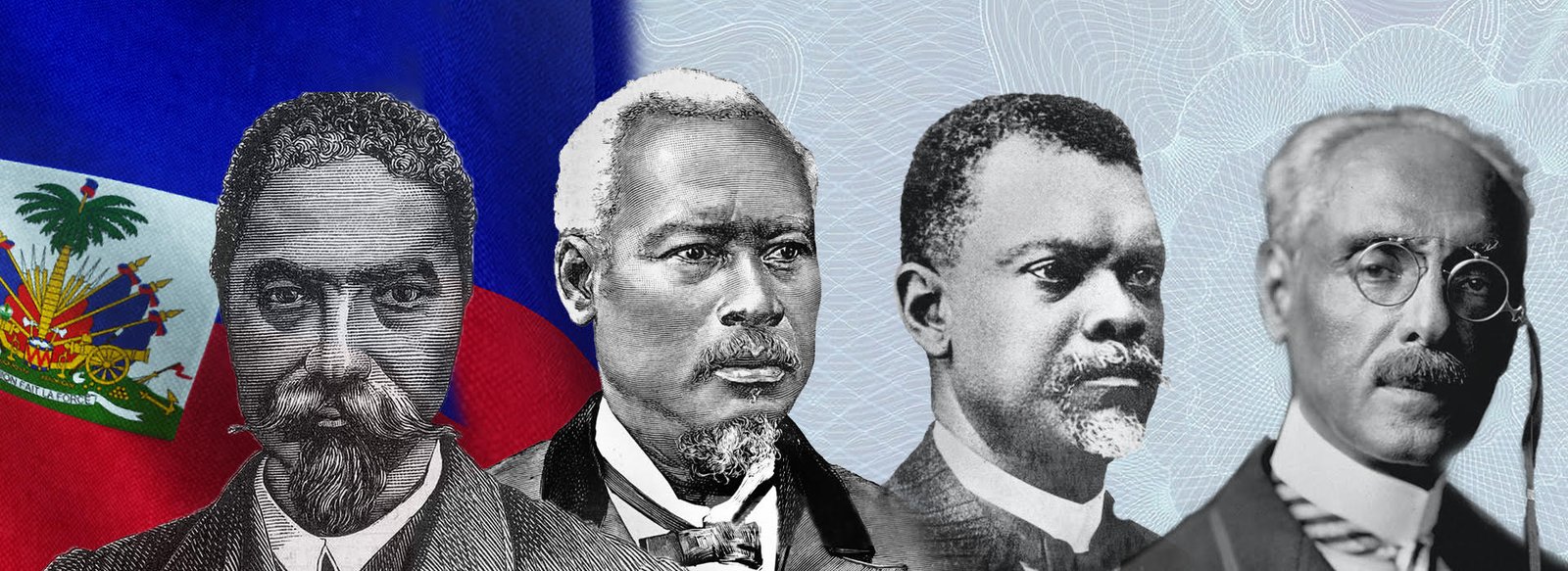
Between dream and Haitian reality: A call for unity and action Many men have dreamed big for Haiti. Toussaint Louverture and Jean Jacques Dessalines are examples. Although torn apart by invisible hands, the social fabric of the country had always been considered the greatest project to be set in motion by men of letters. Until then, the history of Haïti remains and remains for Haitians the most appropriate space to dream and propose full and complete freedom. Indeed, Toussaint Louverture had the dream of improving the lot of slaves. Dessalines, for his part, sacrificed himself for the independence of our island (Haiti-Saint-Domingue). After our liberation from the French, men of letters had to take other paths to safeguard the dignity of the country. This situation showed another form of revolution like poets of the patriotism school with supporters such as: Louis Joseph Janvier, Anténor Firmin, Demesvar Délorme and the Generation of the Round with Fernand Hibbert, Georges Sylvain also the indigenous school with Jean Price Mars, Jacques Stephen Alexis, Roussan Camille etc... who express their discontent by pouring ink. By describing or painting the situation of the country. Several years which were first conceived and then born the idea of ​​giving the country its sovereignty, its own bicolor, its army, etc. it was not easy and did not continue like this. Haïti needs for the moment men of dreams, men who love their countries, but not the wealth of this country, men who love the happiness of their country, but not its misfortunes, men who have viable projects , but are not specialists in carnage who are only interested in their pockets, rather for the happiness of our two-tone, men who must fight against corruption, against waste, against the invisible hands of foreigners, against this form of public administration which targets only a small group of people in the country to the detriment of the population, this form of insecurity planned by the state, the so-called bourgeoisies, economic powers from abroad such as: France, USA, Canada, Brazil. q~Haïti in 1979 with full power. Maître Fevry is said to have declared: The dream of Haïti cannot support, nor accept improvised solutions ~q. The Haitian’s dream must always be a team effort. A team of men of skill, vision, good will, reflection and meditation. q~ Men who can place their personal and private interests over public interests. Men who want to make a new start to achieve the dream of Jean Jacques Dessalines and that of Henri Christophe who aimed that Haitians will not envy any other country in the world so that all Haitians can be happy in their own country, chanted Professor Lesly Saint Roc Manigat.~q Our dear Haiti, which was once the pearl of the Antilles, is no longer present today. For this we ask all Haitians: children, young people, adults and old people, let us unite our arms, our strength, our voices and all that we could do to liberate our dear homeland Haïti Chérie. Let’s change our reality together! Long live Haiti, long live freedom for the whole world.

Long-term repercussions

The consequences of this debt and colonial exploitation are still visible today. Haïti remains one of the poorest countries in the world, with underdeveloped infrastructure and fragile institutions. The debt of independence has created a vicious circle of poverty and underdevelopment, from which Haïti is struggling to free itself.

Haïti
Haïti
Haïti

Need for restitution and repair

The history of French-Haitian relations is a striking example of how former colonial powers maintained their economic dominance well after the formal independence of their colonies. It raises crucial questions about historical responsibility and the need for reparations, not only for Haïti but also for other countries that have suffered similar injustices. Recognizing past wrongs and putting in place remedial measures can play a crucial role in rebuilding a more equitable and sustainable economy for all.

Haïti and the price of independence: https://haitiwonderland.com/haiti/histoire/haiti-et-le-prix-de-l-independance/136

This dark chapter in Haiti’s history must be told and taught around the world. It reminds us that freedom sometimes comes at an exorbitant price and that the injustices of the past continue to shape our present. Understanding this history is essential to building more equitable international relations and to allowing Haïti to finally overcome the obstacles inherited from its colonial past.

Ultimately, Haiti’s story is also a story of extraordinary resilience. Despite the immense obstacles it faced, the Haitian nation survived and continues to fight for a better future. It is a powerful testament to the strength of the human spirit in the face of adversity.

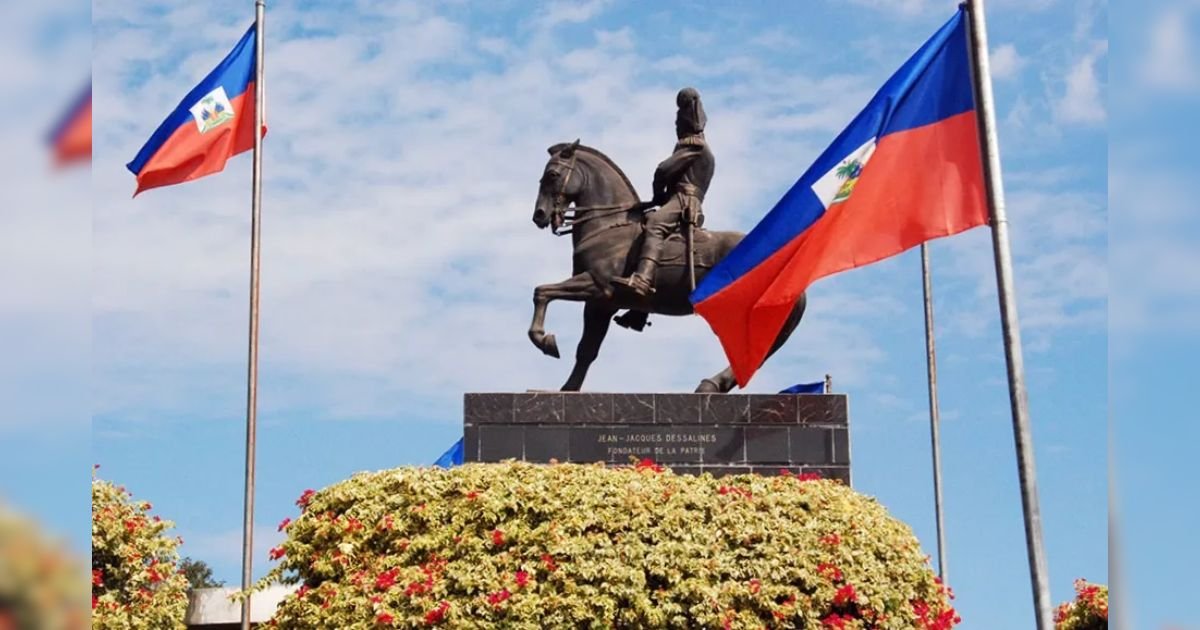
Jean-Jacques Dessalines, leader of the Haitian Revolution

Jean-Jacques Dessalines, leader of the Haitian Revolution

In the annals of the history of Haiti, an island located in the Caribbean at the entrance to the Gulf of Mexico and shared with the Dominican Republic, Jean-Jacques Dessalines emerges like a phoenix from the ashes of oppression. Born a slave on September 20, 1758 in the home of Henri Duclos, in Cormier (Grande-Rivière-du-Nord), in the French colony of Saint-Domingue, Dessalines was a Creole of African (Afro-Caribbean) origin. Freed during the 1794 abolition achieved through slave revolts, actually served as an officer in the French army during the French Revolution. At that time, the ideas of freedom and equality were at the heart of the concerns of the inhabitants of the colonies. Dessalines actively participated in the fighting against the Spanish and British forces, alongside the French, in Santo Domingo. Having risen to the rank of Lieutenant General, Jean-Jacques Dessalines turned against the French during the Leclerc expedition, sent to Saint-Domingue by Bonaparte to reestablish colonial authority and slavery during the Haitian Revolution. After the capture and deportation of Toussaint Louverture to France on June 7, 1802, Dessalines assumed a leading role in continuing the struggle for independence. He led numerous battles, including the battle of Crête-à-Pierrot in March 1802, where he galvanized his soldiers with his famous declaration: “Let those who want to remain slaves of the French leave the fort, let those, on the contrary, who want to die as free men, line up around me.” On January 1, 1804, Jean-Jacques Dessalines achieved the long-awaited goal of independence by proclaiming Haïti as a sovereign nation, becoming the second country in the Americas to gain independence from a colonial power. He became the first leader of the newly formed nation and was named Emperor under the name James I. However, his imperial reign was marked by authoritarian and brutal policies, including the massacre of many white settlers and the redistribution of land to peasants that was in the hands of the generals of the independence army. In addition, he organized the hunt for delinquents in the city while implementing rigorous agrarian policies, considering that they represented a threat to the stability of the nation, these controversial actions caused divisions within Haitian society. Dessalines was assassinated on October 17, 1806 following a plot organized by some of his generals in the Haitian army. His death marked the end of his brief but influential period in power. Despite the controversies surrounding his methods, he is recognized as the main architect of Haiti’s independence and his name was honored in 1903 by being attributed to the Haitian national anthem, La Dessalinienne, composed by Justin Lhérisson.Finally, the great visionary man Jean Jacques Dessalines remains an emblematic figure in the history of Haiti, recognized for his role in the fight for independence and the end of slavery in the region.

Share
About the Author
Appolon Guy Alain
Appolon Guy Alain
Appolon Guy Alain

Full Stack Developer, Créatif, expérimenté, passionné des nouvelles technologies et de l’art.

See other articles from Appolon Guy Alain
Neil T. Rigaud

Thanks for sharing this.

May 02, 2025 - 10:37:42 PM
Leave a comment

Recently Posted

Haiti: A look back at the First Rara Weekend in Petit-Goave

Haitian culture is a true treasure, woven from the creativity of its artists, its rich heritage and the diversity of its cultural expressions. Among these cultural gems, the rara stands as a true national emblem, uniting Haitians through its captivating rhythms and centuries-old traditions. During the first Rara weekend, this very essence of Haitian culture shone brightly, revealing palpable social cohesion. Despite the absence of law enforcement, tranquility reigned in Petit-Goâve, testifying to the ability of citizens to come together in peace and conviviality. However, media attention was mainly focused on the first plain, leaving a certain imbalance in the coverage of the festivities. Ratyèfè, three-time reigning champion, once again captivated minds with his talent and artistic mastery, offering an unparalleled spectacle. But his rival, Lambi gran dlo, was not to be outdone, displaying a determination to compete for first place. The event was also marked by unfortunate incidents, reminding us that despite the beauty of tradition, tensions can arise. Clashes between fans of different groups tarnished the festive atmosphere, highlighting the need for careful management of celebrations to avoid such excesses. At the heart of this musical competition, where each group aspires to recognition and victory, a complex picture of rivalries and alliances emerges. Chenn tamarin, although appearing asleep in the first moments, shows signs of waking up, ready to shake up the established order. On Sunday evening, Lambi gran dlo honored the memory of one of its loyal supporters, while Grap Kenèp was the scene of violence between fans, recalling the fragility of social cohesion when passion runs wild. In this whirlwind of emotion and competition, it is crucial to keep in mind that it is the journalist who must look to the events, and not the other way around. This is how we draw up the first ranking for this first weekend: 1. Ratyèfè 2. Lambi grand dlo 3. Chenn tamarind Beyond the results, it is the preservation of unity and mutual respect that must remain at the heart of these celebrations, making the rara not only a musical festival, but above all a symbol of the wealth and resilience of the people Haitian.

Newsletter

Subscribe to our newsletter to stay informed of all our activities and news on Haiti.

Recently Posted

History

History

First black nation to free itself from slavery and gain independence from France in 1804 and influenced other liberation movements around the world, inspiring struggles for freedom and equality.

Natural beauty

Natural beauty

Haïti is blessed with spectacular natural landscapes, including white sand beaches, mountains and rich biodiversity.

Heritage

Heritage

Haïti has a rich historical heritage, including sites like the Citadelle Laferrière and the Sans-Souci Palace, listed as UNESCO World Heritage Sites.

Culture

Culture

Haïti has a rich and diverse culture, influenced by African, European and indigenous elements. Haitian music, dance, art and cuisine are celebrated around the world.

  • +
    • Post