contact@haitiwonderland.com+509 36184317

Discover

Shopping Cart

A Pre-Parade to Kick Off the Festivities

A Pre-Parade to Kick Off the Festivities

Jacmel Opens Carnival 2026 with Splendor and Creativity

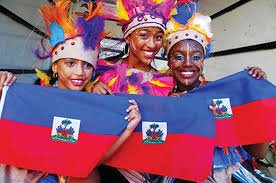
The city of Jacmel launched the festivities of the 2026 National Carnival with a spectacular pre-parade, organized by the city hall in partnership with the carnival committee. This first major event marks the official entry of the southeastern city into a festive season eagerly awaited by residents and visitors alike.

Streets Transformed into an Open-Air Stage

Early on, the city streets were transformed into a vast open-air theater. Dance troupes, traditional masquerades, and marching bands filled the main thoroughfares, offering a vibrant spectacle where movement, imagination, and cultural heritage intertwined. Musical entertainment, provided by several DJs, amplified the excitement, immersing the public in a rhythmic, colorful, and creative atmosphere.

A Celebration of Jacmel’s Cultural Identity

Under the theme "Jacmel in Our Dreams," this edition brought together an impressive crowd of carnival-goers, citizens, and visitors who came together to celebrate the city’s cultural identity. The originality of the performances, the exquisite costumes, and the quality of the organization were widely praised, confirming the artistic expertise for which Jacmel is renowned.

Jacmel, an Essential Showcase of Haitian Carnival

Through this successful pre-parade, the city reaffirms its status as a cultural benchmark for Haitian carnival. Tradition and innovation meet here, giving rise to a unique popular expression. Local authorities hope that this festive energy will continue throughout the scheduled activities, contributing to strengthening the tourist and cultural appeal of this southeastern metropolis.

Le Makaya, histoire et pratiques vaudouesques en haïti

Le Makaya, histoire et pratiques vaudouesques en haïti

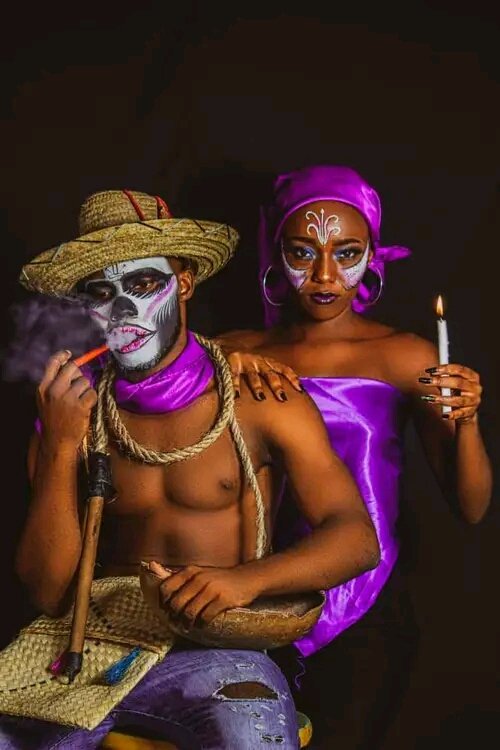
Le Makaya est bien plus qu’une simple fête ; il est un pilier spirituel du vaudou haïtien, une tradition vivante qui lie les croyances ancestrales aux rituels de purification, de guérison et de renouveau. Célébré principalement à la fin du mois de décembre, le Makaya tire ses racines de l’Afrique, en particulier des civilisations bantoues, et se déroule dans un contexte profondément spirituel où les liens avec les ancêtres et les forces naturelles sont essentiels. Le terme "Makaya", qui signifie "feuilles" en Kikongo, est intrinsèquement lié à la nature et aux plantes, éléments essentiels du vaudou. Ce lien direct avec la nature fait du Makaya un moment de purification, où les croyants se connectent à la terre et aux esprits par l’intermédiaire des végétaux. La tradition du Makaya vient des peuples Bantous, principalement du Congo, et de leurs pratiques spirituelles qui ont été transposées, adaptées et enrichies par la diaspora haïtienne pendant la période de l’esclavage. La période du Makaya commence le 21 décembre, lors du solstice d’hiver, une date symbolique marquant la victoire de la lumière sur les ténèbres, le commencement du renouveau solaire. Dans le vaudou, cette époque est perçue comme un moment d’introspection où la nuit la plus longue de l’année se transforme lentement en jour, apportant avec elle des forces purificatrices et régénératrices.


The Jacmel Carnival, a Living and Historic Tradition

The Jacmel Carnival occupies a unique place in Haiti’s cultural history. Renowned for its papier-mâché masks, satirical characters, and keen sense of staging, it has established itself over the decades as one of the most authentic and creative carnivals in the country.

An artistic and symbolic heritage
Stemming from a long history of cultural resistance and popular expression, the Jacmel carnival draws its roots from African, European, and local traditions. It constitutes a space for freedom, social critique, and collective memory, where art becomes language and commitment.

A carnival that tells a story and questions society

Unlike carnivals dominated by musical floats, Jacmel distinguishes itself through a narrative and artistic approach. Each edition tells a story, questions the present, and summons the collective conscience. More than just a celebration, the Jacmel carnival remains a major cultural event, bringing renown to the city far beyond its borders.

Petit-Goave, Haiti: Decryption of the 3rd rara weekend!

Petit-Goave, Haiti: Decryption of the 3rd rara weekend!

It is more and more obvious that in Petit-Goave the media space is absorbed by the rivalry between Ratyèfè, triple champions and lambi gran lambi dlo, a former champion. The past weekend was once again irrefutable proof of the media tension over these two rival bands. With a carnival-like appearance, the fan club of the first dressed in a white shirt, short orange-yellow skirt, purple tie, black boot; the other dressed in a traditional hat, yellow jersey, red pants, red or yellow tennis shoes. This marriage of colors with the taste of carnival is the expression of cultural diversity as La Fontaine said in his book tales and short stories "diversity is my motto." This formula can adapt well to the rara. If it is true in Léogane this marriage of color has existed for ages. It is no less true that this was the case in Petit-Goave because we had to wait for the strong return of Ratyèfè in 2018 to see the rara fan clubs dress differently each new weekend. Last Saturday more than one expected a new face to face between Lambi gran dlo and Ratyèfè because the latter weighed anchor in the direction of the 2nd plain and the latter, in the direction of the city center. Less than in any other circumstance, this duel at the top was obvious. If for some comments it was a favorable opportunity for Lambi to take his revenge on his rival compared to the previous weekend because he had done the profile although he had the advantage because he was two against one. (Lambi,chenn tamarin vs Ratyèfè). This enormous advantage did not work in their favor because the hours that had passed worked against them, as proof they had gone to sleep while ratyèfè remained to play for at least 30 more rounds. Surprisingly but not surprisingly during the meeting long awaited by less than one, at the Acul not far from the Saint Jean-Baptiste church, lambi had decided not to play anymore. However, according to the customs and costumes of the rara when there are two bands, the one who stops playing first, shows weakness and surrender. Consequently, the other who is opposite out of decency and good morals has no other choice to do the same. It follows that for the umpteenth time the great power formation (lambi grand dlo) was unable to take revenge on its rival. For many cultural journalists who were present to witness this event did not have their tongue in their pocket to give their impression of Ratyèfè’s monster performance. This is the case for Brignol, a cultural commentary which wondered if Ratyèfè had the devil in his body so that the most incredulous were in their feeling of joy. On Sunday evening this monster of animation once again made its mark in the art of its know-how. This is what explains the almost unanimity among the cultural journalists of Petit-Goâve in granting first place to this band for its performance and its musical discipline. So, for this weekend according to the circle of cultural journalists of Petit-Goave and with the approval of many other cultural comments. We have the following classification: 1st Ratyèfè 2nd Grap Kenèp 3rd Orgueil de la jeunesse

Share
About the Author
Moise Francois
Moise Francois
Moise Francois

Journalist editor, poet and apprentice lawyer.

See other articles from Moise Francois
Leave a comment

Recently Posted

Newsletter

Subscribe to our newsletter to stay informed of all our activities and news on Haiti.

Recently Posted

History

History

First black nation to free itself from slavery and gain independence from France in 1804 and influenced other liberation movements around the world, inspiring struggles for freedom and equality.

Natural beauty

Natural beauty

Haïti is blessed with spectacular natural landscapes, including white sand beaches, mountains and rich biodiversity.

Heritage

Heritage

Haïti has a rich historical heritage, including sites like the Citadelle Laferrière and the Sans-Souci Palace, listed as UNESCO World Heritage Sites.

Culture

Culture

Haïti has a rich and diverse culture, influenced by African, European and indigenous elements. Haitian music, dance, art and cuisine are celebrated around the world.

  • +
    • Post