contact@haitiwonderland.com+509 36184317

Discover

Shopping Cart

Discover the Origins of the Haitian Creole Language

Discover the Origins of the Haitian Creole Language

The Haitian Creole language, spoken by nearly 12 million people, is much more than just a means of communication. It embodies the history, culture, and identity of Haiti. But where does this unique language come from? This article explores its origins, evolution, and central role in Haitian society.

Haïti
Haïti
Haïti

A Language Born of Resistance and Resilience

Haitian Creole was born during the 17th and 18th centuries, during the French colonial period in Saint-Domingue (now Haiti). At that time, millions of Africans were uprooted from their lands and enslaved to work on sugarcane, coffee, and indigo plantations.

These slaves came from different regions of Africa and spoke different languages, making communication between them difficult. They had to find a way to communicate not only with each other, but also with the French colonists. Haitian Creole thus developed as a mixture of African languages, regional French dialects, and to a lesser extent, terms borrowed from other European and indigenous languages.

The Creole language was thus born out of a need for survival and resistance, becoming a symbol of unity for the slaves in their fight against oppression.

The Influence of French and African Languages ​​

Haitian Creole finds its main roots in French, which was the language of the colonists. However, it incorporates many elements of African languages, particularly in terms of grammatical structure, pronunciation, and vocabulary.

- French: The majority of words in Haitian Creole come from French, but their pronunciation and spelling have been adapted to reflect the sounds and needs of the speakers. For example, mwen (I, me) comes from the French moi, and li (he/she) from lui.
- African languages: African influence can be found in syntax, tones, and some specific terms, such as vèvè (a symbol used in voodoo) or zantray (entrails).
- Other influences: Some words come from Spanish, English, and Native American languages, due to cultural and commercial exchanges in the Caribbean region.

This unique fusion gave birth to an original language, with its own grammar and phonetic system.

Haïti
Haïti
Haïti

The Role of Creole in Haitian History and Culture

After Haïti gained independence in 1804, Creole remained the majority language spoken by the population. However, French continued to dominate as the official language and language of the elite, creating a linguistic and social divide that persists to this day.

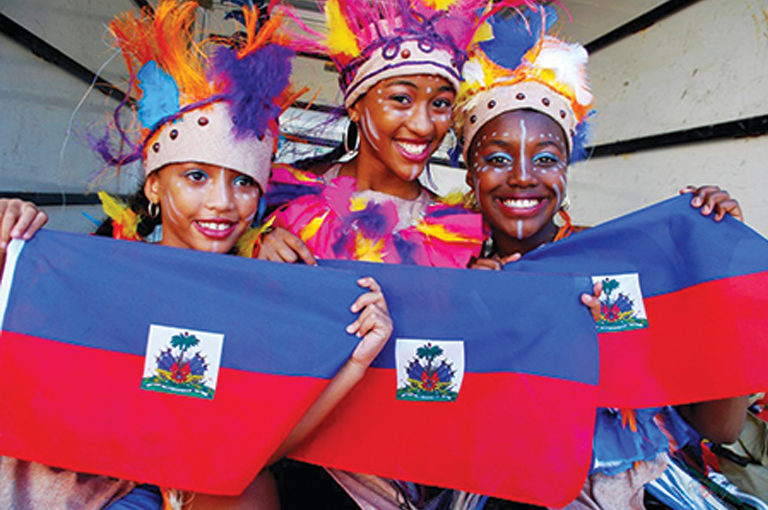
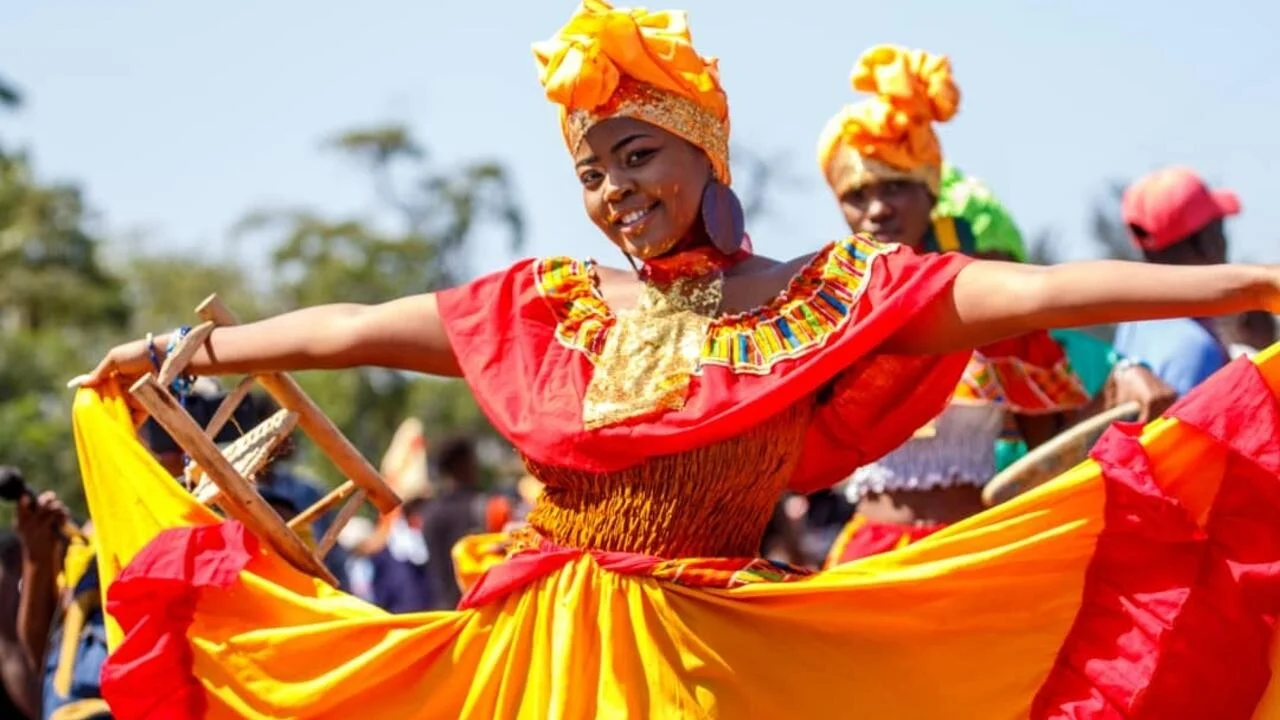
Despite this, Haitian Creole has always been at the heart of Haitian culture. It is the language of songs, stories, proverbs and voodoo rituals. It reflects the spirit and creativity of the Haitian people, preserving and transmitting the oral traditions and history of the country.

In 1987, the Constitution of Haïti officially recognized Creole as a national and co-official language alongside French, marking a turning point in its promotion.

Haïti
Haïti
Haïti

Creole Today: A Living and Dynamic Language

Today, Haitian Creole is spoken by the entire population of Haïti and by the Haitian diaspora around the world. It continues to evolve, enriched with new expressions and adapting to modern realities.

Many initiatives aim to promote and develop Creole, including through:
- Education: School programs and textbooks in Creole are increasingly used to facilitate children’s learning.
- Media: Radio, television, and social networks in Creole play a crucial role in its dissemination.
- Literature: Haitian writers publish works in Creole, contributing to its cultural influence.

Creole is also taught in universities abroad and studied as an example of a Creole language in its own right, which reinforces its international recognition.

A Symbol of Haitian Identity

Haitian Creole is not only a language; it is a pillar of national identity. It testifies to the resilience and creativity of Haitians in the face of the trials of their history.

Through Creole, Haitians affirm their cultural pride and their attachment to their roots. It is a language that unites, that tells a story of struggle and triumph, and that continues to carry the soul of a people.

Why is Creole so Important to Haitians?

Haitian Creole is much more than a tool of communication: it is a reflection of the history, culture and spirit of the Haitian people. Its birth in the most difficult conditions, its evolution into a symbol of national pride and its central role in daily life make it an exceptional and precious language.

In Haïti and abroad, Creole remains a bridge between the past and the future, uniting generations and reminding everyone of the very essence of what it means to be Haitian.

Share
About the Author
Appolon Guy Alain
Appolon Guy Alain
Appolon Guy Alain

Full Stack Developer, Créatif, expérimenté, passionné des nouvelles technologies et de l’art.

See other articles from Appolon Guy Alain
Kervensky

Premye ak dezyèm rezolisyon sou alfabèt kreyòl la

August 10, 2025 - 08:47:26 PM
Jeanbertho Tilus

Mwwen se yon ayisen tout bon vle map mouriii pou hayti kpk bwa kale net a les.

August 23, 2025 - 05:46:54 AM
Leave a comment

Recently Posted

Haiti: Ministry of Tourism

In its quest to revitalize its tourism industry and highlight its natural and cultural riches, Haïti relies on a key player: the Ministry of Tourism. As a government entity dedicated to the promotion and development of tourism, this ministry plays a crucial role in transforming Haïti into a leading tourist destination. One of the main objectives of the Ministry of Tourism is to strengthen the attractiveness of Haïti to international travelers. To do this, it develops innovative marketing campaigns, highlighting the country’s pristine beaches, fascinating historical sites, rich culture and exquisite cuisine. These efforts aim to change the perception of Haïti and generate interest among potential tourists around the world. In collaboration with private sector players, the ministry is committed to supporting and promoting local tourism businesses. By encouraging entrepreneurship and innovation in the tourism sector, the ministry helps create jobs and stimulate the local economy. The Ministry of Tourism also attaches great importance to the preservation of the environment and cultural heritage of Haiti. It implements policies and initiatives aimed at protecting the country’s natural sites, national parks and historic monuments. By encouraging sustainable and responsible tourism, the ministry ensures that future generations will also be able to enjoy the beauty and cultural richness of Haiti. Finally, the Ministry of Tourism works closely with other national and international organizations to promote Haiti’s tourism development. Through strategic partnerships and exchanges of best practices, Haïti benefits from the expertise and support necessary to strengthen its tourism sector and increase its competitiveness in the global market. Haiti’s Ministry of Tourism is a key player in transforming the country into an attractive and sustainable tourist destination. Through its continued efforts to promote tourism, support local businesses, and preserve Haiti’s natural and cultural heritage, the ministry is paving the way for a bright future for the country’s tourism industry.

Newsletter

Subscribe to our newsletter to stay informed of all our activities and news on Haiti.

A Call for Online Media Awareness to improve the image of Haïti on the internet

A simple Google search for "Haïti" will leave you with a bitter taste, as you will mostly discover degrading images that fail to pay homage to Haïti’s natural beauty, rich history, and vibrant culture. This reality stems from a multitude of online media outlets that, in their relentless quest for visibility and profit, disseminate images that do not reflect the true essence of Haïti. It is time to challenge this trend and raise awareness among Haïtian online media of the profound impact of their editorial choices on the image of their own country. b~The Consequences of the Dissemination of Degrading Images:~b Sharing degrading images of Haïti contributes to perpetuating prejudices and reinforcing negative stereotypes associated with the country. This can have serious consequences for tourism, foreign investment, and even the national pride of Haïtians. Furthermore, it creates a distortion of reality, masking the many positive and inspiring aspects of Haïti. b~A Call for Editorial Responsibility:~b It is imperative that Haïtian online media take editorial responsibility in ensuring that the images and stories they broadcast reflect the diversity and richness of Haïti. Rather than focusing only on the negative aspects, they should highlight the successes, positive initiatives, and exceptional contributions of Haïtians to global society. b~Promote a Balanced Image:~b Haïti’s diversity, both culturally and socially, deserves to be celebrated. Haïtian online media have the opportunity to play a key role in promoting a more balanced image of the country by highlighting its successes, its innovations and its rich history. This will not only help educate the global public, but also inspire pride and confidence in Haïtians themselves. It is time for Haïtian online media to realize their power as opinion shapers and actively contribute to transforming Haïti’s image. By choosing to share balanced and positive stories, they can play a vital role in building a more accurate and respectful perception of this remarkable country. It is a call for editorial responsibility, sensitivity and national pride, in order to restore Haïti to its rightful place on the world stage.

Recently Posted

History

History

First black nation to free itself from slavery and gain independence from France in 1804 and influenced other liberation movements around the world, inspiring struggles for freedom and equality.

Natural beauty

Natural beauty

Haïti is blessed with spectacular natural landscapes, including white sand beaches, mountains and rich biodiversity.

Heritage

Heritage

Haïti has a rich historical heritage, including sites like the Citadelle Laferrière and the Sans-Souci Palace, listed as UNESCO World Heritage Sites.

Culture

Culture

Haïti has a rich and diverse culture, influenced by African, European and indigenous elements. Haitian music, dance, art and cuisine are celebrated around the world.

  • +
    • Post