contact@haitiwonderland.com+509 36184317

Discover

Shopping Cart

Haiti: What is the difference between "Liberty - Equality - Fraternity" and "Strength in Unity"?
Haiti: What is the difference between  Liberty - Equality - Fraternity  and  Strength in Unity ?
Haiti: What is the difference between Liberty - Equality - Fraternity and Strength in Unity ?

Haiti: What is the difference between "Liberty - Equality - Fraternity" and "Strength in Unity"?

"Liberty-Equality-Fraternity" vs. "Unity is Strength": finally understand the difference between Haiti's two mottos and their historical complementarity.

When we talk about the symbols of the Republic of Haiti, two emblematic expressions resonate in the heart of every Haitian: "Liberty - Equality - Fraternity" and "Strength in Unity." But what is really the difference between these two national mottoes? Why does Haïti have two distinct phrases? Let’s delve into the history and meaning of these phrases, which embody the soul of the first independent Black Republic.

The Constitutional Motto: "Liberty - Equality - Fraternity"

According to Article 4 of the 1987 Constitution of the Republic of Haiti, the official national motto is "Liberty - Equality - Fraternity." This triad of universal values ​​reflects the fundamental principles on which the Haitian state is based.

Origin and Meaning

This motto has its roots in the French revolutionary legacy, but it takes on a particular meaning in Haiti:

- Liberty: It recalls the heroic struggle of the slaves who broke their chains in 1804, making Haïti the first country in the world to emerge from a successful slave revolt.
- Equality: It symbolizes the rejection of the racist colonial system and the proclamation of equality among all citizens, regardless of their skin color.
- Fraternity: It expresses the ideal of a united society where all Haitians, despite their differences, form a united community.

This constitutional motto therefore defines the legal and philosophical identity of the Haitian nation.

The legend of the coat of arms: "Unity is Strength"

"Unity is Strength" is not just an inspiring phrase: it is the official legend that appears on the Arms of the Republic, at the center of the Haitian flag.

An emblematic place

According to the constitutional description of the flag, the arms of the Republic include:

- The palm tree surmounted by the cap of liberty
- A trophy of arms shaded by the palms
- And the legend: "Unity is Strength"

A powerful historical message

This motto originates from the very context of Haitian independence. It reminds us that:

- Victory against the French colonial armies was only possible thanks to the unity of former slaves, both mulattoes and blacks.
- Faced with hostile European powers, only national cohesion could guarantee the survival of the young Republic. - Solidarity between Haiti’s different social classes and regions remains the key to national prosperity.

Complementarity rather than opposition

These two mottos do not contradict each other: they complement each other.

- "Liberty - Equality - Fraternity" sets out the fundamental values ​​that must guide Haitian society.
- "Unity is Strength" recalls the means to achieve these ideals: through the unity and solidarity of the Haitian people.

One defines the "why" (the values), the other the "how" (the method).

Why two mottos for one nation?

This duality reflects the complexity of Haitian identity:

1. Universal heritage: With "Liberty - Equality - Fraternity," Haïti is part of the Enlightenment movement and affirms its place among the democratic nations of the world.

2. The Unique Experience: With "Unity is Strength," Haïti recalls its unique journey and the historical lesson that unity is essential for survival and national progress.

A Lesson Still Relevant

More than two centuries after independence, these two mottos resonate with particular acuity. They remind Haitians that:

- The ideals of liberty, equality, and fraternity must guide all political and social action.
- Only the unity of the Haitian people, beyond partisan, regional, or social divisions, will overcome contemporary challenges.

Two Sides of the Same Coin

"Liberty - Equality - Fraternity" and "Unity is Strength" are not two competing mottos, but two complementary expressions of the Haitian soul. The first establishes the principles, the second recalls the method. Together, they form the symbolic foundation on which Haiti’s national identity rests.

To understand this difference is to grasp the full depth of the Haitian national project: a free, egalitarian, and fraternal society, built on the union of all its children. A message as relevant today as it was in 1804.

Share
About the Author
Appolon Guy Alain
Appolon Guy Alain
Appolon Guy Alain

Full Stack Developer, Créatif, expérimenté, passionné des nouvelles technologies et de l’art.

See other articles from Appolon Guy Alain
Leave a comment

Recently Posted

Newsletter

Subscribe to our newsletter to stay informed of all our activities and news on Haiti.

The literary and philosophical club of Galette-Chambon reveals its second edition: a journey to the heart of books

In an atmosphere of madness, at the Auditorium Saint Jean Marie Vianney de Galette-Chambon, where the laughs broke out, the music resounded, and the talents were dismented, started the second edition of the reading competition, around the theme "Ann Li pou n chanje peyi n ». This initiative, organized by the literary and philosophical club of Galette Chambon (CLPGACH) on Friday 06 October 2024, was marked by an overflowing passion within the public. The spectators came for several reasons: to support the applicants and live their presentations. The works, as "thus spoke of the uncle", "the vocation of the elite" of Jean Price Mars, "the ten black men" of Etzer vilary and "the courage to live in Haïti in the 21st century" of Hérold Toussaint, present innovative arguments linked to the societal context. They intertwine with folklore, Haitian culture, sociology and anthropology. These books are given to the applicants for a period of 15 days. Back, they come with their summaries and, after each presentation, in turn, reveal new perspectives on burning questions and delicate themes from works, while taking into account the concepts learned in public speaking. In this arena where the verve and the verb clash as well as logic, conviction, precision and clarity, it is a question of "saying all in a few words". The judgments are based on three criteria: the methodology concerning the substance and the form of the work; The eloquence which concerns verbal and non -verbal discourse (micro management, good pronunciation, etc.); And finally, an essential criterion: understanding. This is to assess whether the applicant has controlled the work. Questions can be asked without ignoring the context in which he lives. In addition, assistants have the opportunity to vote for the applicant who charmed them the most. This vote is precious at a higher level. Note that this vote can be made not only face -to -face but also online on our Facebook page CLPGACH. In addition, the public has always changed well through this trip to the universe of regional authors. The latter weave the frame and make vital the very repertoire of the competition vital, made up of impactful works such as "the price of irresponsibility" of Montuma Murat, "the return to citizen responsibility" written by Jean Jacquesson Thelucier and "Courage to live in Haïti in the 21st century "Professor Hérold Toussaint, to name a few. Although they died, some writers still live at the heart of our situation through their inheritance. Among them, it is necessary to quote: "the vocation of the elite" of Doctor Jean Price Mars, "the ten black men" of Etzer Villaire and "the Governor of the dew" by Jacques Roumain, as well as so many others . For this literary event to be moving and meets expectations for this second edition, many sacrifices are necessary on the part of the staff as well as the public which never leaves us alone. In this sense, we would like to thank them and call all those wishing to support this event. Indeed, if this competition is a solution found to advance together towards a common goal, its success depends on everyone’s commitment. About two years ago, the security climate in the area was not conducive to the completion of the competition. Although it is not yet ideal today, it is time to triumph over obscurantism and fight the dictatorship of ambient ignorance.

Haitian traditions

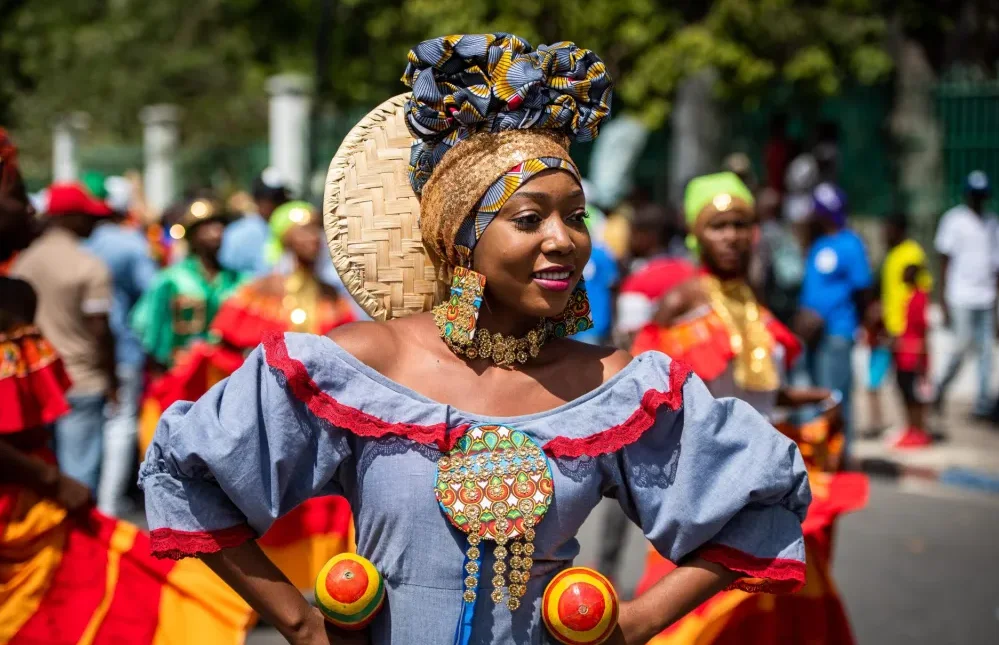
Haiti, the pearl of the Antilles, is a country rich in history and traditions. Its vibrant and diverse culture is reflected through its national holidays, cultural festivities, traditional foods, religious beliefs, folk tales, and traditional games. Let’s immerse ourselves in the social fabric of Haïti to discover the beauty of its traditions. b~National Holidays:~b National holidays in Haïti are moments of pride and national unity as January 1, Independence Day, commemorates the victory of Haitian slaves over French colonial forces in 1804, making Haïti the first independent country in Haiti. Latin America and the Caribbean or the commemoration of the Battle of Vertières on November 18. The Battle of Vertières was one of the last great battles of the revolution. It took place in Vertières, near the town of Cap-Haitien. b~Cultural Festivities:~b Haïti is also famous for its cultural festivities, particularly Carnival, which is an explosion of color, dance, and music. Artistic and craft events, such as the Rara festival, are an opportunity for artists to showcase their talent. The Rara, a musical parade, combines folklore and spirituality, creating a unique experience. b~Traditional Foods:~b Haitian cuisine is a delight for the taste buds. Dishes like griot (fried pork), diri djon djon (rice with black mushrooms), and the legendary joumou (joumou soup) are an integral part of Haitian culinary tradition. Bold flavors, spices and cooking methods inherited from African and French tradition make Haitian cuisine unforgettable. b~Vodou:~b Vodou, often misunderstood, is a synchretic religion that incorporates elements of Catholicism, African animism, and indigenous beliefs. It plays a significant role in the daily lives of Haitians, influencing music, dance, and religious rites. Vodou is a profound expression of Haitian spirituality. The Tales (Krik Krak, Tim Tim, Bwa Sèch): Haitian folk tales, passed down from generation to generation, are rich in morality and wisdom. b~Konbit :~b The concept of Konbit represents community solidarity. Haitians come together to perform community tasks, whether in agricultural fields or for construction projects. It is a living example of the collective spirit that permeates Haitian society. The most recent major project to date concerns the construction of the canal from the Massacre River to Ouanaminthe, which took place between September and December 2023. Thousands of inhabitants of the north of the country mobilized all their forces to erect a canal allowing to collect water intended for irrigation of their plantations, with the aim of obtaining better harvests. Despite their modest means, they were motivated by the slogan "KPK" (Kanal la pap kanpe), a direct response to Dominican President Luis Abinader who warned them and did everything in his power to stop the construction of the canal. This channel represents the deep solidarity of Haitians and reaffirms national pride. Despite economic challenges, the people of northern Haïti have demonstrated exceptional determination to work together for a common goal. The slogan “Kanal la pap kanpe” embodies their resilience in the face of external pressures and demonstrates their unwavering will to continue the construction of the canal. b~Traditional Games:~b Traditional games are an essential part of daily life in Haiti. Games like lido, sote kòd, Yoyo, Ralba, Marèl, TiTaTo, Kay, lago kache, Monte kap, teke mab, woule sèk, twa fwa se manbo, and domino bring people together, promoting camaraderie and fun. Haitian traditions are a harmonious blend of spirituality, community, and cultural diversity. Every aspect, from national holidays to traditional games, helps weave the rich cultural tapestry that makes Haïti proud. These traditions are the beating heart of the nation, a precious heritage that continues to be passed down from generation to generation.


Recently Posted

History

History

First black nation to free itself from slavery and gain independence from France in 1804 and influenced other liberation movements around the world, inspiring struggles for freedom and equality.

Natural beauty

Natural beauty

Haïti is blessed with spectacular natural landscapes, including white sand beaches, mountains and rich biodiversity.

Heritage

Heritage

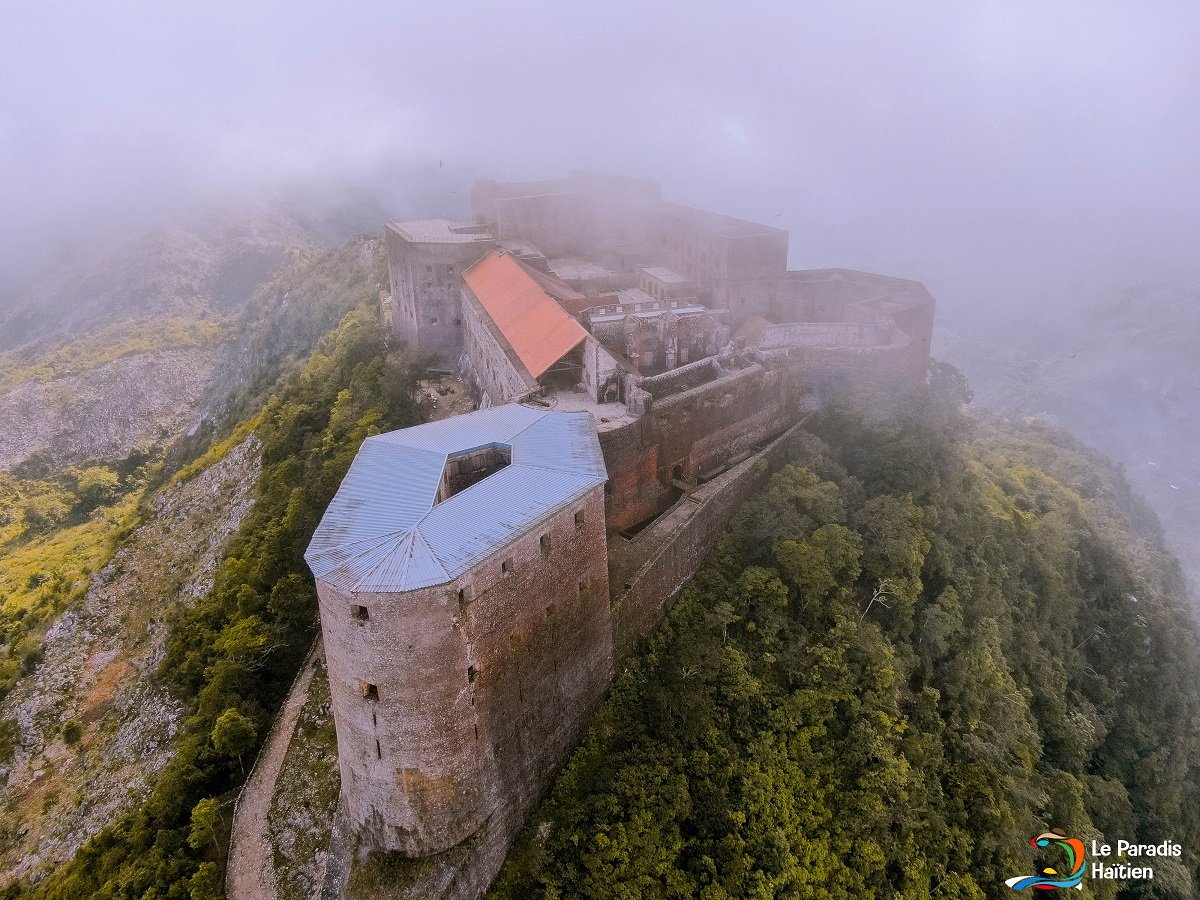
Haïti has a rich historical heritage, including sites like the Citadelle Laferrière and the Sans-Souci Palace, listed as UNESCO World Heritage Sites.

Culture

Culture

Haïti has a rich and diverse culture, influenced by African, European and indigenous elements. Haitian music, dance, art and cuisine are celebrated around the world.

  • +
    • Post