contact@haitiwonderland.com+509 36184317

Discover

Shopping Cart

KSPGKS: An Innovative Campaign to Raise Awareness Among Young People Against HIV/AIDS
  • News
  • December 21, 2024

KSPGKS: An Innovative Campaign to Raise Awareness Among Young People Against HIV/AIDS

HIV/AIDS remains a major threat to public health, especially among young people in Haiti. Faced with this reality, LEAD-ACADEMY, an organization founded in December 2020 by Dwinny Belval, has committed itself through the project “KANPAY SANSIBILIZASYON POU GOUMEN KONT VIH/SIDA” (“Awareness Campaign to Combat HIV/AIDS”). This initiative, launched as part of World HIV/AIDS Day, aims to mobilize Carrefour schoolchildren and promote responsible behavior in the face of this epidemic.

LEAD-ACADEMY: A Mission Dedicated to Leadership and Good Governance

LEAD-ACADEMY is dedicated to the training and intellectual awakening of young Haitians, guiding them towards holistic development to transform them into responsible leaders. With a vision of sustainable development, this organization focuses on awareness and action to address major issues, such as the fight against HIV/AIDS.

See as well

De gauche a droite - Dr Chery et Dr Bernadin

The KSPGKS Project: Objectives and Structure

The KSPGKS initiative was marked by two major activities: a launch conference and an awareness campaign in secondary schools in Carrefour.

A. Launch Conference (December 1, 2024)
The conference was held at the Emmanuel Charlemagne Municipal Cultural Center and brought together nearly 100 participants from various backgrounds. Two speakers, Dr. Schaïdhen Chery and Dr. Frantz Bernadin, respectively discussed medical advances and the role of communities in combating stigma. Guests included representatives from the Carrefour City Hall and local figures, accompanied by a musical performance by the artist Loupens Privert.

B. School Awareness Campaign (December 2-6, 2024)
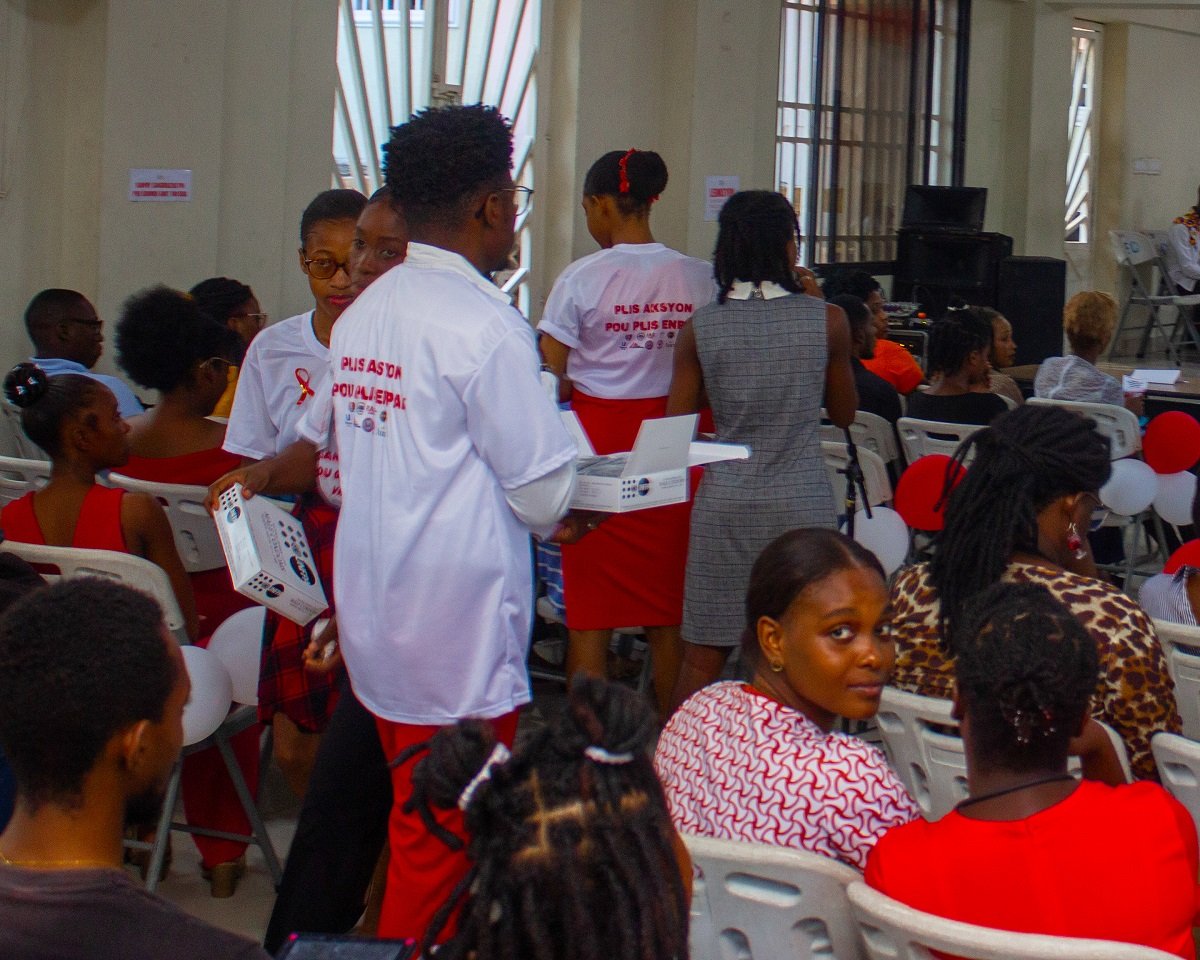
Interactive sessions were organized for secondary school students. Led by health personnel and experts, these activities included discussions on prevention, demonstrations on the use of condoms and lubricants, and the distribution of educational brochures. In total, more than 300 young people were reached.

Background and Importance of the Campaign

According to Christian Mouala, Director of UNAIDS, HIV/AIDS infections are experiencing a worrying increase among young Haitians aged 15 to 24. This increase is exacerbated by the intensification of gang activities and a lack of accurate information. Persistent stigma and misinformation are major obstacles to prevention and care.

Faced with these challenges, KSPGKS was designed to:
- Break the taboos surrounding HIV/AIDS.
- Promote responsible behavior.
- Educate young people on means of prevention and access to care.

Beven brings Haïti among the elite of world slam

Beven brings Haïti among the elite of world slam

This Thursday, November 14, 2024, the young slam artist Youven Beaubrun, Beven by his stage name, qualified Haiti, for the very first time in its history, for the final of the Slam World Cup. This competition, which brings together the best slam artists on the planet, took place on African soil, more precisely in Togo. In a country held by the throat, a country that is dying from start to finish, under the dangerous feat of a certain armed part of its youth, Beven’s extraordinary performance in this competition resonates with the echo of a whole piece of the country, in the thirst for beauty. Beven is the symbol of a youth that refuses to give in to the chaos that surrounds the face of its motherland. Art, slam being his field of specialization, is used in the best possible way to make hope resonate. And to continue to believe that a country that made 1804 cannot afford the luxury of sinking so hard in the face of human history. "It is with pride that I advanced in this competition. Especially with the crisis that is going through the country at the moment. My qualification for the final is an eternal sign of hope, which confirms the fact that not everything in this country will end in death," the young slammer told us before going to compete in the final. The final took place on Saturday, November 16, 2024, where Beven had his chance to represent his wounded land well on the doorstep of a world victory, a victory that if it had taken place, would have been initialed in the name of an entire people, in the absolute race against a great chaos that dreams only of suffocating it. Although he failed to win this cup (finishing in sixth place overall), the Haitian slam champion had time to inspire an entire country during his great journey in this competition. This is only a postponement, next time victory will be achieved for sure.

Key Results and Impact

- Direct impact: More than 300 young schoolchildren made aware in five days.
- Change in posture: A better understanding of the issues related to HIV/AIDS and an increased interest in screening.
- Strengthening collaborations: Partnerships established with schools and local/international organizations.

Directeur General de la Mairie de Carrefour (M. Zavier Junior Degand)

Partners and Supporters

This project was made possible thanks to the support of several institutions and individuals, including:
- Emmanuel Charlemagne Municipal Cultural Center
- Carrefour City Hall
- FOSREF
- U-report by UNICEF
- Various schools
- Project ambassadors
- Various health professionals and local organizations.

Perspectives

KSPGKS is a powerful example of how community initiatives can transform mindsets and encourage responsible behavior. By mobilizing young people and establishing strategic partnerships, LEAD-ACADEMY demonstrates that the fight against HIV/AIDS is a key priority for Haiti’s future.

To learn more or collaborate with LEAD-ACADEMY, contact:
Dwinny Belval (Chief Executive Officer)
Email: dwinnyobelval@gmail.com
Phone: +509 4749-5132
Website: https://leadacademyul.com

Share
About the Author
Appolon Guy Alain
Appolon Guy Alain
Appolon Guy Alain

Full Stack Developer, Créatif, expérimenté, passionné des nouvelles technologies et de l’art.

See other articles from Appolon Guy Alain
Leave a comment

Recently Posted

Haïti / Fort Picolet: Historical Guardian of Liberty

Cap-Haïtien, Haiti’s historic jewel, is home to a fascinating architectural relic: Fort Picolet. Built at the end of the 18th century by the French, this imposing bastion majestically dominates the bay of Cap-Haïtien, bearing witness to the tumults of Haitian history and the fierce struggle for independence. The history of Fort Picolet is closely linked to that of Haiti, particularly at the time of the Haitian Revolution. During this tumultuous period, when slaves and freedmen rose up against colonial oppression, the fort was the scene of epic battles and fierce sieges. Sometimes used by French forces, sometimes by Haitian revolutionaries, Fort Picolet was a silent witness to the events that shaped the destiny of the nation. Designed with a strategic vision, the fort embodies the military architecture of its era. Its thick stone walls, strategically positioned cannons and viewpoints overlooking the bay make it an impregnable bastion. Its name, Fort Picolet, pays homage to General Louis Marie, Marquis de Picolet, French governor of Cap-Français at the end of the 18th century. Today, Fort Picolet remains much more than a simple historical monument. It is a living symbol of the resilience and determination of the Haitian people. Visitors who wander through its ruins can feel the imprint of history and contemplate the remains of a tumultuous past. From up there, a panoramic view of the bay of Cap-Haitien is available to them, offering a unique perspective on the strategic importance of this place in the maritime history of Haiti. As a pillar of Haitian tourism, Fort Picolet attracts visitors from around the world. Its historical aura, combined with the natural beauty of its environment, makes it a must-see destination for history and culture lovers. More than just a tourist attraction, Fort Picolet is a poignant testimony to the endless struggle for freedom and the cultural richness of Haiti. Throughout the centuries, Fort Picolet has survived the test of time, reminding everyone that freedom is an inalienable right, hard won and carefully preserved. By exploring its ramparts, contemplating its silent cannons, visitors find themselves immersed in the tormented history of Haiti, a story of courage, resistance and hope. Live an extraordinary experience by virtually visiting the ruins of Fort Picolet: https://haitiwonderland.com/haiti-virtual-reality-ht/monuments-histoire/haiti--fort-picolet--visite-virtuelle/14

Newsletter

Subscribe to our newsletter to stay informed of all our activities and news on Haiti.

Haiti: Flora and Fauna

Haiti, located on the western part of the Caribbean island of Hispaniola, is often associated with its rich and complex history. However, beyond its cultural and historical aspects, Haïti is home to a remarkable diversity of fauna and flora that deserves to be explored and preserved. This article highlights the ecological wealth of Haiti, emphasizing its unique flora and fauna. Fauna: Haïti is home to a variety of animal species, some of which are endemic to the island. The country’s tropical rainforests are home to a great diversity of birds. The rugged mountains provide suitable habitat for rare species. The waters surrounding Haïti are also rich in biodiversity. Colorful corals, tropical fish and sea turtles find refuge in the coral reefs along the coast. Conservation efforts are crucial to protect these fragile marine ecosystems and preserve marine life. Flora: Haiti’s landscapes are adorned with a wide variety of plants and flowers. The tropical rainforests are home to majestic trees, the Hispaniola pine and the gum tree. These forests play an essential role in climate regulation and the preservation of biodiversity. The coastal plains are dotted with palm trees, including Haiti’s iconic royal palm. Botanical gardens, such as the Jardin Botanique des Cayes, are havens of greenery where you can admire a wide variety of tropical plants, some of which are endemic to the region. Haiti, with its unique flora and fauna, is an ecological gem that deserves to be preserved for future generations. Awareness, conservation and sustainable development are key elements to ensure the survival of this natural wealth. By investing in the protection of its environment, Haïti can not only preserve its ecological heritage, but also promote sustainable tourism and strengthen the resilience of its ecosystems in the face of current global challenges.

Discover the Hidden Gem of Caracol: A Peaceful Haven in Haiti

Nestled in the enchanting embrace of Haiti’s North East department lies a true marvel – Caracol. This picturesque area is more than just a destination; it’s a sanctuary where tranquility dances in harmony with the gentle whispers of nature. From the chirping of content birds to the warm smiles of its inhabitants, Caracol is a true wonderland waiting to be explored. One of the most captivating aspects of Caracol is its serene ambiance. Here, peace isn’t just a concept; it’s a way of life. Even the birds seem to sing with an extra ounce of joy, as if they’ve found their own slice of paradise amidst the lush greenery. Stepping into Caracol feels like entering a world where time slows down, allowing you to embrace the simple pleasures of life. But what truly sets Caracol apart is its people – kind-hearted souls who find solace in the simplicity of their daily lives. Engaged in activities like fishing and gardening, they embody a deep connection to the land that sustains them. And amidst it all, the industrious spirit of Caracol shines through, with the industrial parc serving as a beacon of progress and opportunity for the community. Yet, amidst the tranquil rhythm of everyday life, Caracol pulsates with the vibrant energy of Haitian culture. Voodoo, an integral part of local life, weaves its mystical threads into the fabric of daily rituals and traditions. And come July, the entire community comes alive with patronal celebrations that draw Haitian diaspora from every corner of the globe. It’s a time of joyous reunions, where cultural immersion meets spirited competitions, from exhilarating running races to thrilling boat races on the sparkling waters. As the sun sets on another day in Caracol, the excitement doesn’t end – it transforms. Carnival season, known as "mardi gras," casts its spell over the land, igniting the imaginations of children who eagerly don disguises and wield whips to make merry mischief. Laughter fills the air as they chase each other, their gleeful shrieks echoing through the streets, creating memories that will last a lifetime. In Caracol, every moment is a celebration, every day a testament to the resilience and warmth of its people. So, whether you’re seeking a tranquil retreat or a cultural adventure, Caracol invites you to discover its hidden wonders and experience the magic for yourself. After all, in this captivating corner of Haiti, every day is a journey into the heart of paradise.

Recently Posted

History

History

First black nation to free itself from slavery and gain independence from France in 1804 and influenced other liberation movements around the world, inspiring struggles for freedom and equality.

Natural beauty

Natural beauty

Haïti is blessed with spectacular natural landscapes, including white sand beaches, mountains and rich biodiversity.

Heritage

Heritage

Haïti has a rich historical heritage, including sites like the Citadelle Laferrière and the Sans-Souci Palace, listed as UNESCO World Heritage Sites.

Culture

Culture

Haïti has a rich and diverse culture, influenced by African, European and indigenous elements. Haitian music, dance, art and cuisine are celebrated around the world.

  • +
    • Post