contact@haitiwonderland.com+509 36184317

Discover

Shopping Cart

UNESCO, Haïti Jazz Foundation and MCC Unite for Kreyol Jazz

UNESCO, Haïti Jazz Foundation and MCC Unite for Kreyol Jazz

On Monday, April 28, 2025, UNESCO, represented by Mr. Éric Voli Bi, Director for Haiti, the Haïti Jazz Foundation, represented by Ms. Milena Sandler, Executive Director, and Mr. Joel Widmaier, Artistic Director of PAP Jazz, along with the Ministry of Culture and Communication, represented by Ms. Stéphanie Saint-Louis, Director of Cultural Affairs at the MCC, held a press conference at UNESCO’s office on Rue Geffrard in Pétion-Ville. During the event, they announced their alliance to promote Kreyol Jazz.

Summary

The press conference also marked the launch of a festival to be held from April 29 to May 3 in Pétion-Ville, Jacmel, and Cap-Haïtien. It will celebrate International Jazz Day on April 30 and will serve as a platform for major discussions on Kreyol Jazz. An international conference on April 29, themed "Kréyol Jazz: Multiple Identities, Market, a Musical Genre," will bring together experts, musicians, producers, researchers, broadcasters, and institutions from the Creole-speaking world to explore this unique genre that unites diverse styles (Vodou Jazz, Maloya Jazz, Biguine Jazz, Jazz Ka, Caribbean Jazz…) within the Francophone space.

Haïti
Haïti
Haïti

The goal is to enhance visibility, tap into its economic potential, and uncover new opportunities for Haïti and the wider Creole world. This festival will also echo the recent PAP Jazz Festival, reaffirming Haiti’s musical vibrancy despite ongoing political and security challenges.

According to the organizers, Kreyol Jazz reflects Haitian creativity and can enhance the country’s image. They used the global celebration of jazz to spark deep reflection on the benefits this genre could bring to Haiti.

Ms. Stéphanie, speaking on behalf of Minister Patrice Delatour, emphasized the Ministry’s strong support for this initiative, which not only promotes Haitian music but also the Creole language as a vital tool of national identity. She added that it could improve the livelihoods of many young Haitian musicians.


Haïti
Haïti
Haïti

Joel Widmaier, representing the Haïti Jazz Foundation, expressed honor in being part of the project and highlighted the foundation’s pivotal role in spreading this genre in Haiti.

UNESCO, leading the initiative, emphasized through its Haïti Director that this festival is part of the "State-Citizen" relationship project, carried out with UNDP and IOM, and funded by the Peacebuilding Fund. The project aims to promote Kreyol Jazz as a distinct and marketable genre, celebrating Creole traditions and fusion in a spirit of social cohesion, youth inclusion, and cultural and economic development.

Share
About the Author
Moise Francois
Moise Francois
Moise Francois

Journalist editor, poet and apprentice lawyer.

See other articles from Moise Francois
Leave a comment

Recently Posted

Newsletter

Subscribe to our newsletter to stay informed of all our activities and news on Haiti.

Haïti et son Rôle Pionnier dans l’Abolition de l’Esclavage Mondial

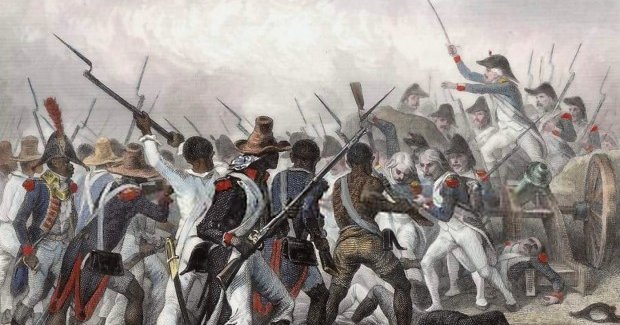
For centuries, the institution of slavery has darkened human history, leaving behind a legacy of pain, oppression and the struggle for freedom. However, in this dark tale, one nation stands out for its courage and determination to break the chains of oppression: Haiti. Located in the Caribbean, Haïti played a pioneering role in the abolition of slavery, laying the foundation for the fight for freedom and equality around the world. The history of slavery in Haïti dates back to the arrival of Europeans on the island, which was then called Santo Domingo, in the 15th century. French colonists quickly established an economy based on sugar and coffee production, cruelly exploiting millions of African slaves deported to work on plantations. However, this brutal system engendered fierce resistance from slaves, whose fight for freedom ultimately led to one of the most significant revolutions in history. In 1791, under the leadership of iconic figures such as Toussaint Louverture, Jean-Jacques Dessalines and Henri Christophe, Haitian slaves rose up against their oppressors in an unprecedented rebellion. This revolt resulted in a war of independence that lasted more than a decade, but ultimately resulted in the proclamation of Haiti’s independence in 1804, making that country the first post-colonial nation ruled by people from slavery. The impact of the Haitian Revolution on the abolition of slavery worldwide cannot be overstated. By breaking the chains of oppression and proclaiming their independence, Haitians have sent a powerful message to all oppressed peoples around the world: freedom is possible, and it is worth the struggle. The example of Haïti inspired other movements for the abolition of slavery in the Americas and beyond, thus helping to shake the very foundations of the institution of slavery. Haiti’s participation in the fight against slavery was not limited to its territory; it also extended to external actions where Haitian men were sent or actively participated in movements for the abolition of slavery in other regions of the world. For example, Haitian President Alexandre Pétion supported Simón Bolívar, the leader of the South American revolution, by providing him with weapons, money and even men, which contributed to the liberation of several countries in America Latin of colonial domination. Haïti also provided support for independence movements in Central America. Haitian fighters, led by General Jean-Pierre Boyer, helped Venezuelan patriots fight against Spanish rule, contributing to the liberation of that region. The Haitian government financially and diplomatically supported movements for the abolition of slavery in countries such as Venezuela, Colombia and Mexico, contributing to the gradual eradication of this institution throughout the region. Although Haïti did not directly participate in the American Civil War, many Haitians and descendants of Haitians played crucial roles in the abolitionist movement in the United States. Figures who were of Haitian origin or of Haitian ancestry, were important voices in the fight against slavery and for equal rights in the United States. The legacy of the Haitian Revolution remains a symbol of resistance and courage for future generations. Today, as the world continues to struggle against injustice and oppression in various forms, Haiti’s history reminds us that the fight for freedom is a universal fight, one that transcends borders and times. Haiti’s participation in the abolition of slavery throughout the world remains a crucial chapter in the history of humanity. Through their courage and determination, Haitians have paved the way for a future where freedom and equality are inalienable rights for all.

Recently Posted

History

History

First black nation to free itself from slavery and gain independence from France in 1804 and influenced other liberation movements around the world, inspiring struggles for freedom and equality.

Natural beauty

Natural beauty

Haïti is blessed with spectacular natural landscapes, including white sand beaches, mountains and rich biodiversity.

Heritage

Heritage

Haïti has a rich historical heritage, including sites like the Citadelle Laferrière and the Sans-Souci Palace, listed as UNESCO World Heritage Sites.

Culture

Culture

Haïti has a rich and diverse culture, influenced by African, European and indigenous elements. Haitian music, dance, art and cuisine are celebrated around the world.

  • +
    • Post