contact@haitiwonderland.com+509 36184317

Discover

Shopping Cart

The compas direct: an important part of Haitian identity
  • Music
  • July 03, 2024
  •     1

The compas direct: an important part of Haitian identity

La musique joue un rôle crucial dans la formation de l’identité d’une nation, en haïti, elle occupe une place centrale dans la vie de presque tous les haïtiens. Elle est utilisée comme étant l’un des moyens les plus fiables dont se sert le peuple haïtien pour s’évader face aux nombreux événements qui constituent l’essentiel de son quotidien. Le genre musical qui prédomine en haïti est le compas direct. Créer par l’esprit créatif haïtien, le compas à évoluer au fil des années pour aboutir jusqu’à sa position actuelle.

Music plays a crucial role in shaping the identity of a nation; in Haiti, it occupies a central place in the lives of almost all Haitians. It is used as one of the most reliable means used by the Haitian people to escape from the many events that constitute the majority of their daily lives.

The musical genre that predominates in Haïti is direct compass. Created by the Haitian creative spirit, the compass evolved over the years to reach its current position. Today we can say with certainty that it is a musical genre that transcends generations and borders, becoming a symbol of pride and an inspiring sign for Haitians around the world.

Compas
Compas
Compas

The compass a real instrument of social cohesion

The privileged place occupied by the compass allows it to be an omnipresent musical genre in Haitian society. It is found both in the most exclusive salons and in the neighborhoods most exposed to poverty. It manifests itself strongly in all religious cults (Protestants; Catholics; Vodouists); popular festivities, including political movements. It is also a means of celebration, protest, and above all, preservation of Haitian cultural identity in the face of the challenges of acculturation due to the strong exposure of young Haitians to dominant external cultures.

Compas
Compas
Compas

The origin of the direct compass.

The direct compass was born in the middle of the 20th century and then was popularized by Nemours Jean-Baptiste, a famous Haitian musician, internationally recognized and considered the father of the direct compass, it was he who launched the genre in 1955 with his orchestra musical.

Technically the compass is a mixture of Afro-Caribbean rhythms, meringue and African-American jazz influences, characterized by driving rhythms and bass lines. This fusion gave birth to a distinctive sound that quickly captured the hearts of Haitians and West Indians in general.

Compas
Compas
Compas

The influence of the compass in life in Haïti and within the Haitian diaspora.

The compass is not just a musical genre; it is a way of life for many Haitians. For the Haitian diaspora, the compass is a means of attachment to the country. It is an effective tool for combating exile and feeling in the middle of your culture just by listening to a piece of music.

The lyrics of compas songs most often reflect the social and political realities of the country and those of Haitians in the diaspora. We can cite as examples the works of ti manno, with his group dipi-exprès those of skacha #1, a group of internationally recognized compass, whose sounds recount the daily adventures of Haitians, the beauty of Haitian women and the joys of Haitians despite their difficulties. We can take "koupé klouré" as an example to conclude, Gesner Henry, his real name, is the greatest phenomenon of the compass. Listening to him we feel very clearly the intimacy of Haitians which is revealed in broad daylight, thus becoming a mirror of Haitian society. Generally speaking, compass artists are emblematic figures who inspire and mobilize in society. Their voice matters a lot.

Compas
Compas
Compas

The evolution of the compass.

Since its creation, the compass has undergone numerous developments. In the 1970s and 1980s it went international with bands like Tabou Combo and Magnum Band who brought the genre to the world stage. In the 1990s and 2000s, Compass incorporated elements of electronic music, rap and reggae, while still retaining its roots. Today, the compass continues to reinvent itself, influencing and being influenced by other musical genres, while remaining true to its essence.
At first glance, the nemours compass is not that of zenglen, djakout, or even zafèm to cite the current group of superstars of the direct compass at the moment. It is a music reworked almost from top to bottom and whose most necessary tools and instruments have been reworked in order to be able to adapt to the demands of our time.

Compas
Compas
Compas

The compass at the origin of zouk

The impact of the direct compass on zouk and West Indian music in general is very considerable. And can only be measured on a multiple variation scale.
Departing from this significant impact, the Antilles remain favorable terrain for the development of the compass outside of Haiti. And it is practically from this influence that the greatest classics of West Indian music emerge.

In the 1980s, Guadeloupean and Martinican musicians, such as the founders of the group Kassav’, were inspired by the compass to create zouk. This new genre which had quickly gained popularity in the Caribbean, Africa and beyond, establishing a musical bridge between the West Indians and the rest of the world. Enriching the Caribbean musical heritage, by uniting all the West Indian peoples through a common musical history.
The compass can boast of being at the origin of West Indian zouk.

In other words, beyond the painful memories of slavery and the socio-economic challenges that characterize the West Indies, the direct compass from its great influence stands out as a unifying element which Haitians and West Indians use to create a common voice. It represents the resilience, creativity and joy of living of the Haitian people who refuse to stay on the ground.

In short, direct compass is much more than a musical genre; it is a reflection of the Haitian soul and a testimony to the cultural richness of the Antilles. It continues to evolve, and will continue to unite and inspire, affirming its central place in the identity of an entire region. And Haïti has the precious privilege of being at the origin of this highly impactful musical phenomenon. It is one of the elements which confirms the great cultural wealth of this beautiful little Caribbean country.

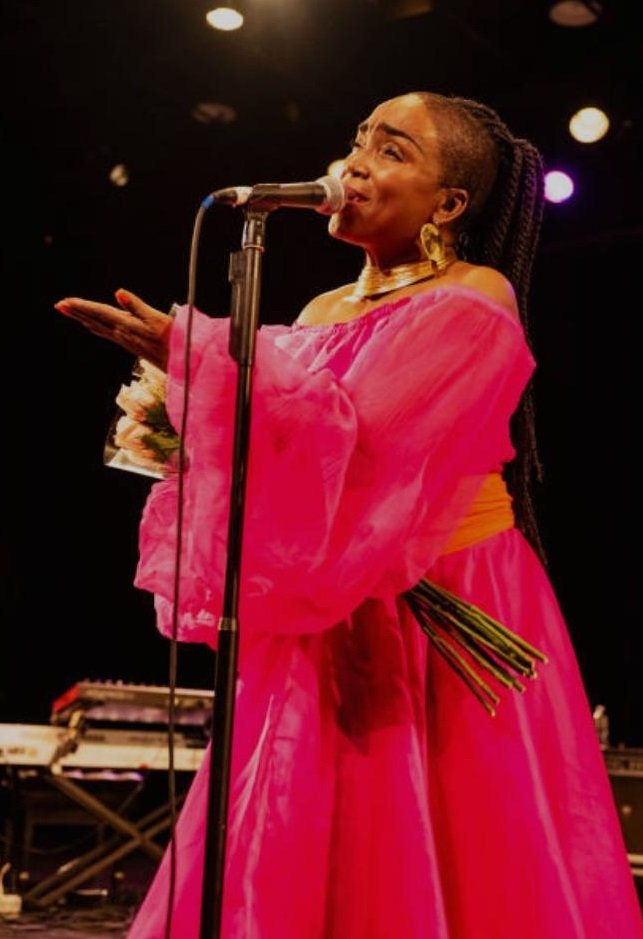
Emeline Michel, in exceptional concert in Miami

Emeline Michel, in exceptional concert in Miami

St. Clement Parish celebrates its seventy years of service to God and the Haitian community, this November 23, 2024, at 2975 N. Andrews Ave., Wilton Manors, FL. On the occasion of this celebration, Emeline Michel will be in exceptional concert to mark this cultural event. On the menu of this program, the committee plans to organize evangelization sessions, continuing education, fields of ethics, morality and spirituality. This event will also emphasize faith, reason and culture to rebuild in unity the kingdom of God here below where "Charity unites us to God". With the aim of raising culture to its peak, the Archbishop of Miami is pleased to join us for a great Eucharistic celebration on Saturday, November 23, 2024, starting at 10 a.m. Together, they will mark this mythical date engraved in the memory of his faithful and friends. This evening will be hosted by the icon of Haitian music, Emeline Michel, who has made a name for herself in the Haitian cultural landscape: "We welcome the famous singer Emeline Michel. She will do us the honor of reliving important and unforgettable moments of our charming land of Haiti. With her melodious, very captivating voice and her poetic songs, all the beautiful memories will be there, like our beaches, the light breeze of our mornings and the flight of capricious birds," wrote the press release. The 58-year-old diva continues to establish herself as one of the unique, contagious voices of Haitian music. While remaining in her style, she has been able to create her musical universe during her career, which has allowed her to be honored in the community by her fans. Emeline Michel, with her sincere lyrics and unique style, has managed to reach a wide audience without giving up her authenticity. With her songs and her melodious voice, she has rocked several generations. Throughout her musical career, she has an enriching repertoire, about thirteen albums to her credit, we can cite a few: Douvanjou ka leve (1987); Flanm (1989); Pa gen manti nan sa (1990); Rhum et Flamme (1993); Tout mon temps (1991); Emeline Michel, the very best (1994); Ban m pase (1996); Coedes and Soul (2001); Rasin Kreyòl (2004); Queen of Hearts (2007); Quintessence and lastly Gratitude (2015). She also has many collaborations with other artists. Chanjman and Jan mwen (2020, and 2021) Emeline Michel, 40 years of experience on stage, she carries all Haïti in her voice, her soul and her body. During her flourishing years of success, she has marked several continents where she has already performed (Antilles, America, Europe, Asia). This allowed her to discover several places, such as: Carnegie Hall, at the United Nations; the Teatro Manzoni in Milan; the Kravis Center in Florida; the International Jazz Festival (Haiti). Then, the Luminato Festival in Ontario; the International Jazz of Montreal; the New Orleans Jazz Fest; the Ten Days On The Island. The priest of the parish of St. Clement, Rev. Patrick Charles, took the opportunity to extend a warm invitation to the community to come celebrate this great day marking its seventieth anniversary and to entertain in order to once again highlight Haitian culture.

Share
About the Author
Moise Francois
Moise Francois
Moise Francois

Journalist editor, poet and apprentice lawyer.

See other articles from Moise Francois
François Dordy

Mwen ta renmen aprann plis sou kilti m avèk Wonderland.
Mèsi anpil pou gwo travay sa a.
Kenbe djanm.

November 01, 2024 - 06:40:10 AM
Leave a comment

Recently Posted

Newsletter

Subscribe to our newsletter to stay informed of all our activities and news on Haiti.

Beven brings Haïti among the elite of world slam

This Thursday, November 14, 2024, the young slam artist Youven Beaubrun, Beven by his stage name, qualified Haiti, for the very first time in its history, for the final of the Slam World Cup. This competition, which brings together the best slam artists on the planet, took place on African soil, more precisely in Togo. In a country held by the throat, a country that is dying from start to finish, under the dangerous feat of a certain armed part of its youth, Beven’s extraordinary performance in this competition resonates with the echo of a whole piece of the country, in the thirst for beauty. Beven is the symbol of a youth that refuses to give in to the chaos that surrounds the face of its motherland. Art, slam being his field of specialization, is used in the best possible way to make hope resonate. And to continue to believe that a country that made 1804 cannot afford the luxury of sinking so hard in the face of human history. "It is with pride that I advanced in this competition. Especially with the crisis that is going through the country at the moment. My qualification for the final is an eternal sign of hope, which confirms the fact that not everything in this country will end in death," the young slammer told us before going to compete in the final. The final took place on Saturday, November 16, 2024, where Beven had his chance to represent his wounded land well on the doorstep of a world victory, a victory that if it had taken place, would have been initialed in the name of an entire people, in the absolute race against a great chaos that dreams only of suffocating it. Although he failed to win this cup (finishing in sixth place overall), the Haitian slam champion had time to inspire an entire country during his great journey in this competition. This is only a postponement, next time victory will be achieved for sure.

Haiti: Is buying votes to be elected a form of corruption or political strategy?

The democratic political system requires the active participation of citizens in the management of the city. Everyone freely expresses their opinion for harmonious management of society. Generally the choices are made from the organization of free and honest elections. However, sometimes candidates use diverted means to achieve their ends. Can we consider this act as a form of corruption or a political strategy? In a democratic society, the organization of elections at regular intervals is an imperative. Managers are generally elected by the majority of voters, which ensures them a certain legitimacy within the framework of government management. Today, more and more, around the world, the elections are controlled by economic power. This sector gives a lot of silver to candidates who often buy the media services in order to have certain visibility through mass communication means (radio, VAT, Internet, etc.) and do without constraints Many very expensive trips, which require enormous capital. By the way, the possibility that a candidate with low financial means of being elected is increasingly reduced in Western societies. Despite everything, it is illegal to buy the votes of the voters. It is an act of corruption that should lead to criminal sanctions. No society can tolerate this practice which could hamper the degeneration of the democratic system and, consequently, of the electorate system. Civil society and human rights organizations must be vigilant in order to avoid these harmful drifts in the democratic system. In fact, the temptation to bribe the voters in order to access elective positions must be denounced as an act of corruption. In doing so, will lead to political dissenting between duty, and law, because citizens are called upon to freely choose the leaders of the city. Ultimately, the organization of the elections must be the fruit of consensus between the various groups of the social system. Managers must be chosen according to their ability to provide adequate answers to the problems of the company. They can still benefit from powerful financial means from other partners. But, giving voters directly money is a condemnable detective act which reduces the autonomy of action and thinking of voters. In this sense, the latter’s vote must reflect the desire to choose or build a fair, fair and favorable company.

Recently Posted

History

History

First black nation to free itself from slavery and gain independence from France in 1804 and influenced other liberation movements around the world, inspiring struggles for freedom and equality.

Natural beauty

Natural beauty

Haïti is blessed with spectacular natural landscapes, including white sand beaches, mountains and rich biodiversity.

Heritage

Heritage

Haïti has a rich historical heritage, including sites like the Citadelle Laferrière and the Sans-Souci Palace, listed as UNESCO World Heritage Sites.

Culture

Culture

Haïti has a rich and diverse culture, influenced by African, European and indigenous elements. Haitian music, dance, art and cuisine are celebrated around the world.

  • +
    • Post