contact@haitiwonderland.com+509 36184317

Discover

Shopping Cart

Haiti: Why do people confuse "Unity is Strength" and "Liberty - Equality - Fraternity"?
Haiti: Why do people confuse  Unity is Strength  and  Liberty - Equality - Fraternity ?
Haiti: Why do people confuse Unity is Strength and Liberty - Equality - Fraternity ?

Haiti: Why do people confuse "Unity is Strength" and "Liberty - Equality - Fraternity"?

What is Haiti's real motto? Understanding the confusion between "Unity is Strength" and "Liberty-Equality-Fraternity."

If you’ve ever debated Haiti’s motto with friends or family, you’re not alone. This confusion between "Unity is Strength" and "Liberty - Equality - Fraternity" is more common than you might think, and it hides a fascinating story worth telling.

Two phrases, two distinct functions

The official answer is clear, according to the 1987 Constitution: Haiti’s national motto is "Liberty - Equality - Fraternity." Yet, "Unity is Strength" holds an equally important place in the hearts of Haitians. Why this ambiguity?

"Unity is Strength": The Legend of the Arms of the Republic

This powerful phrase is not the national motto, but rather the legend inscribed on the Arms of the Republic, which appears at the center of the Haitian flag. It accompanies the palm tree topped with the cap of liberty and the trophy of arms, symbols of the struggle for independence.

This legend resonates deeply in the Haitian soul because it evokes:

- The unity necessary to overcome slavery and colonialism
- The solidarity that enabled the victory of 1804
- A practical and mobilizing message for the nation

"Liberty - Equality - Fraternity": The Constitutional Motto

Enshrined in Article 4 of the 1987 Constitution, this motto places Haïti in the lineage of great democratic revolutions. It reflects:

- The legacy of the Enlightenment and the French Revolution
- The universal values ​​that inspired the Haitian Revolution
- Haiti’s aspiration to embody these principles for the Black world

The roots of a legitimate confusion

1. An overwhelming visual presence

"Unity is Strength" appears on the national flag, an official document ubiquitous in daily life. Every Haitian sees this phrase far more often than the constitutional motto, which is rarely highlighted.

2. A message more rooted in national history

This legend directly recalls the ancestors’ struggle for independence. It speaks to a specifically Haitian collective experience, while "Liberty - Equality - Fraternity" is a universal motto shared with other nations.

3. Variable civic education

Not all Haitians receive the same level of civic education. The subtle distinction between "national motto" and "arms legend" is not always clearly taught in schools.

4. A Dual National Identity

This confusion perhaps reveals a deeper reality: Haïti possesses two complementary souls. One, oriented toward the universal with "Liberty - Equality - Fraternity," the other, rooted in its unique history with "Unity is Strength."

What the law says: a necessary clarification

The 1987 Constitution is clear:

- Article 3: Describes the flag with its two horizontal bands (blue at the top, red at the bottom) and the Arms of the Republic in the center.
- Article 4: Unequivocally establishes that "The national motto is: Liberty - Equality - Fraternity."

The Arms of the Republic, for their part, feature "the Palm Kernel topped with the Cap of Liberty" shading "a Trophy of Arms with the Legend: Unity is Strength."

A Wealth Rather Than a Weakness

This confusion, far from being problematic, testifies to Haiti’s symbolic richness. The two phrases are not opposed; they complement each other:

"Liberty - Equality - Fraternity" expresses Haiti’s universal aspiration and its historical role as the first free Black republic.

"Unity is Strength" recalls the concrete method that made this freedom possible: the unity of the Haitian people in the face of oppression.

What’s the takeaway?

The next time you hear someone say that Haiti’s motto is "Unity is Strength," you can politely correct them while acknowledging the importance of this legend. Because, at heart, the two phrases tell the same story: that of a people who, through their unity and their thirst for freedom, changed the course of world history.

Knowing this distinction means better understanding the symbols that make Haïti a unique nation, proud of its past and looking to the future.

Share
About the Author
Appolon Guy Alain
Appolon Guy Alain
Appolon Guy Alain

Full Stack Developer, Créatif, expérimenté, passionné des nouvelles technologies et de l’art.

See other articles from Appolon Guy Alain
Leave a comment

Recently Posted

Newsletter

Subscribe to our newsletter to stay informed of all our activities and news on Haiti.

Haïti / Fort Saint-Joseph: Historical Vestige of the Resistance

Located in the Bay of Cap-Haitien, Fort Saint-Joseph stands like a silent guardian of Haiti’s tumultuous history. Built in two stages, in 1748 and 1774, this defensive work was once a crucial element of the city’s protection system against French colonial assaults. Alongside other forts such as Picolet and Magny, its mission was to control maritime passages and defend Haitian sovereignty. However, its history is not limited to its defensive function. In 1802, then under the control of General Henry Christophe, the fort became the scene of a heroic act of resistance. Faced with the French expeditionary army, Christophe ordered the destruction of the powder magazine and the entrance gate to the fort, thus rendering it temporarily unusable. This courageous gesture, although tactical, left indelible scars on the very structure of the fort, testifying to the fierce clashes between French colonial forces and Haitian resistance fighters. These historic marks, still visible today, offer a window into the country’s tumultuous past. They allow visitors and historians to interpret the fierce struggles that forged Haitian identity. Fort Saint-Joseph, as a witness to the resistance and the struggle for freedom, embodies the indomitable spirit of the Haitian people. Recognizing its historical significance, the Haitian government officially classified Fort Saint-Joseph as national heritage in 1995. This recognition paved the way for restoration efforts aimed at preserving this precious vestige of Haitian military heritage. Thanks to collaboration between the public sector and local private funding, the fort has recently been restored and enhanced. Thus, Fort Saint-Joseph remains much more than a simple stone structure. It is a living symbol of the resilience and determination of the Haitian people, reminding all visitors that Haiti’s history is deeply rooted in the struggle for freedom and human dignity. To virtually discover this jewel of Haitian history, you can visit the following link: https://haitiwonderland.com/haiti-virtual-reality-ht/monuments-histoire/haiti--fort-saint-joseph--visite- virtual/11


Recently Posted

History

History

First black nation to free itself from slavery and gain independence from France in 1804 and influenced other liberation movements around the world, inspiring struggles for freedom and equality.

Natural beauty

Natural beauty

Haïti is blessed with spectacular natural landscapes, including white sand beaches, mountains and rich biodiversity.

Heritage

Heritage

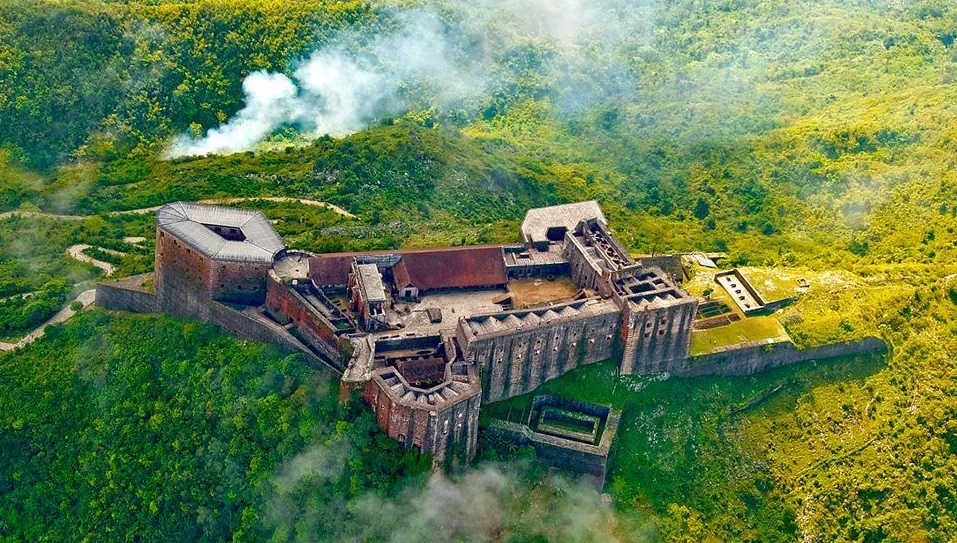
Haïti has a rich historical heritage, including sites like the Citadelle Laferrière and the Sans-Souci Palace, listed as UNESCO World Heritage Sites.

Culture

Culture

Haïti has a rich and diverse culture, influenced by African, European and indigenous elements. Haitian music, dance, art and cuisine are celebrated around the world.

  • +
    • Post