contact@haitiwonderland.com+509 36184317

Discover

Shopping Cart

Living the Spirit of Christmas in Haiti: A Unique Experience

Living the Spirit of Christmas in Haiti: A Unique Experience

Christmas in Haïti is a magical time where culture, traditions and spirituality blend to offer a unique experience. Much more than a simple celebration, it is a time of sharing, reflection and rejoicing that unites Haitians, whether at home or across the diaspora. This article invites you to discover how the spirit of Christmas is lived in Haiti, through its traditions, celebrations and warm atmosphere.

Haïti
Haïti
Haïti

A Magical Atmosphere: Decorations and Lights

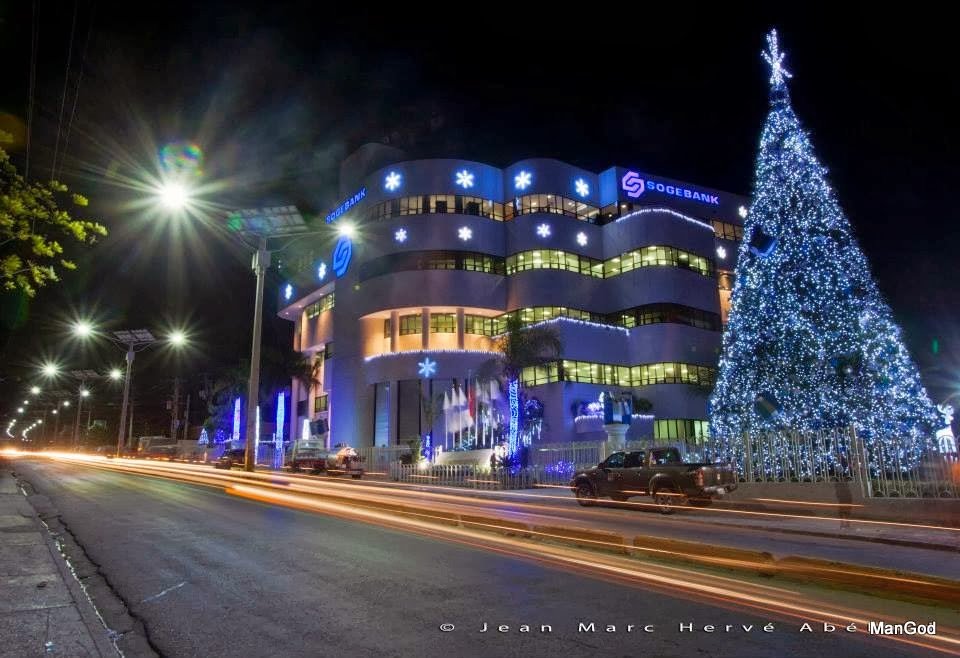
In December, Haitian streets are adorned with bright colors and sparkling lights. In cities like Port-au-Prince, Cap-Haïtien or Jacmel, markets are full of Christmas decorations, garlands and crafts. Families decorate their homes with Christmas trees, often made of local materials such as wood or branches, symbolizing both creativity and adaptation.

Nativity scenes, representing the birth of Jesus, also play an important role in the decoration. They are often carefully crafted and displayed in churches, homes, and even public spaces, recalling the spiritual nature of this period.

See as well

Religious Celebrations: A Spiritual Christmas

Spirituality is at the heart of Christmas celebrations in Haiti. Midnight mass, known as *"Christmas Mass"*, is a central event where families gather to pray, sing hymns, and celebrate the birth of Jesus Christ.

Christmas carols, such as *"Michaël O"*, *"Papa Nwel pote kado"*, or traditional religious hymns, resonate in churches and communities, bringing a touch of fervor and joy. This spiritual dimension reminds Haitians of the importance of love, peace and generosity at this time of year.

Haïti
Haïti
Haïti

Family Traditions Filled with Joy

Christmas in Haïti is above all a family celebration. Family members gather to spend time together, often around a large meal. Preparing the food is a moment of complicity where everyone plays a role, from children to grandparents.

Gifts, although often modest, are exchanged in a spirit of gratitude and love. This simple gesture demonstrates the importance of family ties and caring for others. In some homes, children eagerly await the arrival of "Papa Nwèl", the Haitian equivalent of Santa Claus, who symbolizes the magic of the holidays.

Haïti
Haïti
Haïti

An Unforgettable Feast: Flavors of Christmas

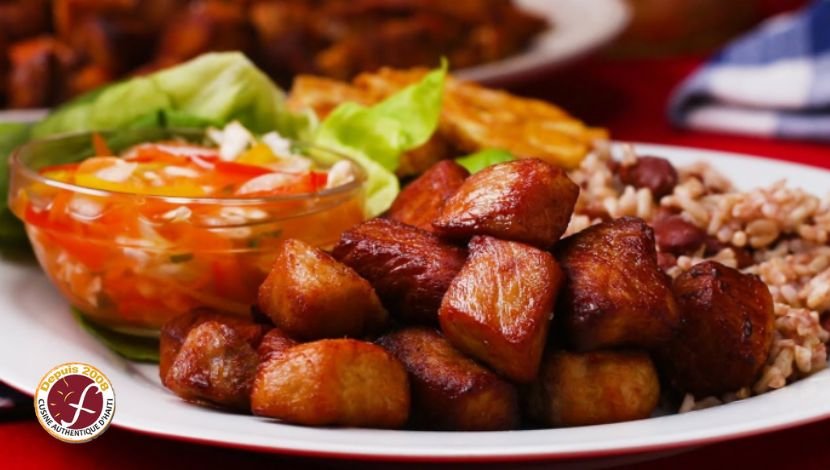
Christmas meals are one of the highlights of the celebrations. Tables are filled with traditional dishes that are the pride of Haitian gastronomy. Among the must-haves:
- Christmas ham: marinated and roasted, often served with spicy sauces.
- Djon djon rice: prepared with black mushrooms typical of Haitian cuisine.
- Griot: tasty bites of fried pork, accompanied by weighed bananas.
- Local sweets: such as pain patate or coconut candies, which bring a sweet touch to the meal.

All this is often accompanied by kremas, a sweet and creamy drink made with rum and coconut milk, which adds a festive touch to this special time.

Children at the Heart of the Holidays

Christmas in Haïti is a particularly joyful holiday for children. In addition to gifts, they participate in songs, dances and games organized in neighborhoods or schools. Families and communities do everything they can to ensure that children feel the magic of Christmas, even in modest conditions.

In churches and villages, plays or live scenes from the nativity scene are organized, allowing the youngest to immerse themselves in the Christmas story while having fun.

Haiti: A look back at the First Rara Weekend in Petit-Goave

Haiti: A look back at the First Rara Weekend in Petit-Goave

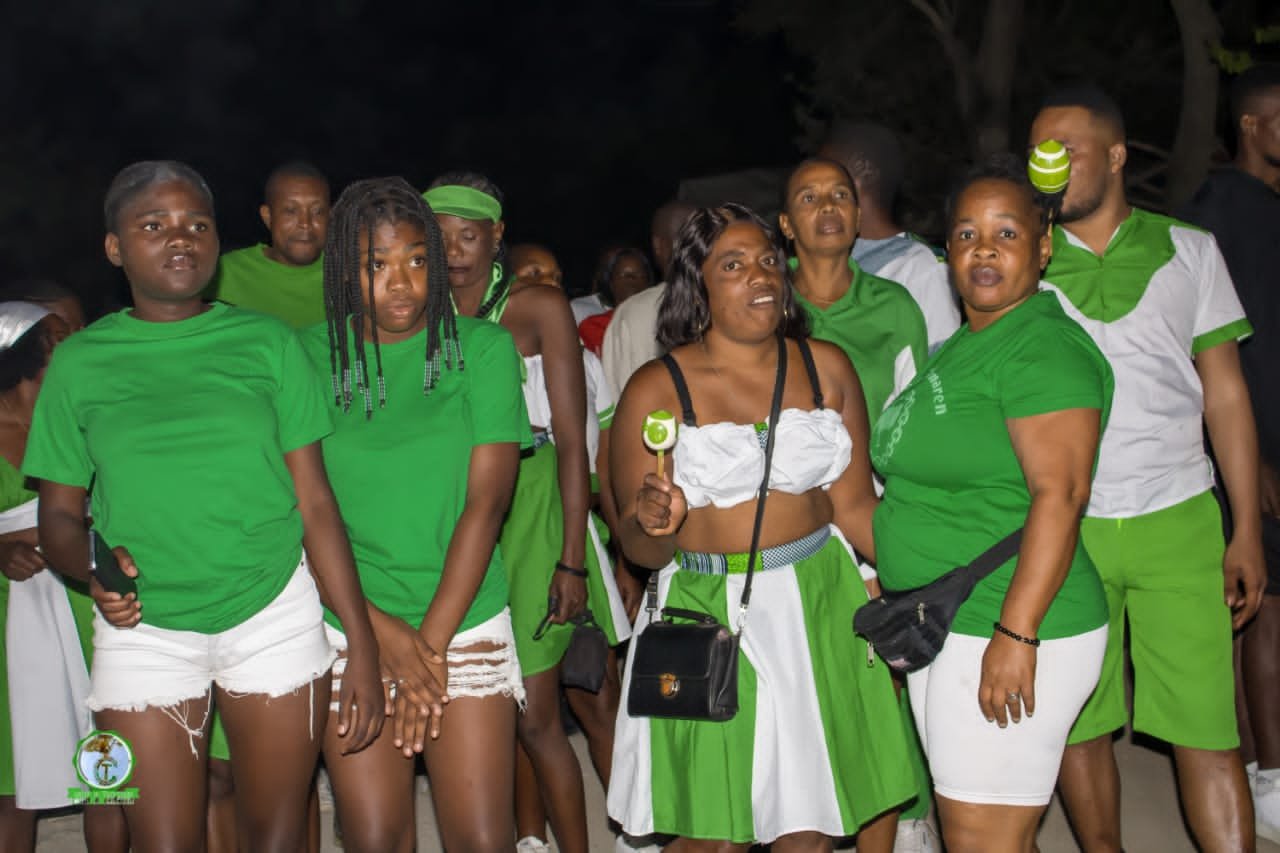
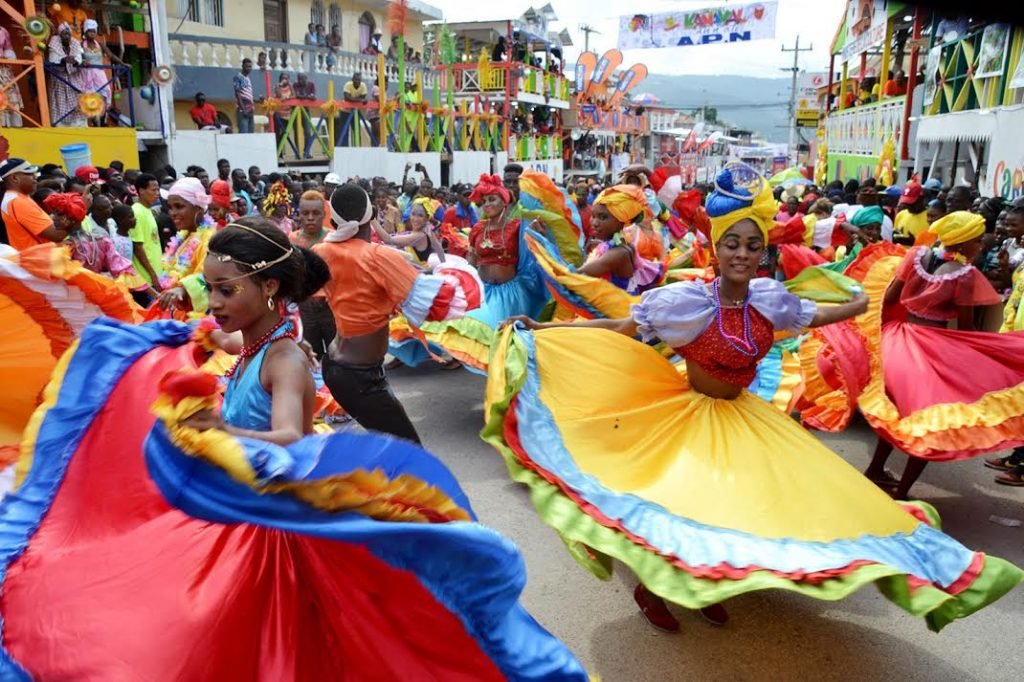
Haitian culture is a true treasure, woven from the creativity of its artists, its rich heritage and the diversity of its cultural expressions. Among these cultural gems, the rara stands as a true national emblem, uniting Haitians through its captivating rhythms and centuries-old traditions. During the first Rara weekend, this very essence of Haitian culture shone brightly, revealing palpable social cohesion. Despite the absence of law enforcement, tranquility reigned in Petit-Goâve, testifying to the ability of citizens to come together in peace and conviviality. However, media attention was mainly focused on the first plain, leaving a certain imbalance in the coverage of the festivities. Ratyèfè, three-time reigning champion, once again captivated minds with his talent and artistic mastery, offering an unparalleled spectacle. But his rival, Lambi gran dlo, was not to be outdone, displaying a determination to compete for first place. The event was also marked by unfortunate incidents, reminding us that despite the beauty of tradition, tensions can arise. Clashes between fans of different groups tarnished the festive atmosphere, highlighting the need for careful management of celebrations to avoid such excesses. At the heart of this musical competition, where each group aspires to recognition and victory, a complex picture of rivalries and alliances emerges. Chenn tamarin, although appearing asleep in the first moments, shows signs of waking up, ready to shake up the established order. On Sunday evening, Lambi gran dlo honored the memory of one of its loyal supporters, while Grap Kenèp was the scene of violence between fans, recalling the fragility of social cohesion when passion runs wild. In this whirlwind of emotion and competition, it is crucial to keep in mind that it is the journalist who must look to the events, and not the other way around. This is how we draw up the first ranking for this first weekend: 1. Ratyèfè 2. Lambi grand dlo 3. Chenn tamarind Beyond the results, it is the preservation of unity and mutual respect that must remain at the heart of these celebrations, making the rara not only a musical festival, but above all a symbol of the wealth and resilience of the people Haitian.

Haïti
Haïti
Haïti

The Spirit of Sharing and Solidarity

Beyond family celebrations, Christmas in Haïti is also a time of generosity. Haitians, even those who have little, willingly share what they have with their neighbors, friends and people in need. Communities organize collective meals, food or clothing distributions for those who need it most.

This spirit of solidarity is one of the distinctive marks of Christmas in Haiti, testifying to the human warmth and mutual aid that characterize the Haitian people.

Haïti
Haïti
Haïti

Experiencing the Spirit of Christmas in Haiti: A Unique Experience

Spending Christmas in Haïti means immersing yourself in a festive, spiritual and authentic atmosphere. It means discovering a unique blend of religious traditions, warm festivities and local gastronomy.

Whether you are Haitian or a visitor, celebrating Christmas in Haïti is an experience that will leave you with lasting memories, marked by the love, sharing and conviviality that reign during this very special period.

Share
About the Author
Appolon Guy Alain
Appolon Guy Alain
Appolon Guy Alain

Full Stack Developer, Créatif, expérimenté, passionné des nouvelles technologies et de l’art.

See other articles from Appolon Guy Alain
Leave a comment

Recently Posted

Newsletter

Subscribe to our newsletter to stay informed of all our activities and news on Haiti.

Haiti: The History of the World’s First Free Black Nation

Haiti, the pearl of the Antilles, is a Caribbean island with a rich and complex history. However, its special status as the world’s first free black nation gives it a unique place in the annals of history. This small island was the scene of an extraordinary revolution which resulted in independence, thus marking the beginning of a new era for the black community and the abolition of slavery. Let’s delve into the captivating story of the birth of the first black republic, Haiti. b~The colonial era and slavery~b Haiti’s history dates back to the arrival of Europeans in the 15th century, when Christopher Columbus discovered the island. European settlers, mainly Spanish and French, introduced slavery to exploit the island’s resources, including sugar, coffee and cotton. The indigenous Native American population was decimated, paving the way for the massive importation of African slaves. b~The Haitian Revolution~b On August 14, 1791, Haitian slaves rose up against their oppressors, sparking the Haitian Revolution. Under the leadership of iconic figures such as Toussaint Louverture, Jean-Jacques Dessalines and Henri Christophe, the insurgent slaves inflicted defeats on European armies, demonstrating fierce resistance and a desperate quest for freedom. b~The Declaration of Independence and the creation of the Republic of Haiti~b On January 1, 1804, Haïti proclaimed its independence, becoming the world’s first free black nation. This historic declaration symbolized the end of slavery and the triumph of the will of a people determined to live free. The Republic of Haïti was born in struggle and blood, asserting its autonomy in the face of the colonial powers. b~Post-independence challenges~b However, independence did not mean the end of challenges for Haiti. The country had to face external pressure, reparations imposed by France in exchange for recognition of its independence, as well as internal unrest. Despite these obstacles, Haïti strove to build a free and sovereign nation. The story of Haïti is that of a nation that overcame countless challenges to emerge as a pioneer of freedom for the black population. The Haitian Revolution remains a unique example of resistance, courage and determination, and Haïti continues to carry the torch of independence in the contemporary world. The legacy of this small Caribbean island still resonates today, reminding the world that freedom is a universal right that can be won even in the most difficult circumstances.

Recently Posted

History

History

First black nation to free itself from slavery and gain independence from France in 1804 and influenced other liberation movements around the world, inspiring struggles for freedom and equality.

Natural beauty

Natural beauty

Haïti is blessed with spectacular natural landscapes, including white sand beaches, mountains and rich biodiversity.

Heritage

Heritage

Haïti has a rich historical heritage, including sites like the Citadelle Laferrière and the Sans-Souci Palace, listed as UNESCO World Heritage Sites.

Culture

Culture

Haïti has a rich and diverse culture, influenced by African, European and indigenous elements. Haitian music, dance, art and cuisine are celebrated around the world.

  • +
    • Post