contact@haitiwonderland.com+509 36184317

Discover

Shopping Cart

R.V.C, a Christian institution of reference in Haiti.

R.V.C, a Christian institution of reference in Haiti.

Rendez-vous Christ (R.V.C) is a network of churches and Christian institutions gathered under the leadership of Reverend Pastor, Dr. Julio Volcy. The network consists of campuses located in Delmas 75, Caseau, Jérémie, and Cap-Haïtien. RVC supports these churches and other Christian charitable institutions to fulfill its mission among the Haitian population. Rendez-vous Christ is preparing to celebrate its 9th anniversary on March 23. On this occasion, the church plans to visit prisoners, sharing the good news of the Gospel, eating with them, and offering other gifts.

Haïti
Haïti
Haïti

Enlightened, Disciplined Leadership

One of RVC’s characteristics is its enlightened vision for the formation of effective Haitian Christian citizens. This vision is accompanied by an increased desire for discipline, which could even be described as a mannerism. At RVC, punctuality is keyit’s a way of acknowledging that Christianity does not prosper in indiscipline. Additionally, RVC believes in education as a tool for transforming mentalities, to create enlightened Christians who can be examples in intellectual, family, and economic spheres. It’s a way of saying that every Christian must first preach the Gospel through the example of their life and be a beacon of hope where the darkness of the world is most evident.

Haïti
Haïti
Haïti

A Church That Believes in the Real Development of People

At RVC, all aspects of the human being are considered: spirit, soul, and body. The visible, mobile person is ready to invest in just causes. If we take care of the body while neglecting the soul, an unbalanced scandal will surface, and it will not be pleasant to see. Generally, this is why the church emphasizes offering care for all that makes up the human being. While the Christian should hope for heaven for their soul, their body must live well while waiting, and their spirit must be flourishing. RVC also distinguishes itself by believing that the Christian citizen has a voice in society’s affairs, including political ones, as Christian citizens are not disconnected from the rest of society. Their role is to improve society, not to avoid it with irresponsible attitudes.

A Church by Christians for Non-Christians

Rendez-vous Christ is characterized by its efforts to reach non-Christians in Haiti. Referencing the biblical version of Acts 15:19, where the author suggests not imposing burdens on new converts, RVC strives not to stigmatize people based on their clothing choices or whether they let their hair grow, or any other sign that might attract harsh judgments from traditional Haitian Christians. According to RVC’s leaders, the church is a place of healing for all kinds of people, both those with emotional wounds and physical ones.

Haïti
Haïti
Haïti

Loving God, Loving People, and Making Disciples

Love is the cornerstone of Jesus Christ’s message. Anyone who wants to share it with others must be able to love and show it daily. Indeed, RVC aims to be a proud symbol in this regard, as it demonstrates its love by helping people in need. And it’s through the example of this love that the church manages to bring souls into the body of Christ.

A Modern Institution

Rendez-vous Christ is also characterized by its modern approach. Its strong presence on social media even allows it to have an online campus. Furthermore, RVC strives to offer services using the most effective tools to build the perfect atmosphere to strengthen Christians in their desire to worship God.

Haïti
Haïti
Haïti

Youth Empowered

If there is one place in Haïti where power is shared equitably with the youth, it’s at RVC. From the moment you enter the Delmas campus, it’s clear. The church perfectly reflects the importance and significant demographic presence of young people, with many of them serving the church through various ministries (JAM for children, REVIV for teenagers, praise dance for those who want to dance…), which make up the evangelical religious institution.

Share
About the Author
Moise Francois
Moise Francois
Moise Francois

Journalist editor, poet and apprentice lawyer.

See other articles from Moise Francois
Leave a comment

Recently Posted

Haiti, dream space.

Between dream and Haitian reality: A call for unity and action Many men have dreamed big for Haiti. Toussaint Louverture and Jean Jacques Dessalines are examples. Although torn apart by invisible hands, the social fabric of the country had always been considered the greatest project to be set in motion by men of letters. Until then, the history of Haïti remains and remains for Haitians the most appropriate space to dream and propose full and complete freedom. Indeed, Toussaint Louverture had the dream of improving the lot of slaves. Dessalines, for his part, sacrificed himself for the independence of our island (Haiti-Saint-Domingue). After our liberation from the French, men of letters had to take other paths to safeguard the dignity of the country. This situation showed another form of revolution like poets of the patriotism school with supporters such as: Louis Joseph Janvier, Anténor Firmin, Demesvar Délorme and the Generation of the Round with Fernand Hibbert, Georges Sylvain also the indigenous school with Jean Price Mars, Jacques Stephen Alexis, Roussan Camille etc... who express their discontent by pouring ink. By describing or painting the situation of the country. Several years which were first conceived and then born the idea of ​​giving the country its sovereignty, its own bicolor, its army, etc. it was not easy and did not continue like this. Haïti needs for the moment men of dreams, men who love their countries, but not the wealth of this country, men who love the happiness of their country, but not its misfortunes, men who have viable projects , but are not specialists in carnage who are only interested in their pockets, rather for the happiness of our two-tone, men who must fight against corruption, against waste, against the invisible hands of foreigners, against this form of public administration which targets only a small group of people in the country to the detriment of the population, this form of insecurity planned by the state, the so-called bourgeoisies, economic powers from abroad such as: France, USA, Canada, Brazil. q~Haïti in 1979 with full power. Maître Fevry is said to have declared: The dream of Haïti cannot support, nor accept improvised solutions ~q. The Haitian’s dream must always be a team effort. A team of men of skill, vision, good will, reflection and meditation. q~ Men who can place their personal and private interests over public interests. Men who want to make a new start to achieve the dream of Jean Jacques Dessalines and that of Henri Christophe who aimed that Haitians will not envy any other country in the world so that all Haitians can be happy in their own country, chanted Professor Lesly Saint Roc Manigat.~q Our dear Haiti, which was once the pearl of the Antilles, is no longer present today. For this we ask all Haitians: children, young people, adults and old people, let us unite our arms, our strength, our voices and all that we could do to liberate our dear homeland Haïti Chérie. Let’s change our reality together! Long live Haiti, long live freedom for the whole world.

Newsletter

Subscribe to our newsletter to stay informed of all our activities and news on Haiti.

The literary and philosophical club of Galette-Chambon reveals its second edition: a journey to the heart of books

In an atmosphere of madness, at the Auditorium Saint Jean Marie Vianney de Galette-Chambon, where the laughs broke out, the music resounded, and the talents were dismented, started the second edition of the reading competition, around the theme "Ann Li pou n chanje peyi n ». This initiative, organized by the literary and philosophical club of Galette Chambon (CLPGACH) on Friday 06 October 2024, was marked by an overflowing passion within the public. The spectators came for several reasons: to support the applicants and live their presentations. The works, as "thus spoke of the uncle", "the vocation of the elite" of Jean Price Mars, "the ten black men" of Etzer vilary and "the courage to live in Haïti in the 21st century" of Hérold Toussaint, present innovative arguments linked to the societal context. They intertwine with folklore, Haitian culture, sociology and anthropology. These books are given to the applicants for a period of 15 days. Back, they come with their summaries and, after each presentation, in turn, reveal new perspectives on burning questions and delicate themes from works, while taking into account the concepts learned in public speaking. In this arena where the verve and the verb clash as well as logic, conviction, precision and clarity, it is a question of "saying all in a few words". The judgments are based on three criteria: the methodology concerning the substance and the form of the work; The eloquence which concerns verbal and non -verbal discourse (micro management, good pronunciation, etc.); And finally, an essential criterion: understanding. This is to assess whether the applicant has controlled the work. Questions can be asked without ignoring the context in which he lives. In addition, assistants have the opportunity to vote for the applicant who charmed them the most. This vote is precious at a higher level. Note that this vote can be made not only face -to -face but also online on our Facebook page CLPGACH. In addition, the public has always changed well through this trip to the universe of regional authors. The latter weave the frame and make vital the very repertoire of the competition vital, made up of impactful works such as "the price of irresponsibility" of Montuma Murat, "the return to citizen responsibility" written by Jean Jacquesson Thelucier and "Courage to live in Haïti in the 21st century "Professor Hérold Toussaint, to name a few. Although they died, some writers still live at the heart of our situation through their inheritance. Among them, it is necessary to quote: "the vocation of the elite" of Doctor Jean Price Mars, "the ten black men" of Etzer Villaire and "the Governor of the dew" by Jacques Roumain, as well as so many others . For this literary event to be moving and meets expectations for this second edition, many sacrifices are necessary on the part of the staff as well as the public which never leaves us alone. In this sense, we would like to thank them and call all those wishing to support this event. Indeed, if this competition is a solution found to advance together towards a common goal, its success depends on everyone’s commitment. About two years ago, the security climate in the area was not conducive to the completion of the competition. Although it is not yet ideal today, it is time to triumph over obscurantism and fight the dictatorship of ambient ignorance.

Recently Posted

History

History

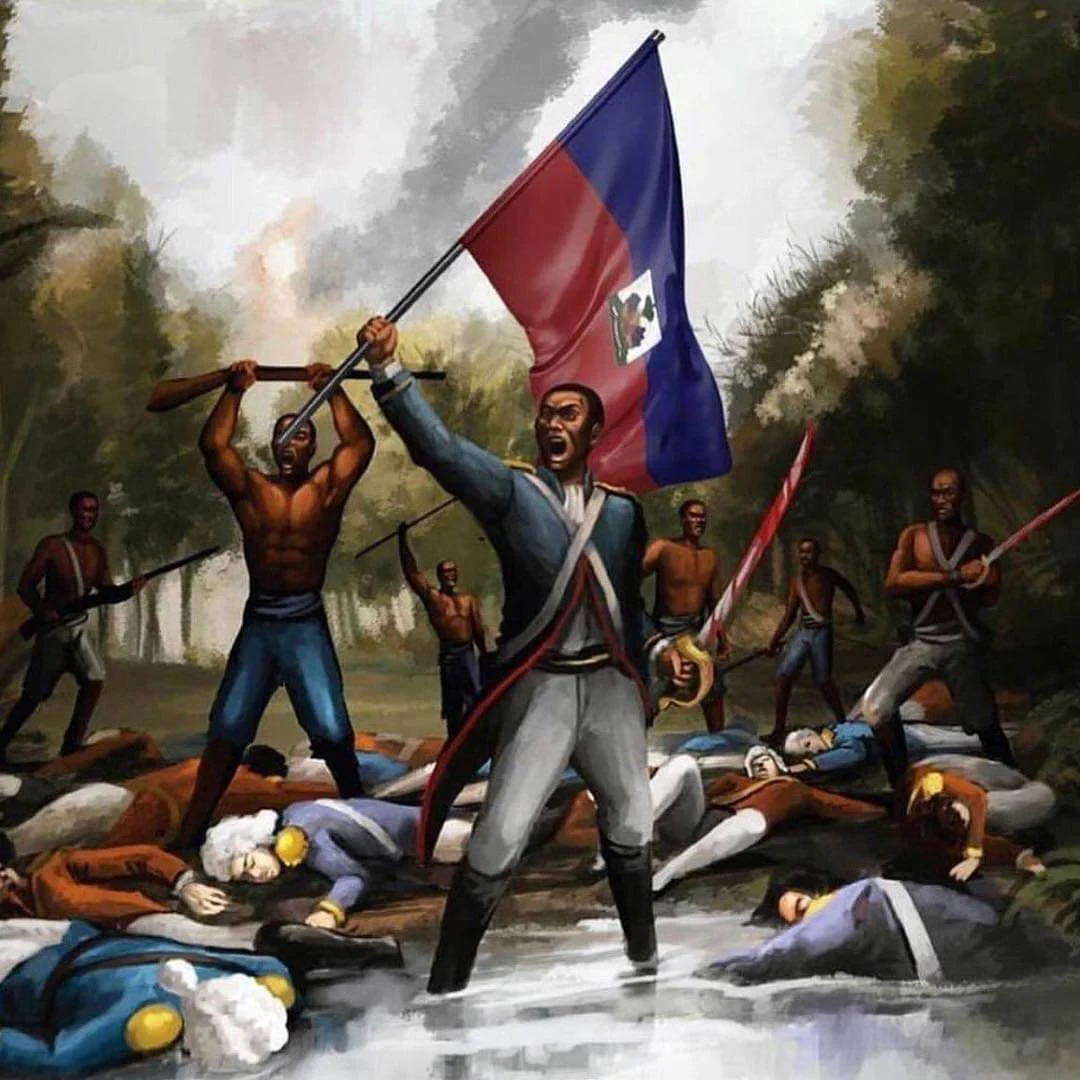
First black nation to free itself from slavery and gain independence from France in 1804 and influenced other liberation movements around the world, inspiring struggles for freedom and equality.

Natural beauty

Natural beauty

Haïti is blessed with spectacular natural landscapes, including white sand beaches, mountains and rich biodiversity.

Heritage

Heritage

Haïti has a rich historical heritage, including sites like the Citadelle Laferrière and the Sans-Souci Palace, listed as UNESCO World Heritage Sites.

Culture

Culture

Haïti has a rich and diverse culture, influenced by African, European and indigenous elements. Haitian music, dance, art and cuisine are celebrated around the world.

  • +
    • Post