contact@haitiwonderland.com+509 36184317

Discover

Shopping Cart

Jephte Estiverne: A Poetic Voice Rising in 2025

Jephte Estiverne: A Poetic Voice Rising in 2025

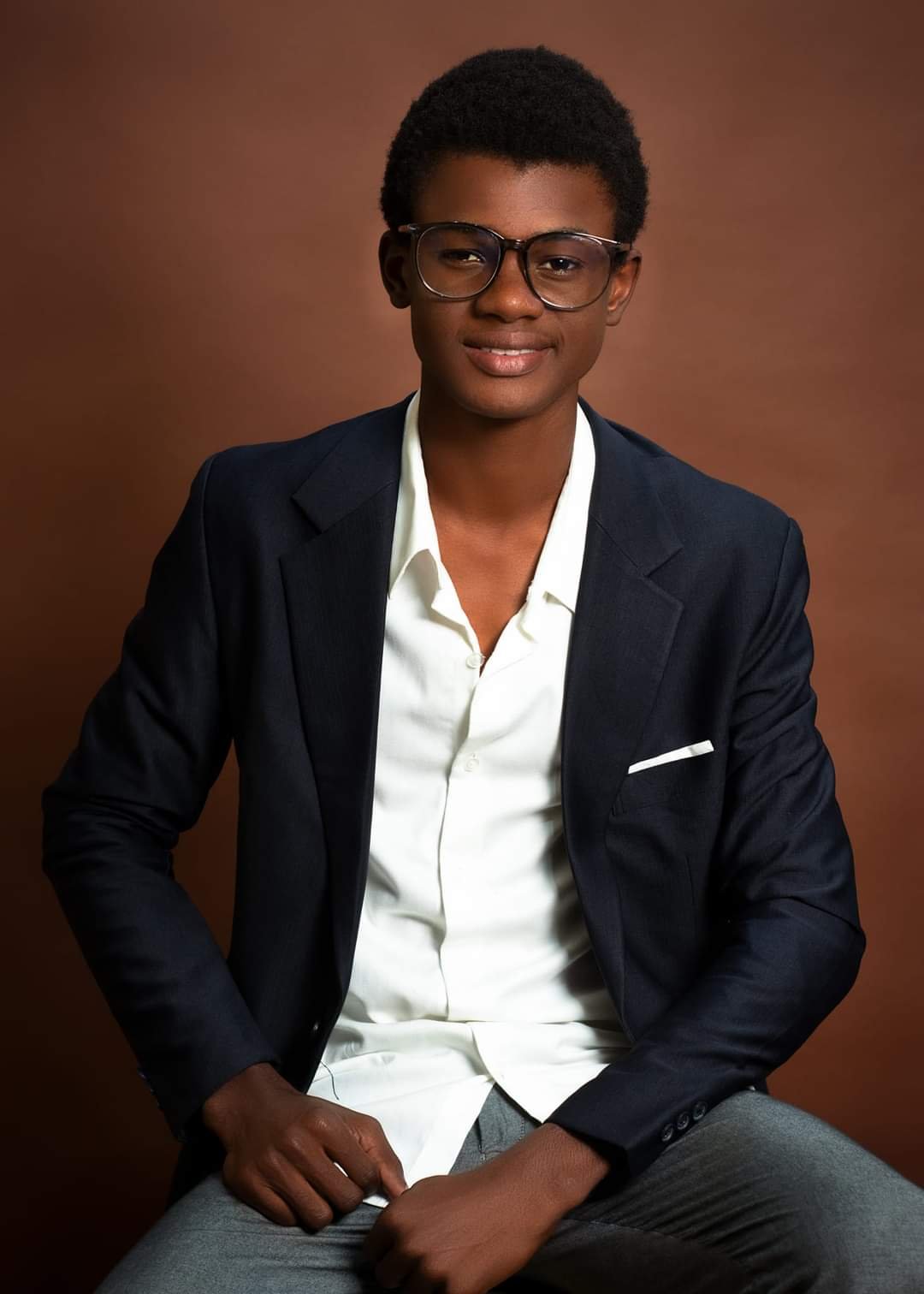
In 2025, the name Jephte Estiverne echoes ever louder in the Haitian literary world. A poet, linguist, and trained sports journalist, this young author with a meteoric rise, originally from Carrefour-Feuilles, is establishing himself as one of the most promising voices of his generation. Through personal insights and reflections, he shares his journey, his relationship with writing, his vision of the country, literature, and poetic commitment.

Haïti
Haïti
Haïti

Place of Origin

"I come from Carrefour-Feuilles, that’s the first thing to remember," he says right away, highlighting the significance of this neighborhood, now devastated by gang violence, but for years a place of grounding and personal roots in his development. The third of five children in a Christian family, he discovered writing in 2018a pivotal moment he calls foundational: "I was a solitary child, a quiet teenager... being in love with the words of others led me to search for my own," he confides.

Since that encounter with poetry, Jephte has published three collections: Bretèl Solèy, Ce que l’ange confie aux étoiles, and Naufrage, between 2021 and 2024. He also contributed to the anthology Chambres, edited by Lyonel Trouillot and Marie Bénédicte Loze. His sensitive and authentic voice has already earned him several honors, including a mention in the Chansons sans Frontières poetry contest and recognition among the winners of Mon histoire en mille mots.

But it is in 2025 that his talent truly explodes onto the scene. Winner of the Amaranthe Poetry Prize, champion of the first contest organized by the Port-au-Prince Book Fair, runner-up in the Evelyne Trouillot Prize, and finalist for the prestigious Balisaille International PrizeJephte is having an exceptional year. "This time last year, I wasn’t thinking about awards. But a fellow poet, Daryl Lorenzo Moïse, encouraged me to enter as many contests as possible. I prepared as best as I could… and it worked."

Yet, the young poet remains grounded, fully aware of the road still ahead. "It brings me great joy and a bit of pride, but I’m still far from where I want to be." This clarity is echoed in his critique of the Haitian publishing world: "It’s stagnant. There’s a lack of expertise, and printing problems persist. My first book was self-published, and although I had support for the other two, I sometimes feel I should have waited."

See as well

Haïti
Haïti
Haïti

Main Themes

Jephte Estiverne’s poetry explores themes like love, desire, and country. However, he confides a desire to evolve toward other subjects. Writing, for him, is a fluctuating necessity: "Sometimes it’s a desire, sometimes a need. It depends on the day. Sometimes nothing comes, and I accept that." This fluid relationship with writing began in adolescence, nourished by books brought home by his sister. He started with sports articles and then published his first poems on Facebook in 2016, encouraged by those around him.

For Jephte, literature is a powerful tool: "It is the measure of all things in the world. It writes, it heals, it breaks, it sanctifiessometimes without even realizing it." While he admits that Haitian history isn’t yet a strong presence in his writing, he is working on it. "I’m a man of the moment. I try to create with what directly relates to my era."

His inspirations include literary giants like Lyonel Trouillot, Dany Laferrière, Yasmina Khadra, and also Jean D’Amérique, Gaël Faye, Christian Bobin, among otherswriters who have shaped his vision and voice.

Message to the Youth

"Read. Read everything. Read without moderation. Even when you don’t feel like it. Everything begins with reading." Despite the prevailing chaos, Haïti remains an inexhaustible source of inspiration for him: "I draw a lot from it. I like to write about what’s happening, what I hear…"

In these uncertain times, Jephte Estiverne’s poetry stands as a bright example, transmitting sparks of light. It rises like a sunny, resilient space that has earned him honors that reflect his youthful dedication.

It’s worth remembering that in these past two years in Haiti, many young people like Jephte Estiverne have gathered their creative energies to confront a collapsing state and society. His current journey is truly inspiring and clearly demonstrates why any nation should make it a priority to provide children access to the luminous practice of reading starting at the earliest age possible.

Share
About the Author
Moise Francois
Moise Francois
Moise Francois

Journalist editor, poet and apprentice lawyer.

See other articles from Moise Francois
Leave a comment

Recently Posted

Pity or the work of an old soul crushed under the weight of an absinthe-flavored existence

The word crisis carries an infinite number of meanings. No intention of revealing them all this afternoon. However, a few clarifications are necessary. A kid whose parents do not have enough money at Christmas to buy her a Little Black Mermaid doll has a fit and locks herself in her room without touching her meals for the day. A boy whose dog was suddenly poisoned by a neighbor in revenge or shot after contracting rabies, losing a faithful friend overnight, enters into crisis. Finally, a society in the grip of all sorts of mutations and whose leaders are weak, perhaps prolonged in a deep crisis. In the first case, the young girl sulks to attract the attention of her parents in order to feel appreciated by children her age at school or in the neighborhood. Today, thirty minutes of negotiations can be enough to find a lasting solution. In my day, a few well-aimed belt blows would have overcome this whim. But, humanity evolves, they say. In the second case, this boy can find his smile again after a few weeks. He needs a little attention and, probably, another dog. As Stendhal would say, only passion triumphs over passion. In the last case, this society led by inepts is shaken to its deep foundations. Its institutions can disintegrate one by one. The vital forces dissolve in no time. This situation creates a societal tsunami that destroys all life within this community. It is indeed a crisis. The crisis from this point of view constitutes an alarming, desperate situation in the existence of a community where nothing is going well. Chaos reigns supreme. The very essence of life disappears. The individual can take precedence over the community. Everyone tries to solve their problems without worrying about others. The closest neighbor is relegated light years away from you. How can we turn to creation? How can we continue to conceive of otherness? How can the artist absorb this great collective disarray as a source of motivation? These are the questions I must answer. An artist sees and feels what ordinary mortals cannot even imagine in a thousand-year life. He creates to denounce, when his conscience as a human being is revolted. He exalts heroes or the homeland according to his feelings. He sings the beauty of an irresistible, captivating or ugly resplendent woman. He can also use the ambient desolation to give meaning to life. Creating in literature as in the arts in general does not depend on the situation. The act of creation depends on the creator’s disposition. Events paralyze some and galvanize others. Creating is enjoyable. Everyone therefore enjoys according to their own whim. Writing opens the way to change. The writer takes a different look at the world. By embedding himself in reality, he embellishes it, makes it better or hideous depending on the message he intends to share. All things considered, with him, life is never fixed. Writing is putting the world in a jar to travel the universe. The artist broods over his work in all weathers. Oswald Durand was delighted to see Choucoune’s beautiful body from his secret observatory. Musset, on the other hand, was in pain writing his October night. As for Dany Laferrière, in exile, he described the horrors of the Duvalier dictatorship and the carefree attitude of the young girls in his neighborhood in this violent and dangerous world. Ultimately, the writer lives in a society with values ​​that he shares or not. They condition his existence or have no hold on him. In many ways, the surrounding world serves as his laboratory. He carries out his experiments there. He casts a new, worn, disillusioned, melancholic, violent, bitter look at the world depending on his mood. Pitié is the work of an old soul crushed under the weight of an existence that tastes of absinthe. Young Mike Bernard Michel lives by expedients and lies. The hands of life fall on him with indescribable violence. Misfortune embraces him day and night. Should we give up? Musset liked to say: "Man is an apprentice, pain is his master. And no one knows himself until he has suffered." The artist must produce under all skies. Such is his vocation. Incompetents in power, legal or highway bandits, the high cost of living, unemployment, heartaches are all subjects of concern for him. If it is true that a hungry belly has no ears, the fact remains that it keeps the brain awake. What am I saying, it stimulates it to the point of creating timeless works. Mr. Pitié, you have a bright future ahead of you. Work of Jean Rony Charles, the book is available from Éditions Repérage.

Newsletter

Subscribe to our newsletter to stay informed of all our activities and news on Haiti.

Recently Posted

History

History

First black nation to free itself from slavery and gain independence from France in 1804 and influenced other liberation movements around the world, inspiring struggles for freedom and equality.

Natural beauty

Natural beauty

Haïti is blessed with spectacular natural landscapes, including white sand beaches, mountains and rich biodiversity.

Heritage

Heritage

Haïti has a rich historical heritage, including sites like the Citadelle Laferrière and the Sans-Souci Palace, listed as UNESCO World Heritage Sites.

Culture

Culture

Haïti has a rich and diverse culture, influenced by African, European and indigenous elements. Haitian music, dance, art and cuisine are celebrated around the world.

  • +
    • Post