contact@haitiwonderland.com+509 36184317

Discover

Shopping Cart

Haitian Athletes at the 2024 Olympic Games
  • News
  • July 27, 2024
  •     1

Haitian Athletes at the 2024 Olympic Games

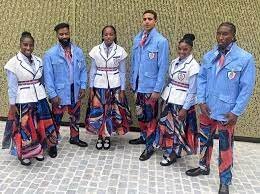
The Paris 2024 Olympic Games mark a time of pride and hope for Haiti, a nation rich in culture and resilience. This year, Haïti is represented by an exceptional team of athletes, each bringing their talent, determination, and dreams of victory on the world stage. Here’s a look at the stars lighting up our Olympic horizon.

Haïti : Lynnzee Brown

Lynnzee Brown, Rising Star in Gymnastics

Lynnzee Ellise Brown (born September 9, 1998) is a Haitian-American artistic gymnast who made her international debut in 2023. After a stellar collegiate career at the University of Denver, where she won several prestigious titles, Brown began representing Haïti on the world stage. At the 2023 Pan American Artistic Gymnastics Championships, she placed 15th in the all-around event and then qualified for the 2023 World Artistic Gymnastics Championships. In May 2024, she earned a university berth to represent Haïti at the 2024 Summer Olympics.

See as well

Haïti : Philippe-Abel Metellus

Philippe-Abel Metellus: The Champion of the Tatami

Philippe-Abel Metellus, Haiti’s flag bearer, is a 34-year-old judoka. Metellus recently won the silver medal at the Abidjan African Open, cementing his position as one of Haiti’s top judokas.

Haïti : Christopher Borzor

Christopher Borzor: Caribbean Lightning on the Track

Christopher Borzor, born April 11, 1999 in Uniondale, New York, is a promising Haitian sprinter. After a successful college career at Cincinnati, where he set several school records, Borzor continues to shine on the track. In 2022, he had impressive performances at the U.S. Championships, finishing third in the 100m and second with the 4x100m relay.

Conference / Festival Quatre Chemins / 21st edition

Conference / Festival Quatre Chemins / 21st edition

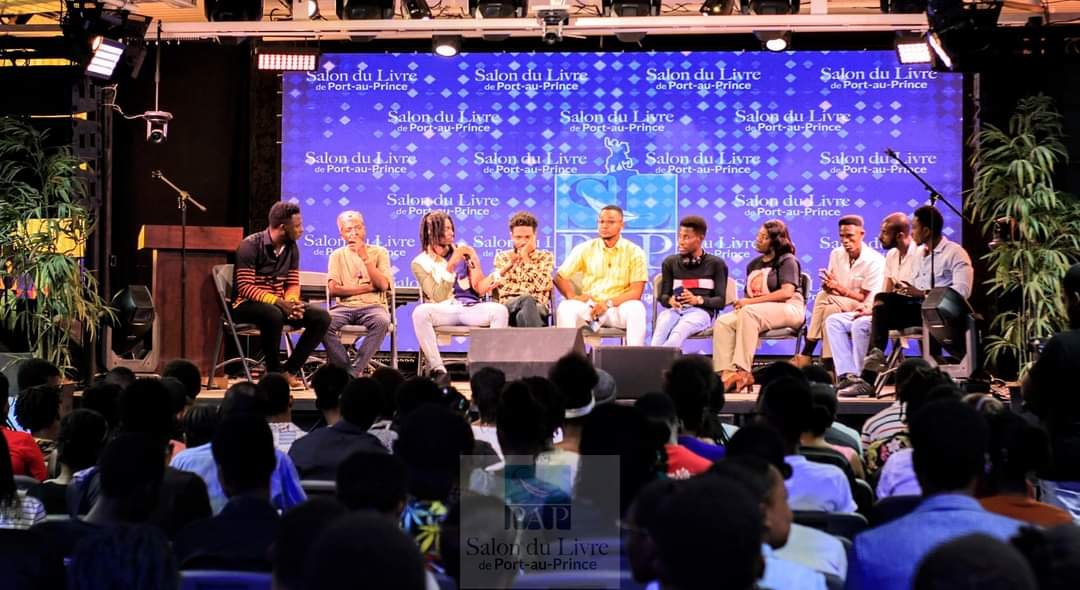
The impact of collective and individual trauma on the personal development of young people in Port-au-Prince While writers, actors, dancers, poets, among others, have gratified us with their performances, the master’s degree student in psychology at the Faculty of Human Sciences (FASCH), Lourdya Blaise, spoke with the audience about trauma. Structured around the theme "Youth and Trauma, analysis of the impact of collective and individual trauma on the personal development of young people living in Port-au-Prince between 2010-2024", this conference gave rise to enriching discussions. During this meeting, moderated by Michaël Formilus, Ms. Blaise showed how the events that have taken place in the country have caused cases of trauma among Haitians. According to the student, citing the American Psychological Association, we speak of trauma as a consequence of trauma. The latter is explained by the fact that we feel threatened, whether it is the person in question or their loved ones. However, she specifies that a collective trauma remains depending on the impact that the event has on the individual. To illustrate her remarks, she mentioned the earthquake of January 12, 2010, considered a collective trauma, insofar as it still occupies our minds. This tragedy reminds us of the disappearance of our loved ones and enormous losses. This is the case of a trauma that becomes a collective trauma. For the student, it should be emphasized that when an event occurs, some people are traumatized and others are not. According to him, the violence of armed gangs is not perceived in the same way, says Ms. Blaise. There are people who have fled their homes but are not traumatized. In fact, some people see traumatic situations as a passing event, she says. The speaker also spoke about collective trauma, which, according to him, preoccupies the mind, even if we no longer experience it. It manifests itself in several forms: lack of sleep, fear psychosis, intrusive thoughts, intense heartbeat, etc. Generally, symptoms related to trauma are hard to die. When it persists, it becomes acute stress. To deal with it, we must talk to other people. If the situation persists, acute stress turns into a phase of post-traumatic stress; in this case, we must confide in a trusted person or go see a mental health specialist, she advises. In her presentation, Lourdya Bazile also drew attention to the psychological state of children in these times. According to the presenter, children are also facing this crisis situation, even if they do not talk about it to their parents. As much as adults, children also plan their future. Faced with flouted school years, they become pensive and worried, she stressed. They withdraw. The child who used to be brilliant can become violent and perform less well at school. Parents are called upon to listen to them and understand them. A good moment of exchange, rich in practical advice. The audience participated fully. In turn, the presenter invites them to breathe better and meditate. "We live in a country where worries mix, we must take time for ourselves, do sports, eat well, make sure that the sleeping space is clean and take time for ourselves. There is more than one way to find calm," recalls the psychologist. Gertrude Jean-Louis

Haïti : Cedrick Belony

Cedrick Belony, Velvet Fist in the Boxing Arena

Cedrick Belony, who started boxing at the age of 14, dreams of winning a gold medal for Haïti at the 2024 Paris Olympic Games. Determined and motivated, he is ready to do anything to make the Haitian national anthem resound on the world’s biggest sporting stage.

Haïti : Mayah Chouloute

Mayah Chouloute: The Young Swimming Prodigy

Born on November 18, 2009, Mayah Chouloute is the youngest athlete to represent Haïti at the 2024 Paris Olympic Games. At just 14 years old, she competed in the 50m swimming race, making history by becoming the youngest swimmer to represent her country.

Haïti : Alexandre Grand’Pierre

Alexandre Grand’Pierre: The King of the 100m

Alexandre Grand’Pierre, born January 22, 2003, is a Haitian swimmer who won the gold medal in the 100-meter breaststroke category at the 36th edition of the 2024 CCCAN Swimming Championships. With an impressive time of 1.02.39, Grand’Pierre is ready to represent Haïti with pride and determination.

Haïti : Emelia Chatfield

Emelia Chatfield, Luminous Sprinter

Emelia Chatfield, born November 23, 2001, is a Haitian sprinter specializing in hurdles. In 2024, she achieved remarkable performances, including winning the 60m hurdles at the Big 12 Championships with a record time of 7.95 seconds. Chatfield represents a bright hope for Haitian athletics at the 2024 Paris Olympic Games.

With this Olympic team full of youth and talent, Haïti has hopes of a medal that would light up our nation. Our athletes, through their determination and performances, show that Olympic dreams can become reality, bringing pride and inspiration to an entire country.

Share
About the Author
Appolon Guy Alain
Appolon Guy Alain
Appolon Guy Alain

Full Stack Developer, Créatif, expérimenté, passionné des nouvelles technologies et de l’art.

See other articles from Appolon Guy Alain
Dre Francine Leclerc

Très fière de ces athlètes haitiens.
Bravo!

August 13, 2024 - 02:11:14 PM
Leave a comment

Recently Posted

Haiti: Carnival and Rara: Crossed Perspectives on Culture and Haitian Identity

In our tradition, carnival represents an essential cultural activity. Indeed, for the holding of it this year, the State had drawn from the public treasury not only a huge sum but also a strong concentration of law enforcement to ensure the protection and security of carnival-goers in the area. metropolitan. Despite numerous criticisms and concerns expressed by certain media on the one hand, then on the other hand by the democratic opposition. While it is true that in Port au Prince these concerns had had a no less valuable consequence on the progress of this festivity. It is no less true that this was the case in other provincial towns, as proof in the southeast department the authorities did not record anything as an element of accident or incident during the progress of the carnival unlike Port au Prince. Certainly, socio/economic problems are increasingly worrying, nevertheless what makes us what we are today, a free and independent people is none other than our exceptionality. This deeply expresses our intrinsic characteristic in relation to people. In fact, historically we are a people who laugh and cry, smile and irritate, dance and hit the system, sing and fight so well that "grenadya alaso sa ki mouri zafè ya yo" is the most emblematic song of the slaves for the conquest of our freedom. We do not intend to claim that those who expressed their disagreement with the carnival are showing a historical deficit. However, we leave in the shadows a fundamental question: why is carnival taken care of by the State while the rara is like an abandoned child? The rara is not only a simple cultural tradition but, above all, it is the heritage of our valiant warriors who bravely fought the French expeditionary army, the most powerful of the time. While, this mass cultural, she is still marginalized by state authorities. It is emphasized that social cohesion is the dead point of carnival. On the other hand, this is the strong point of rara. As proof, the Thursday of the Dead in our Voudouesque tradition which represents the opening ceremony for the rara bands is the blatant testimony of this social cohesion. And, in fact, there were circles of people who took divergent directions to attend the opening ceremony of their rara bands. For this opening ceremony the atmosphere was a taste of carnival in terms of color. On the side of Croix Hilaire, for the title champion Ratyèfè full force band, the color of his club was very diverse, a long dress of apricot yellow, mauve white, then white scarf. In terms of performance, this band had completely proven its champion skills thanks to its arsenal of musicians who were not in their testing phase. To tell the truth, they performed their note with surgical precision as a doctor-surgeon in his surgical procedure. The synchronization between the musicians, the instruments and then the fans form a whole and harmonize perfectly well. This band not only has the magic of words and verbs, it seems that they also have the magic to thrill even the most reluctant fans. Moreover, his performance for this dead Thursday was a challenge for his rivals this weekend to the extent that their performances were less good. On the symbol side of light, Grap Kenèp was the wonder of the Thursday evening of the dead. His club dressed in the appropriate color for this evening, purple scarf, purple jersey, then white “kolan”. In a symbolic way, this marriage of color represents Baron in Haitian Vodou. Without a doubt, it was the most beautiful symbolic representation of the evening. In terms of performance, returning from the cemetery we felt a very strong warmth of jubilation, elation, and playfulness for a completely balanced performance. As far as Chenn Tamarin is concerned, it was already 2 a.m. when our team met him, it was a less good performance than what we were accustomed to. On the symbolic side it leaves something to be desired. His news was that he had his own media. Petit-Goave/Culture and Society

Newsletter

Subscribe to our newsletter to stay informed of all our activities and news on Haiti.

Haiti: Discovering Lake Péligre

At the heart of the majestic Haitian topography, lies a natural gem of breathtaking beauty: Lake Péligre. Nestled in the mountains of Haiti’s central region, this artificial lake is a wonder for local residents and amazed visitors alike. From its historical creation to its contemporary ecological importance, let’s explore together the riches of Lake Péligre. Origin and History: Lac de Péligre is the result of an ambitious engineering project undertaken in the 1950s. At that time, the Haitian government, in collaboration with international partners, undertook the construction of the Péligre Dam on the Artibonite River. The main goal was to provide large-scale electricity to Haïti while regulating river flooding to protect agricultural land downstream. Ecology and Biodiversity: Beyond its usefulness as a source of hydraulic energy, Lake Péligre is home to rich ecological diversity. The calm waters of the lake provide vital habitat for a variety of native fish species, supporting local fishing communities. In addition, the surrounding forests and hills that border the lake are home to diverse flora and fauna, contributing to the preservation of the regional ecosystem. Tourism and Leisure: For outdoor enthusiasts and nature enthusiasts, Lake Péligre offers a multitude of leisure opportunities. Visitors can enjoy peaceful boat rides on the tranquil waters of the lake, offering panoramic views of the surrounding mountains. Additionally, hiking trails winding through lush forests allow hikers to explore the area’s natural beauty. Lake Péligre represents much more than a simple artificial body of water. It is a living testament to human ingenuity and the natural beauty of Haiti. As an emerging tourism destination, it offers visitors an immersive experience in nature, while highlighting the crucial importance of environmental conservation. By preserving this natural treasure, we also preserve the sustainable future of our planet.

Recently Posted

History

History

First black nation to free itself from slavery and gain independence from France in 1804 and influenced other liberation movements around the world, inspiring struggles for freedom and equality.

Natural beauty

Natural beauty

Haïti is blessed with spectacular natural landscapes, including white sand beaches, mountains and rich biodiversity.

Heritage

Heritage

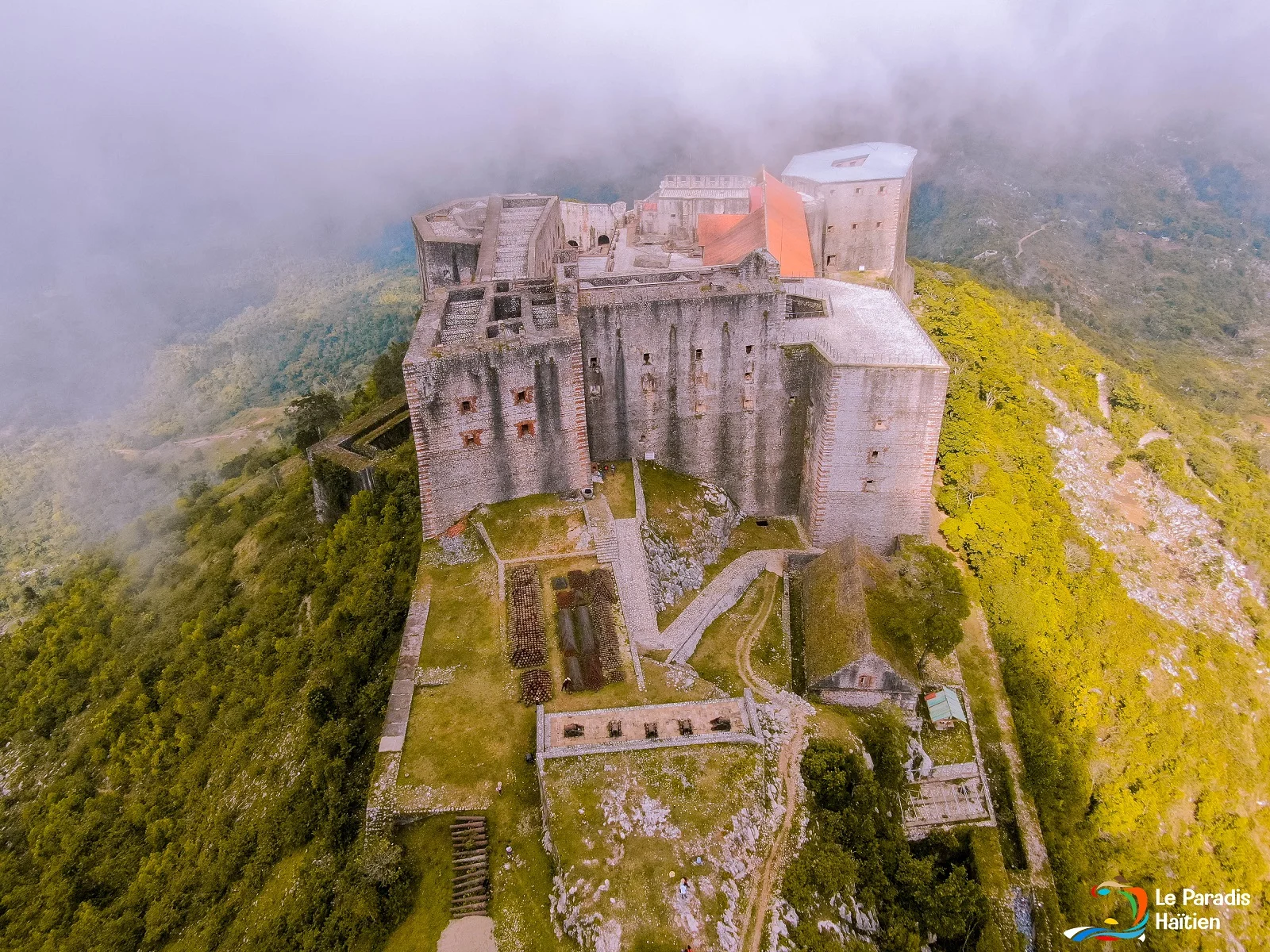
Haïti has a rich historical heritage, including sites like the Citadelle Laferrière and the Sans-Souci Palace, listed as UNESCO World Heritage Sites.

Culture

Culture

Haïti has a rich and diverse culture, influenced by African, European and indigenous elements. Haitian music, dance, art and cuisine are celebrated around the world.

  • +
    • Post