contact@haitiwonderland.com+509 36184317

Discover

Shopping Cart

Carrefour | Kwen Pawòl Lib: towards the 19th exit
  • News
  • January 08, 2025

Carrefour | Kwen Pawòl Lib: towards the 19th exit

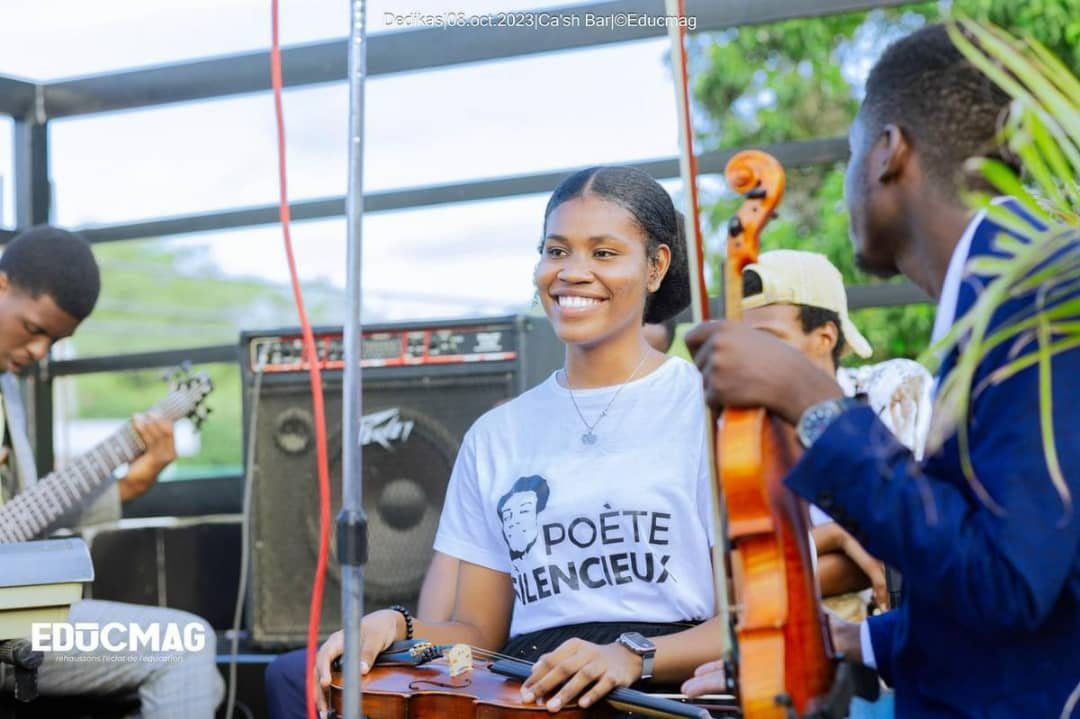
Kwen Pawòl Lib is preparing to start the new year in style. The nineteenth exit, the first of the year, is scheduled for this Thursday, January 9, 2025 at 4:30 p.m. at Caroline Bar, Mon Repos 38, Carrefour.

This socio-cultural initiative, which aims to bring together people of all ages, offers a space for dialogue where participants can exchange and reflect on societal, environmental, etc. topics and issues.


See as well


For this edition, Kwen Pawòl Lib will have the honor of welcoming a distinguished speaker: Gutenberg Destin. A psychologist by training, Gutenberg Destin is one of the instigators of Ribanbèl Timoun, a space dedicated to the well-being and relaxation of children. Sensitized to environmental issues, he is currently pursuing studies in geography at the University Institute of Sciences and leads numerous training courses for national and international institutions, including UNESCO, on risk and disaster management.

Alongside Jean Rony Charles, who will moderate this 19th issue, the discussion will focus on the theme: "Natural disasters do not exist...". This meeting promises to be rich and essential, especially in a context where Haïti is among the most vulnerable countries facing environmental challenges.

Come in large numbers!

Author: Estriplet Millor

Restitution of the content creation workshop: Carrefour, behind the scenes.

Share
About the Author
Haïti Wonderland
Haïti Wonderland
Leave a comment

Recently Posted

Newsletter

Subscribe to our newsletter to stay informed of all our activities and news on Haiti.

Guédés: When Haïti celebrates its ancestors with color and fervor

Every November 1st and 2nd, Haïti comes alive with the colors black and purple to celebrate the Guédés, spirits venerated in the voodoo religion, symbols of a powerful bond between the living and the dead. Fascinating, indomitable and provocative, the Guédés form a true family in the pantheon of Haitian voodoo, where they are respected for their role as spiritual guides of the deceased to the afterlife. Led by iconic figures such as the legendary Baron Samedi and his companion Grann Brigitte, the Guédés embody the paradoxes of life and death. Each Baron has a unique personality: Baron Cimetière, Baron Kriminel, and Baron La Croix are the guardians of the souls that wander on the borders of the world of the dead. Together, they form a powerful and somewhat frightening presence, but one that is deeply rooted in Haitian culture. The Guédés are not like other voodoo spirits; they demonstrate their fearlessness in a spectacular way. Accustomed to death, they are fearless and are provocative: they eat glass, raw peppers, and coat their sensitive parts with rum and pepper. These gestures mark their indifference to danger and remind us that they have already known earthly life. They are thus psychopomps – these beings who lead the souls of the dead – and act as bridges between the world of the living and that of the dead. Some Guédés, like Guédé Nibo, wear black, purple, and white clothing, each with unique characteristics. They are many and varied: Guédé Fouillé, Guédé Loraj, Papa Guédé, and many others. These are the spirits who, each year, remind Haitians of the importance of remembering and honoring the deceased. The cult of the Guédés is not only religious; it is also cultural and historical. According to tradition, their spiritual territory, or “Fètomè” – nicknamed the “Country without Hats” – is a place where the souls of ancestors reside. According to stories, the origins of this cult go back to the Abomey plateau, the ancient capital of the kingdom of Dahomey, in Africa, where death and life coexist in a form of symbiosis. This celebration in Haïti even finds echoes in ancient history. The Romans also honored their dead with the “Fête des Lémuria”, which took place in February, to ward off spirits and restore peace between the world of the living and that of the deceased. For Haitians, honoring the Guédés is about accepting death as a part of life and celebrating the invisible bonds that unite us with those who have left us. It is also a way of resisting, because life, despite its challenges, must be celebrated in all its complexity and depth.

Caractéristique d’un lapin

Les lapins sont des mammifères appartenant à la famille des Leporidae. Voici quelques-unes de leurs caractéristiques principales : 1. **Physique** : Les lapins ont un corps couvert de fourrure douce, des oreilles longues et droites, de grands yeux sur les côtés de leur tête, et une queue courte et duveteuse. Ils possèdent de puissantes pattes arrière adaptées au saut. 2. **Taille et poids** : La taille et le poids peuvent varier considérablement selon la race, allant d’environ 500 grammes pour les plus petits à plus de 5 kilogrammes pour les plus grands. 3. **Comportement** : Les lapins sont connus pour être sociaux et peuvent vivre en groupes dans la nature. Ils communiquent entre eux par différents moyens, y compris par des sons et des mouvements corporels. Les lapins creusent des terriers pour y vivre et se protéger des prédateurs. 4. **Alimentation** : Ils sont herbivores, se nourrissant principalement de foin, d’herbes, de feuilles, de fleurs, et de certains légumes. Leur système digestif est adapté pour traiter une grande quantité de fibres. 5. **Reproduction** : Les lapins sont réputés pour leur capacité à se reproduire rapidement, avec des gestations courtes d’environ 28 à 31 jours. Une portée peut compter de un à douze lapereaux, selon la race. 6. **Sens** : Ils ont une excellente vision périphérique pour détecter les mouvements tout autour d’eux, mais ont une zone aveugle juste devant leur nez. Leur ouïe est également très développée, leur permettant de capter des sons à de grandes distances. 7. **Espérance de vie** : En captivité, les lapins peuvent vivre de 7 à 10 ans, selon la race et les soins prodigués, tandis que dans la nature, leur espérance de vie est généralement plus courte en raison des prédateurs et des maladies. Ces animaux nécessitent des soins appropriés, notamment un régime alimentaire équilibré, de l’exercice, et une attention particulière à leur bien-être émotionnel et physique pour vivre une vie saine et heureuse en captivité.

Recently Posted

History

History

First black nation to free itself from slavery and gain independence from France in 1804 and influenced other liberation movements around the world, inspiring struggles for freedom and equality.

Natural beauty

Natural beauty

Haïti is blessed with spectacular natural landscapes, including white sand beaches, mountains and rich biodiversity.

Heritage

Heritage

Haïti has a rich historical heritage, including sites like the Citadelle Laferrière and the Sans-Souci Palace, listed as UNESCO World Heritage Sites.

Culture

Culture

Haïti has a rich and diverse culture, influenced by African, European and indigenous elements. Haitian music, dance, art and cuisine are celebrated around the world.

  • +
    • Post