The Muse Haïti Center Unveils the 7 Topics for its National Essay CompetitionThe Muse Haïti Center Unveils the 7 Topics for its National Essay Competition
The Muse Haïti Center Unveils the 7 Topics for its National Essay Competition
The Muse Haïti Center, in partnership with the Ministry of National Education and Vocational Training (MENFP), alongside several other national and international institutions, has officially launched the 4th edition of its National Essay Competition. This annual initiative, which aims to encourage young people to engage in critical and civic thinking, focuses this year on a highly topical theme: "The Right to Education in Haiti."
Through this edition, the Muse Center aims to encourage engaged thinking among Haitian students, capable of questioning the realities of the national education system. To this end, seven carefully selected essay topics have been unveiled, each addressing an essential or controversial aspect of the right to education in the current Haitian context.
Can citizenship education help promote respect for the right to education?
Education and social inequalities: can we speak of a two-tiered right to equality in Haiti?
How does the issue of linguistic rights (respect for the mother tongue) impact respect for the right to education?
Should the right to education in a country like Haïti include access to digital technology and new technologies, particularly Artificial Intelligence (AI)?
How can the right to education help promote the right to peace and security?
Right to education and the right to peace in Haiti: challenges, issues, and opportunities.
The right to education is a fundamental and sacred right. Demonstrate its importance in the integral development of the human being.
These topics will offer students and schoolchildren a valuable opportunity to express their opinions on a topic that directly concerns them. Whether it’s the language of instruction, access to technology, or the links between education and social justice, each theme invites in-depth analysis and the proposal of realistic solutions.
The competition is open to students from NSI to NS IV, as well as undergraduate students. The deadline for submitting an application is July 15, 2025, at 11:59 PM (local time). Significant prizes will be awarded to the winners in each category.
1st Prize: One (1) laptop;
100,000 gourdes; One (1) set of 20 books; A certificate of participation; Publication of the winning texts; 4 copies of the collective book.
2nd Prize: One (1) laptop; 75,000 gourdes; One (1) set of 10 books; A certificate of participation; Publication of the winning entries; Two copies of the collective book
This competition presents a unique opportunity for young Haitians to make their voices heard on an issue that affects their immediate future while offering them access to attractive prizes.
First black nation to free itself from slavery and gain independence from France in 1804 and influenced other liberation movements around the world, inspiring struggles for freedom and equality.
Natural beauty
Haïti is blessed with spectacular natural landscapes, including white sand beaches, mountains and rich biodiversity.
Heritage
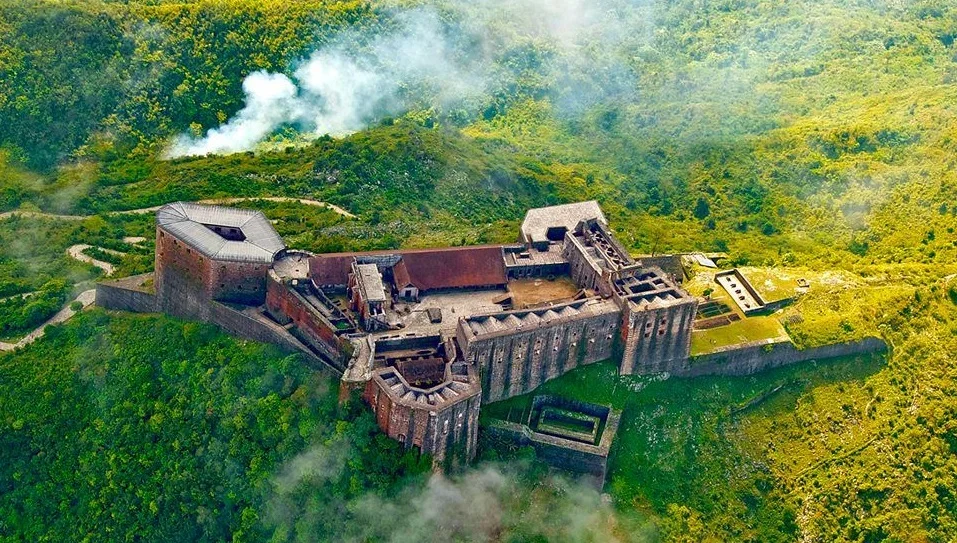
Haïti has a rich historical heritage, including sites like the Citadelle Laferrière and the Sans-Souci Palace, listed as UNESCO World Heritage Sites.
Culture
Haïti has a rich and diverse culture, influenced by African, European and indigenous elements. Haitian music, dance, art and cuisine are celebrated around the world.


























Bonjour, comment puis-je me faire inscrire.
May 22, 2025 - 02:22:32 PMBonsoir,comment puis-je me faire inscrire?
May 22, 2025 - 02:24:52 PM