contact@haitiwonderland.com+509 36184317

Discover

Shopping Cart

What is the name of Haiti’s largest river?

What is the name of Haiti’s largest river?

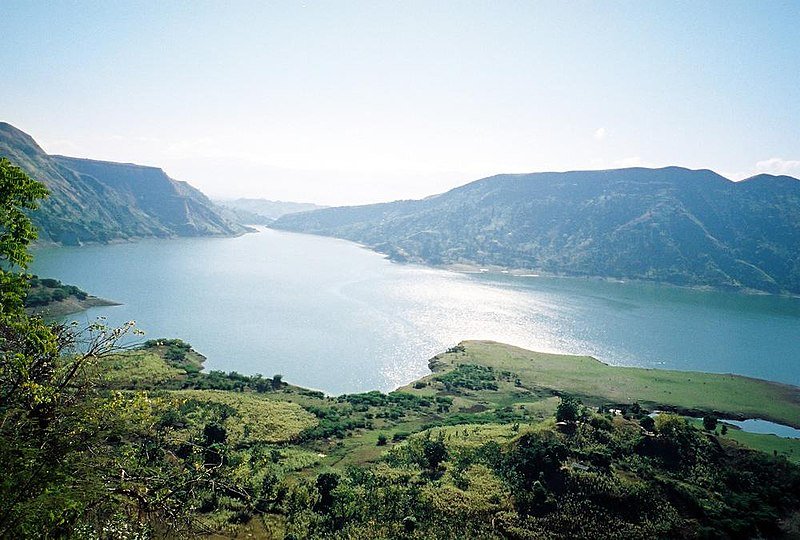
Haiti’s largest river is called the Artibonite. This majestic waterway, which crosses the country from one end to the other, is a key element in the geography, economy and daily life of Haitians. With its crucial role in agriculture, its historical importance and its impact on the local ecosystem, the Artibonite deserves special attention. This article explores the many facets of this iconic river.

The Artibonite: A River of Exceptional Magnitude

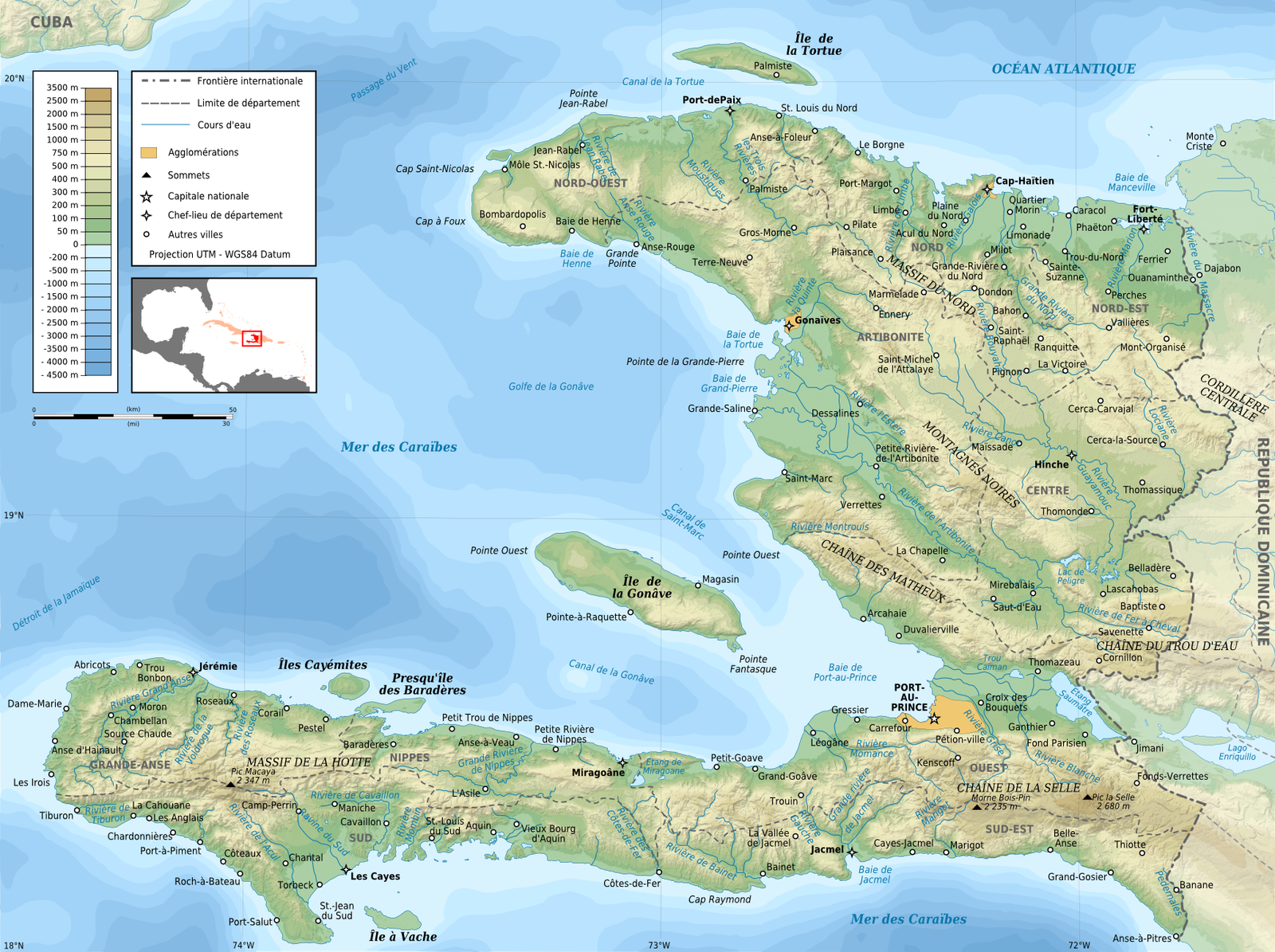
The Artibonite is Haiti’s longest river, with a length of approximately 320 kilometers. It rises in the mountains of the Dominican Republic, crosses the Haitian border and winds through the fertile valley that bears its name before emptying into the Gulf of Gonâve.

This river is a true artery of life for the region it irrigates. The Artibonite Valley is often referred to as the country’s “rice bowl,” due to the vast rice fields that depend on it. About 80% of Haiti’s rice production comes from this region, making the Artibonite a pillar of national food security.

A key role in agriculture and the economy

The Artibonite River is Haiti’s main irrigation system. Through irrigation projects such as the Péligre Dam, built in the 1950s, it provides water to thousands of hectares of arable land. In addition to rice, the region also produces corn, vegetables, and fruits, contributing to the local and national economy.

However, challenges abound. Soil erosion, caused by deforestation and poor land management, threatens the river’s ability to support agriculture. Reforestation and sustainable watershed management efforts are needed to preserve this vital ecosystem.

A historical and cultural heritage

The Artibonite is not only a natural resource; it is also deeply rooted in Haitian history and culture. The region around the river played a strategic role during the Haitian Revolution, hosting crucial battles that led to the country’s independence in 1804.

In addition, the river inspires many Haitian artists, writers, and musicians, who celebrate its beauty and importance in their works. It is often seen as a symbol of resilience and life for the Haitian people.

Some key figures about the Artibonite

- Total length: approximately 320 km, much of which flows through Haiti.
- Watershed area: approximately 9,500 km², covering a region rich in biodiversity.
- Rice production: The Artibonite Valley accounts for approximately 80% of Haiti’s rice production, feeding millions of people.
- Péligre Dam: Built on the river, it generates a significant portion of the country’s electricity while providing irrigation.

An ecosystem to preserve

The Artibonite is home to unique biodiversity, but it faces growing environmental challenges. Pollution, uncontrolled sand mining, and deforestation are affecting water quality and aquatic life. Conservation and environmental education initiatives are crucial to ensure the river continues to support life in Haiti.

Local and international organizations are working to raise awareness among communities about the importance of protecting the river. These efforts include planting trees, building dikes, and promoting sustainable agricultural practices.

The Artibonite, a national treasure

The Artibonite River is much more than just a body of water: it is an agricultural engine, a source of energy, and a historical symbol for Haiti. Its protection is essential not only for the communities that directly depend on it, but also for the future of the entire country.

Whether for its economic role, its rich history, or its natural beauty, the Artibonite is a river that Haïti can be proud of. If you have had the opportunity to visit the region or discover the river, do not hesitate to share your experiences in the comments!

Share
About the Author
Haïti Wonderland
Haïti Wonderland
Leave a comment

Recently Posted

Belle-Anse, a village between tradition, nature and tourist potential

Nestled in the southeast of Haiti, Belle-Anse is a destination that fascinates with its natural beauty and rich history. This small town, still often ignored by major tourist routes, is full of treasures that deserve to be discovered. Its wild beaches, its imposing mountains and its unique historical heritage make Belle-Anse a hidden pearl, ready to seduce travelers in search of authenticity and tranquility. Belle-Anse, founded in the 18th century, still bears the traces of its past. Its history, marked by changes of names and identity, bears witness to the political and social upheavals that have given the region. From the colonial era to the birth of the Republic, each corner of the city tells a part of the history of Haiti. This rich past is combined with a vibrant cultural life, where local festivals, such as the celebration of the Patron Saint every December 10, offer an authentic glimpse into the lives of the inhabitants. The historical remains scattered throughout the city are not only a reminder of the era of colonization, but also of the struggles for independence. These witnesses of the past, combined with a calm and preserved atmosphere, make Belle-Anse a place where history and nature intertwine harmoniously. What distinguishes Belle-Anse is undoubtedly its spectacular natural environment. Ultimately, these beaches before the deserts invite you to relax. Lagan Beach, lined with palm trees and crystal clear waters, offers an idyllic setting for lovers of wild nature, far from the crowds of more frequent tourist destinations. The nearby Bay of Jacmel is a true natural bliss, promising moments of calm and escape. The city is also surrounded by majestic mountains, ideal for those who wish to explore the Haitian landscapes on foot, while discovering a unique biodiversity. While Belle-Anse’s natural resources are rich, they are also fragile, and preserving these areas remains an important issue for the future of the region.

Newsletter

Subscribe to our newsletter to stay informed of all our activities and news on Haiti.

The Republic of the Stateless?

Haïti is making headlines all over the world. And it’s not good news. The exploits of Haitians rarely generate so much interest, but we always tend to point out the excesses, spill ink to stir up thorns in the side, broadcast on loop to relay the chaos that is raging. There is hardly any media to make amends for the resilience of this cornered people. No one to highlight the fierce resistance that serves as fuel for this people hanging in the gorges of death. And what if it was to a certain extent the only way to talk about this country to finally attract attention? It is July 26, 2024. The Olympic Games have just started in France. The 33rd Olympiad of modern times. Without realizing it, according to Forbes Magazine, Haïti ranks among the ten nations with the best costume, proudly pointing to third place. At the same time, miles away from France, on “The Island of Skillfully Orchestrated Chaos,” Haitians do not even realize how much this recognition borders on irony. A paradox whose unpopular evocation is likely to greatly displease. An aerial image shows the city of Paris in all its splendor, illuminated like the gates of paradise, reflecting all the grandeur of France, all the magnificence it has acquired over the centuries, without forgetting the contribution of the blood shed by the horrible machine of colonization. I close my eyes, I go back in time, I see again this boy left to his own devices, lost without even knowing it, doomed to failure without even understanding it. And then there are the others. Boys in the same situation, or worse. Banished from society, they do not know what life has in store for them. They form the elegant class of the marginalized, in their quality of scoundrels, good-for-nothings, and thugs who spoil the splendor of society. This contrast challenges me, and I wonder for a moment if those who live the chaos from the outside grasp the stakes and the reality of the situation. Moreover, it seems to me that even the majority of Haitians living in the territory have no notion of the fundamental and essential aspects of the situation.

Caractéristique d’un lapin

Les lapins sont des mammifères appartenant à la famille des Leporidae. Voici quelques-unes de leurs caractéristiques principales : 1. **Physique** : Les lapins ont un corps couvert de fourrure douce, des oreilles longues et droites, de grands yeux sur les côtés de leur tête, et une queue courte et duveteuse. Ils possèdent de puissantes pattes arrière adaptées au saut. 2. **Taille et poids** : La taille et le poids peuvent varier considérablement selon la race, allant d’environ 500 grammes pour les plus petits à plus de 5 kilogrammes pour les plus grands. 3. **Comportement** : Les lapins sont connus pour être sociaux et peuvent vivre en groupes dans la nature. Ils communiquent entre eux par différents moyens, y compris par des sons et des mouvements corporels. Les lapins creusent des terriers pour y vivre et se protéger des prédateurs. 4. **Alimentation** : Ils sont herbivores, se nourrissant principalement de foin, d’herbes, de feuilles, de fleurs, et de certains légumes. Leur système digestif est adapté pour traiter une grande quantité de fibres. 5. **Reproduction** : Les lapins sont réputés pour leur capacité à se reproduire rapidement, avec des gestations courtes d’environ 28 à 31 jours. Une portée peut compter de un à douze lapereaux, selon la race. 6. **Sens** : Ils ont une excellente vision périphérique pour détecter les mouvements tout autour d’eux, mais ont une zone aveugle juste devant leur nez. Leur ouïe est également très développée, leur permettant de capter des sons à de grandes distances. 7. **Espérance de vie** : En captivité, les lapins peuvent vivre de 7 à 10 ans, selon la race et les soins prodigués, tandis que dans la nature, leur espérance de vie est généralement plus courte en raison des prédateurs et des maladies. Ces animaux nécessitent des soins appropriés, notamment un régime alimentaire équilibré, de l’exercice, et une attention particulière à leur bien-être émotionnel et physique pour vivre une vie saine et heureuse en captivité.

Recently Posted

History

History

First black nation to free itself from slavery and gain independence from France in 1804 and influenced other liberation movements around the world, inspiring struggles for freedom and equality.

Natural beauty

Natural beauty

Haïti is blessed with spectacular natural landscapes, including white sand beaches, mountains and rich biodiversity.

Heritage

Heritage

Haïti has a rich historical heritage, including sites like the Citadelle Laferrière and the Sans-Souci Palace, listed as UNESCO World Heritage Sites.

Culture

Culture

Haïti has a rich and diverse culture, influenced by African, European and indigenous elements. Haitian music, dance, art and cuisine are celebrated around the world.

  • +
    • Post