The Republic of the Stateless?
Haïti is making headlines all over the world. And it’s not good news. The exploits of Haitians rarely generate so much interest, but we always tend to point out the excesses, spill ink to stir up thorns in the side, broadcast on loop to relay the chaos that is raging. There is hardly any media to make amends for the resilience of this cornered people. No one to highlight the fierce resistance that serves as fuel for this people hanging in the gorges of death. And what if it was to a certain extent the only way to talk about this country to finally attract attention?
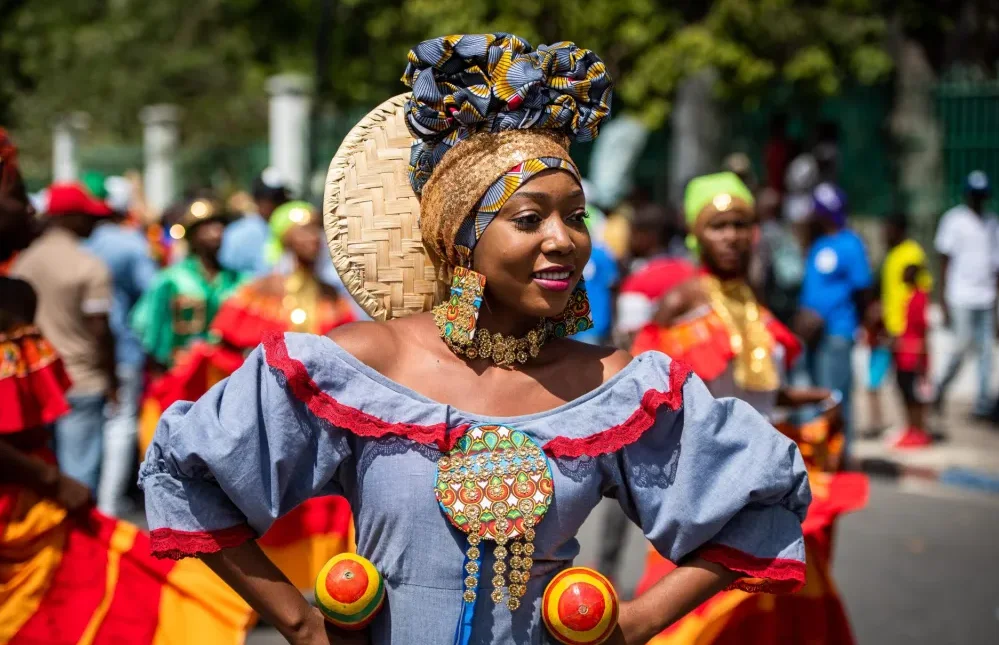
It is July 26, 2024. The Olympic Games have just started in France. The 33rd Olympiad of modern times. Without realizing it, according to Forbes Magazine, Haïti ranks among the ten nations with the best costume, proudly pointing to third place. At the same time, miles away from France, on “The Island of Skillfully Orchestrated Chaos,” Haitians do not even realize how much this recognition borders on irony. A paradox whose unpopular evocation is likely to greatly displease. An aerial image shows the city of Paris in all its splendor, illuminated like the gates of paradise, reflecting all the grandeur of France, all the magnificence it has acquired over the centuries, without forgetting the contribution of the blood shed by the horrible machine of colonization. I close my eyes, I go back in time, I see again this boy left to his own devices, lost without even knowing it, doomed to failure without even understanding it. And then there are the others. Boys in the same situation, or worse. Banished from society, they do not know what life has in store for them. They form the elegant class of the marginalized, in their quality of scoundrels, good-for-nothings, and thugs who spoil the splendor of society. This contrast challenges me, and I wonder for a moment if those who live the chaos from the outside grasp the stakes and the reality of the situation. Moreover, it seems to me that even the majority of Haitians living in the territory have no notion of the fundamental and essential aspects of the situation.
A problem with the saying…
Zafè mouton pa zafè kabrit. There was a time when many Haitians repeated this saying, either out of ignorance or pure selfishness, until reality brutally caught up with them. They believed that the evil that was eating away at certain places in the country was specific only to the residents of these said places, and that it could not, in any case, extend to their doors. Haïti has a history that has been inscribed in the annals of union, in its purest form. Unity is therefore an inseparable element of Haitian identity. This is why, in order to maintain the coherence that lays the foundations of its history and preserve its identity, Haïti cannot rid itself of its demons as long as its people refuse to recognize the sacred quintessence of the act of solidarity. This problem of saying, when it becomes a societal problem, draws its entire explanation from another equally popular saying: sa w plante se li w ap rekòlte. Unfortunately, in the slums of the city, the corners of the city, the corridors of the shanty towns, the streets of the working-class neighborhoods, those who reap the storm had never had to deal with the wind. Because their horizon was only a vaulted and gray sky, above a crenellated sea where not the slightest breeze blew. A picture of deadly boredom. The "Haitian Yakuza" was unaware that his destiny was decided in large, obscure meetings. Men without a soul decided their fate through embezzlement and an unbridled love for power and blood. Machiavellian plans were orchestrated while the Haitian Yakuza lived in total indifference to the danger that awaited him. He was unaware of his misfortune, and did not see it coming. Thus, this abstract being without any rights would become, without knowing it, the essential pillar of the power of these abject beings without faith or law. Now it was them, as soon as the powder was lit, the inveterate criminals, the guilty, the bloodthirsty who had to be destroyed at all costs. But yes, at what price?
A State affair…
There is none. Quite simply. Mentioning the State to designate an assembly of puppets obeying their executioners is a full-bodied insult to Dessalines and Christophe. It is an abundant and sticky spit in the face of these men who had carried within them the ideal of Haitian pride and greatness. But since we must speak of it as if it were the case, it is therefore appropriate to consider the chaos as a matter of State. If the Conzes of power had wanted it, no form of interference could have made this shameful situation possible. How can a people with such a proud history fall so low? Just ask the question, and we start shouting from all sides: "It’s the West’s fault!" This vaguely reminds me of the Kapos, during the Second World War, in the Nazi concentration camps where Jews were exterminated in the crematoria. In Haiti, the same relationship persists between Haitians and their leaders. It is of an unspeakable sadness and such irony to see this country that had the potential to become the first paradise in the world, through its ideal of justice and freedom, fall into the hands of the descendants of the execrable sons of Conzé. Perhaps it is time to finally remember: Enbesil ki bay, sòt ki pa pran. What a misfortune! In the light of history, this country has seen so many imbeciles parade through its ranks that we understand better why we have become one of the favorite targets of the artisans of chaos. Rayi chen an, di dan l blan, we can blame the West for everything, but we must recognize that they are far from being idiots. They are strong, the buggers, it must be recognized, and that suits them well in the face of such amorphous puppets who deliver the country, without forgetting to add to that their dignity, their humanity and their integrity. A whole well-stocked package sold off on the fly.
The reason of the strongest…
There is no rule of law in certain regions of the country, and there is now only one reason to put forward because there is now only one force. What the abandoned and formerly marginalized children decide is now the only law that matters. At the dawn of a possible assault of bullets to finish with the sons of those who make life their fight, perfect scapegoats of a situation with many twists and turns, the children of those who transformed the land of Heroes into hell caress their balls in the best universities at His Excellency the West or gorge themselves on the best pieces of the cake, cloistered in towers guarded by the same sons of the subjugated proletarian class... Finally, even the dog in the parable of the centurion was luckier because at least he was entitled to the crumbs of bread that fell under the table. And we, cornered in the working-class neighborhoods, crammed into the shanty towns, trapped with the Haitian Yakuzas in the surrendered territories (or lost, according to custom), we still wonder what merit to give to those who made the sons of others believe that their future was looming behind the barricades that hindered the progress of the country.
In short, the masquerade continues, and we continue to turn a blind eye, even though we have the scathing gaze of reality fixed on ours. We celebrated the "happy feat" of being among the ten best-dressed nations at the Olympic Games at a time when Haïti is among the top countries in the world that are the most trashed, and the dirtiest.