contact@haitiwonderland.com+509 36184317

Discover

Shopping Cart

Ayiti Liv: A Digital Initiative for the Preservation of Haitian Literary Heritage

Ayiti Liv: A Digital Initiative for the Preservation of Haitian Literary Heritage

"Ayiti Liv" is an online platform dedicated strictly to promoting Haitian literature. It will be operational starting May 1, 2025, and will feature about 300 major works of Haitian literature, written by over 70 authors. Full public access will be granted for its launch phase.
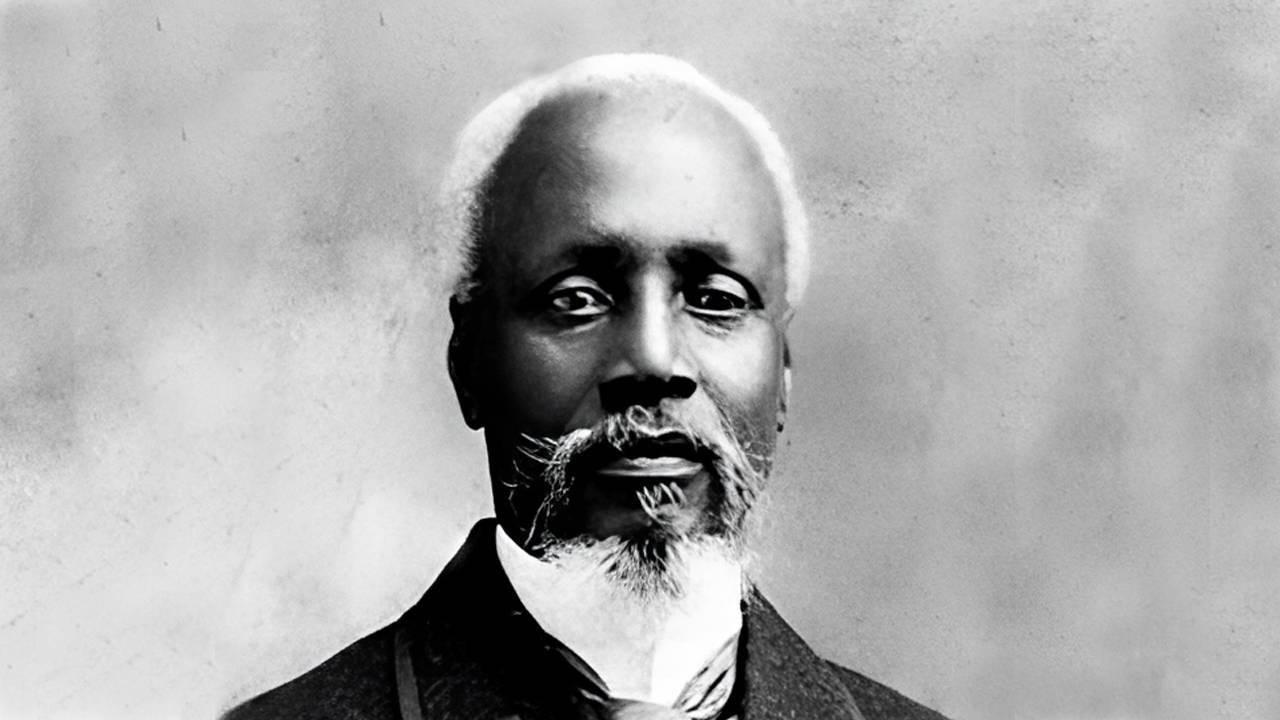
Jean Venel Casseus, one of the platform’s initiators, explains that this initiative was created to fill a significant gap, and this vast project is being carried out by him and a passionate team of Haitian literature lovers.

A Necessity

In Haiti, the lack of libraries remains a major challenge within the educational system. The culture of young people is often severely affected by this glaring lack. The current security crisis in Port-au-Prince, the capital of Haiti, plays a significant role in the degradation of the Haitian educational system, further exacerbating this shortage. Faced with this gap, a group of well-informed individuals decided to act to provide a serious alternative for those eager to learn more about Haitian literature. In this sense, this digital library dedicated exclusively to Haitian writers is a welcome addition.

See as well

Why Was This Project Created?

The idea for Ayiti Liv emerged from the harsh reality of the absence of accessible libraries in Haiti. Jean Venel Casseus explains: "The Haitian state has not truly taken charge of the intellectual training of the youth. In countries that believe in the fundamental role of books in individual development, every neighborhood has a library. In Haiti, some departments don’t even have a space where people can sit down to read and reflect. Yet, entertainment clubs are plentiful." In response to this situation, the Ayiti Liv team chose to use digital tools to provide a tangible and accessible solution for everyone. The platform www.ayitiliv.com was thus born, with the aim of providing unlimited access to Haitian writers’ works while making Haitian culture more accessible and visible to the world.

The Driving Forces Behind the Project

Ayiti Liv is supported by a team of four people: Jean Venel Casseus, Kerbson Louis (engineer), France Medeley Guillou, and Sophia Mésius. They have joined their efforts to bring this ambitious project to life. Their goal is simple: to give every young person with a smartphone the opportunity to access the richness of Haitian literary works, no matter where they are. The team works tirelessly, "day and night," as Jean Venel Casseus emphasizes, to ensure the platform’s sustainability and accessibility.

Pity or the work of an old soul crushed under the weight of an absinthe-flavored existence

Pity or the work of an old soul crushed under the weight of an absinthe-flavored existence

The word crisis carries an infinite number of meanings. No intention of revealing them all this afternoon. However, a few clarifications are necessary. A kid whose parents do not have enough money at Christmas to buy her a Little Black Mermaid doll has a fit and locks herself in her room without touching her meals for the day. A boy whose dog was suddenly poisoned by a neighbor in revenge or shot after contracting rabies, losing a faithful friend overnight, enters into crisis. Finally, a society in the grip of all sorts of mutations and whose leaders are weak, perhaps prolonged in a deep crisis. In the first case, the young girl sulks to attract the attention of her parents in order to feel appreciated by children her age at school or in the neighborhood. Today, thirty minutes of negotiations can be enough to find a lasting solution. In my day, a few well-aimed belt blows would have overcome this whim. But, humanity evolves, they say. In the second case, this boy can find his smile again after a few weeks. He needs a little attention and, probably, another dog. As Stendhal would say, only passion triumphs over passion. In the last case, this society led by inepts is shaken to its deep foundations. Its institutions can disintegrate one by one. The vital forces dissolve in no time. This situation creates a societal tsunami that destroys all life within this community. It is indeed a crisis. The crisis from this point of view constitutes an alarming, desperate situation in the existence of a community where nothing is going well. Chaos reigns supreme. The very essence of life disappears. The individual can take precedence over the community. Everyone tries to solve their problems without worrying about others. The closest neighbor is relegated light years away from you. How can we turn to creation? How can we continue to conceive of otherness? How can the artist absorb this great collective disarray as a source of motivation? These are the questions I must answer. An artist sees and feels what ordinary mortals cannot even imagine in a thousand-year life. He creates to denounce, when his conscience as a human being is revolted. He exalts heroes or the homeland according to his feelings. He sings the beauty of an irresistible, captivating or ugly resplendent woman. He can also use the ambient desolation to give meaning to life. Creating in literature as in the arts in general does not depend on the situation. The act of creation depends on the creator’s disposition. Events paralyze some and galvanize others. Creating is enjoyable. Everyone therefore enjoys according to their own whim. Writing opens the way to change. The writer takes a different look at the world. By embedding himself in reality, he embellishes it, makes it better or hideous depending on the message he intends to share. All things considered, with him, life is never fixed. Writing is putting the world in a jar to travel the universe. The artist broods over his work in all weathers. Oswald Durand was delighted to see Choucoune’s beautiful body from his secret observatory. Musset, on the other hand, was in pain writing his October night. As for Dany Laferrière, in exile, he described the horrors of the Duvalier dictatorship and the carefree attitude of the young girls in his neighborhood in this violent and dangerous world. Ultimately, the writer lives in a society with values ​​that he shares or not. They condition his existence or have no hold on him. In many ways, the surrounding world serves as his laboratory. He carries out his experiments there. He casts a new, worn, disillusioned, melancholic, violent, bitter look at the world depending on his mood. Pitié is the work of an old soul crushed under the weight of an existence that tastes of absinthe. Young Mike Bernard Michel lives by expedients and lies. The hands of life fall on him with indescribable violence. Misfortune embraces him day and night. Should we give up? Musset liked to say: "Man is an apprentice, pain is his master. And no one knows himself until he has suffered." The artist must produce under all skies. Such is his vocation. Incompetents in power, legal or highway bandits, the high cost of living, unemployment, heartaches are all subjects of concern for him. If it is true that a hungry belly has no ears, the fact remains that it keeps the brain awake. What am I saying, it stimulates it to the point of creating timeless works. Mr. Pitié, you have a bright future ahead of you. Work of Jean Rony Charles, the book is available from Éditions Repérage.

The Crucial Role of Literature in the Haitian Context

According to the initiators of Ayiti Liv, literature plays a fundamental role in the development of both individuals and society. It has two essential facets: creative and critical. Literature allows for dreaming through novels and poetry, as well as reflecting on one’s own reality through essays and academic works. In a country like Haiti, where social and economic challenges are numerous, Ayiti Liv aims to provide a space for reflection and a tool for shaping citizens who can think critically and constructively. "The more citizens we have who can think rigorously, both in science and in art, the more we will be shaping individuals with a soul and deep convictions," adds Jean Venel Casseus.

Ambitions for the Future

The Ayiti Liv team has high hopes for the future of this digital library. Their greatest wish is for this project to go beyond their own efforts and become a true cultural heritage, accessible to all future generations. They hope that the platform will not only be a reading tool but also become a true driver of intellectual and social transformation in Haiti.

Ayiti Liv, far more than just a digital library, represents hope for Haitian culture. Through this initiative, the team aims to reinvent access to literature and critical thinking, offering Haitian youth a gateway to better understanding their identity and future.

In a country where access to books is becoming increasingly limited, where even the National Library of Haïti is no longer truly under the control of Haitian authorities, and where more and more young people have access to smartphones, the importance of this digital library can no longer be questioned.

Pity or the work of an old soul crushed under the weight of an absinthe-flavored existence

Pity or the work of an old soul crushed under the weight of an absinthe-flavored existence

The word crisis carries an infinite number of meanings. No intention of revealing them all this afternoon. However, a few clarifications are necessary. A kid whose parents do not have enough money at Christmas to buy her a Little Black Mermaid doll has a fit and locks herself in her room without touching her meals for the day. A boy whose dog was suddenly poisoned by a neighbor in revenge or shot after contracting rabies, losing a faithful friend overnight, enters into crisis. Finally, a society in the grip of all sorts of mutations and whose leaders are weak, perhaps prolonged in a deep crisis. In the first case, the young girl sulks to attract the attention of her parents in order to feel appreciated by children her age at school or in the neighborhood. Today, thirty minutes of negotiations can be enough to find a lasting solution. In my day, a few well-aimed belt blows would have overcome this whim. But, humanity evolves, they say. In the second case, this boy can find his smile again after a few weeks. He needs a little attention and, probably, another dog. As Stendhal would say, only passion triumphs over passion. In the last case, this society led by inepts is shaken to its deep foundations. Its institutions can disintegrate one by one. The vital forces dissolve in no time. This situation creates a societal tsunami that destroys all life within this community. It is indeed a crisis. The crisis from this point of view constitutes an alarming, desperate situation in the existence of a community where nothing is going well. Chaos reigns supreme. The very essence of life disappears. The individual can take precedence over the community. Everyone tries to solve their problems without worrying about others. The closest neighbor is relegated light years away from you. How can we turn to creation? How can we continue to conceive of otherness? How can the artist absorb this great collective disarray as a source of motivation? These are the questions I must answer. An artist sees and feels what ordinary mortals cannot even imagine in a thousand-year life. He creates to denounce, when his conscience as a human being is revolted. He exalts heroes or the homeland according to his feelings. He sings the beauty of an irresistible, captivating or ugly resplendent woman. He can also use the ambient desolation to give meaning to life. Creating in literature as in the arts in general does not depend on the situation. The act of creation depends on the creator’s disposition. Events paralyze some and galvanize others. Creating is enjoyable. Everyone therefore enjoys according to their own whim. Writing opens the way to change. The writer takes a different look at the world. By embedding himself in reality, he embellishes it, makes it better or hideous depending on the message he intends to share. All things considered, with him, life is never fixed. Writing is putting the world in a jar to travel the universe. The artist broods over his work in all weathers. Oswald Durand was delighted to see Choucoune’s beautiful body from his secret observatory. Musset, on the other hand, was in pain writing his October night. As for Dany Laferrière, in exile, he described the horrors of the Duvalier dictatorship and the carefree attitude of the young girls in his neighborhood in this violent and dangerous world. Ultimately, the writer lives in a society with values ​​that he shares or not. They condition his existence or have no hold on him. In many ways, the surrounding world serves as his laboratory. He carries out his experiments there. He casts a new, worn, disillusioned, melancholic, violent, bitter look at the world depending on his mood. Pitié is the work of an old soul crushed under the weight of an existence that tastes of absinthe. Young Mike Bernard Michel lives by expedients and lies. The hands of life fall on him with indescribable violence. Misfortune embraces him day and night. Should we give up? Musset liked to say: "Man is an apprentice, pain is his master. And no one knows himself until he has suffered." The artist must produce under all skies. Such is his vocation. Incompetents in power, legal or highway bandits, the high cost of living, unemployment, heartaches are all subjects of concern for him. If it is true that a hungry belly has no ears, the fact remains that it keeps the brain awake. What am I saying, it stimulates it to the point of creating timeless works. Mr. Pitié, you have a bright future ahead of you. Work of Jean Rony Charles, the book is available from Éditions Repérage.

Share
About the Author
Moise Francois
Moise Francois
Moise Francois

Journalist editor, poet and apprentice lawyer.

See other articles from Moise Francois
Leave a comment

Recently Posted

Rutshelle Guillaume and Blondedy Ferdinand Team Up to Launch RGGlow

Elephant Haitian music and film icons Rutshelle Guillaume and Blondedy Ferdinand are adding another string to their bow with the launch of "RGGlow," a premium skincare brand. This unprecedented collaboration reflects their shared commitment to female empowerment and the celebration of beauty in all its diversity. Set to launch on December 12, 2024, the "RGGlow" line promises products designed to nourish, rejuvenate, and brighten the skin. Made with quality ingredients, "RGGlow" products aim to meet the specific needs of women looking for effective and elegant solutions for their beauty routine. The official launch will take place during an exclusive event at Blondedy Ferdinand Studio, starting at 5 p.m. The event will bring together celebrities, beauty professionals, and fans to celebrate this unique initiative. This is an anticipated moment that will mark the beginning of an ambitious and inspiring project. Beforehand, an exclusive live will be broadcast on December 11 at 7 p.m. on all platforms, allowing the general public to discover the behind the scenes of this entrepreneurial adventure. Rutshelle Guillaume and Blondedy Ferdinand will share the inspirations behind RGGlow, while revealing some secrets about the products that make up this range. This project represents much more than a simple cosmetics brand. RGGlow positions itself as a symbol of unity and determination, carried by two powerful and influential figures. Through this collaboration, Rutshelle and Blondedy wish not only to offer quality products, but also to convey a strong message: every woman deserves to feel beautiful, radiant and confident.

Newsletter

Subscribe to our newsletter to stay informed of all our activities and news on Haiti.

Haiti: The Center department, one of the departments most resistant to natural earthquakes

The Center department, commonly called Plateau Central, is one of the ten (10) departments of Haïti most robust in the face of certain natural phenomena. Before becoming one of the ten (10) departments of Haiti, the Center department was part of the Great North. It is renowned for its natural landscapes, its biosphere climate and its resistance to certain natural phenomena. In addition to its natural productions such as corn, millet and livestock, the Center department is also known for its high mountains which constitute a robust defense against certain natural phenomena such as earthquakes and floods. Composed mainly of high mountains, the department of Charlemagne Peralte and Benoît Batravil is the only one of the ten (10) not to have an outlet to the sea. However, its inhabitants take advantage of the vast rivers, rivers and lakes which cross it . With an area of ​​3,487 km², the population of the Center department is estimated at 678,626 according to a study carried out in 2009. On this same area, the department is divided into four (4) districts and twelve (12) communes. Bordered to the east by the Dominican Republic, the Center department connects other departments of the country such as Nord and Artibonite, and connects the two countries of the island through border areas like Balladère, Hinche and Cerca Carvajal. In the Center department, there are sites that could attract tourists for their natural beauty. In Saut d’Eau, there is the Saut d’Eau waterfall, in Hinche we find the Zim basin, the Péligre lake, the Péligre hydroelectric dam, the Artibonite river, and the Deux river (2 ) Rooms in Thomonde, more precisely in "El Manni", not far from the communal section of Caille-Epin. Thanks to its strong mountains and its natural climate, the Center department remains one of the most resistant departments in the event of an earthquake in Haiti.

Haïti / Fort Saint-Joseph: Historical Vestige of the Resistance

Located in the Bay of Cap-Haitien, Fort Saint-Joseph stands like a silent guardian of Haiti’s tumultuous history. Built in two stages, in 1748 and 1774, this defensive work was once a crucial element of the city’s protection system against French colonial assaults. Alongside other forts such as Picolet and Magny, its mission was to control maritime passages and defend Haitian sovereignty. However, its history is not limited to its defensive function. In 1802, then under the control of General Henry Christophe, the fort became the scene of a heroic act of resistance. Faced with the French expeditionary army, Christophe ordered the destruction of the powder magazine and the entrance gate to the fort, thus rendering it temporarily unusable. This courageous gesture, although tactical, left indelible scars on the very structure of the fort, testifying to the fierce clashes between French colonial forces and Haitian resistance fighters. These historic marks, still visible today, offer a window into the country’s tumultuous past. They allow visitors and historians to interpret the fierce struggles that forged Haitian identity. Fort Saint-Joseph, as a witness to the resistance and the struggle for freedom, embodies the indomitable spirit of the Haitian people. Recognizing its historical significance, the Haitian government officially classified Fort Saint-Joseph as national heritage in 1995. This recognition paved the way for restoration efforts aimed at preserving this precious vestige of Haitian military heritage. Thanks to collaboration between the public sector and local private funding, the fort has recently been restored and enhanced. Thus, Fort Saint-Joseph remains much more than a simple stone structure. It is a living symbol of the resilience and determination of the Haitian people, reminding all visitors that Haiti’s history is deeply rooted in the struggle for freedom and human dignity. To virtually discover this jewel of Haitian history, you can visit the following link: https://haitiwonderland.com/haiti-virtual-reality-ht/monuments-histoire/haiti--fort-saint-joseph--visite- virtual/11

Recently Posted

History

History

First black nation to free itself from slavery and gain independence from France in 1804 and influenced other liberation movements around the world, inspiring struggles for freedom and equality.

Natural beauty

Natural beauty

Haïti is blessed with spectacular natural landscapes, including white sand beaches, mountains and rich biodiversity.

Heritage

Heritage

Haïti has a rich historical heritage, including sites like the Citadelle Laferrière and the Sans-Souci Palace, listed as UNESCO World Heritage Sites.

Culture

Culture

Haïti has a rich and diverse culture, influenced by African, European and indigenous elements. Haitian music, dance, art and cuisine are celebrated around the world.

  • +
    • Post