contact@haitiwonderland.com+509 36184317

Discover

Shopping Cart

HAITI HERITAGE: The Gingerbread style, a heritage in danger

HAITI HERITAGE: The Gingerbread style, a heritage in danger

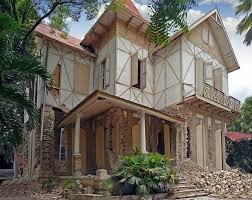
This style of Gingerbread house made its triumphant entry into the project of a new model of building in the middle of the 20th century in Haïti with the arrival of new Haitian engineers studied in Europe, more precisely in France, who were going to provide Haïti with a new form of construction. At that time, the Haitian landscape was flourishing, the city of Port-Au-Prince is full of trees where the weather is beautiful in the heights of the city of Princes, it was a heavenly place where businessmen, mixed with politicians depending on the time began to live in this green space. Today, the Gingerbread house style, a built heritage in danger.

The Gingerbread house style, a heritage in danger.

The State says nothing about the devaluation of these old houses which marked the post-colonial era. These houses, which experienced their glory days in the first half of the 20th century, are today in danger. Some of these houses which are in ruins, the majority, in a state of disrepair. Faced with natural disasters, the materials from which they were built were mainly wood, they could not withstand bad weather, because their lifespan is limited. This new style marked more than a century in the history of a new model of architecture in Haiti. However, their maintenance is too expensive. As wood is now scarcer, repair work becomes very expensive.

Following the adoption of new construction models towards the second half of the 21st century, we could see the virtual disappearance of this Gingerbread house model in Haiti. A new form of construction would replace the Gingerbread style, this is the moment when concrete offers possibilities for larger constructions and on larger spaces. Hence uses which accelerate their degradation or their frequent demolition in favor of concrete constructions.

Several attempts to evolve gingerbread, from wood and masonry, to reinforced concrete, remain very limited. In addition, these new houses built in concrete no longer have all the traditional characteristics of gingerbread. For Mr. Doret, “it’s a radical change, the style has disappeared”.

These old houses, in danger of disappearing, were affected and damaged during the earthquake of January 13, 2010. To reduce the damage caused by the said earthquake, private institutions, FOKAL jointly carried out an operation with one of the Haitian State organizations ,ISPAN, in order to safeguard the few Gingerbread style heritage which were not damaged during the earthquake of January 12, 2010.

Gingerbread style, heritage in danger, the Haitian state and the private sector should act to be able to save these old houses for future generations. Does the country exist without its historical heritage???
Share
About the Author
Leave a comment

Recently Posted

Haiti: Discovering Lake Péligre

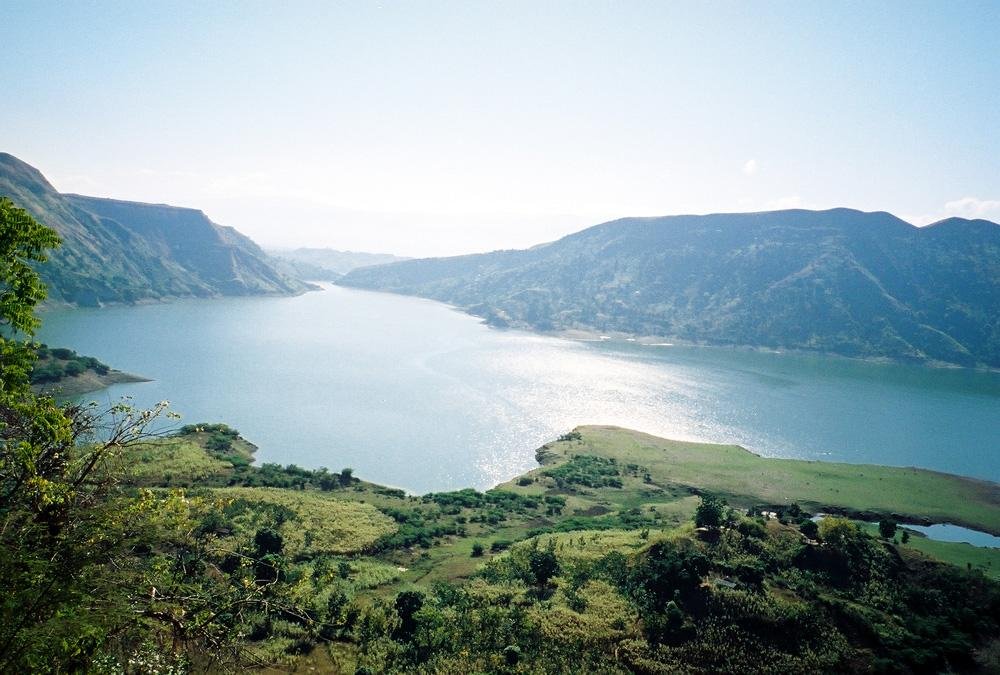
At the heart of the majestic Haitian topography, lies a natural gem of breathtaking beauty: Lake Péligre. Nestled in the mountains of Haiti’s central region, this artificial lake is a wonder for local residents and amazed visitors alike. From its historical creation to its contemporary ecological importance, let’s explore together the riches of Lake Péligre. Origin and History: Lac de Péligre is the result of an ambitious engineering project undertaken in the 1950s. At that time, the Haitian government, in collaboration with international partners, undertook the construction of the Péligre Dam on the Artibonite River. The main goal was to provide large-scale electricity to Haïti while regulating river flooding to protect agricultural land downstream. Ecology and Biodiversity: Beyond its usefulness as a source of hydraulic energy, Lake Péligre is home to rich ecological diversity. The calm waters of the lake provide vital habitat for a variety of native fish species, supporting local fishing communities. In addition, the surrounding forests and hills that border the lake are home to diverse flora and fauna, contributing to the preservation of the regional ecosystem. Tourism and Leisure: For outdoor enthusiasts and nature enthusiasts, Lake Péligre offers a multitude of leisure opportunities. Visitors can enjoy peaceful boat rides on the tranquil waters of the lake, offering panoramic views of the surrounding mountains. Additionally, hiking trails winding through lush forests allow hikers to explore the area’s natural beauty. Lake Péligre represents much more than a simple artificial body of water. It is a living testament to human ingenuity and the natural beauty of Haiti. As an emerging tourism destination, it offers visitors an immersive experience in nature, while highlighting the crucial importance of environmental conservation. By preserving this natural treasure, we also preserve the sustainable future of our planet.

Newsletter

Subscribe to our newsletter to stay informed of all our activities and news on Haiti.

Recently Posted

History

History

First black nation to free itself from slavery and gain independence from France in 1804 and influenced other liberation movements around the world, inspiring struggles for freedom and equality.

Natural beauty

Natural beauty

Haïti is blessed with spectacular natural landscapes, including white sand beaches, mountains and rich biodiversity.

Heritage

Heritage

Haïti has a rich historical heritage, including sites like the Citadelle Laferrière and the Sans-Souci Palace, listed as UNESCO World Heritage Sites.

Culture

Culture

Haïti has a rich and diverse culture, influenced by African, European and indigenous elements. Haitian music, dance, art and cuisine are celebrated around the world.

  • +
    • Post