contact@haitiwonderland.com+509 36184317

Discover

Shopping Cart

What Does December 25th Mean to Haitians?

What Does December 25th Mean to Haitians?

In Haiti, December 25th, Christmas Day, is much more than just a religious holiday. It is a date filled with traditions, cultural meanings, and moments of sharing. This article explores what this day means to Haitians and how it is celebrated throughout the country.

A Deep and Spiritual Religious Holiday

For most Haitians, December 25th is first and foremost a religious holiday, marking the birth of Jesus Christ. As a country where the Christian faith, particularly Catholicism and Protestantism, is central, Christmas is a sacred day.

Haitians gather in churches for special masses, often accompanied by Christmas carols, prayers, and Bible readings. These celebrations provide an opportunity to connect with their faith while sharing a spiritual moment with the community. Christmas mass is a tradition deeply rooted in the hearts of Haitians and is the highlight of the festivities.

See as well

Haïti
Haïti
Haïti

A Moment of Sharing with the Family

Beyond the religious dimension, December 25 is a day dedicated to family. Haitians take advantage of this holiday to gather with their loved ones around a festive meal. This moment is marked by warm exchanges, lively discussions and a deep feeling of gratitude.

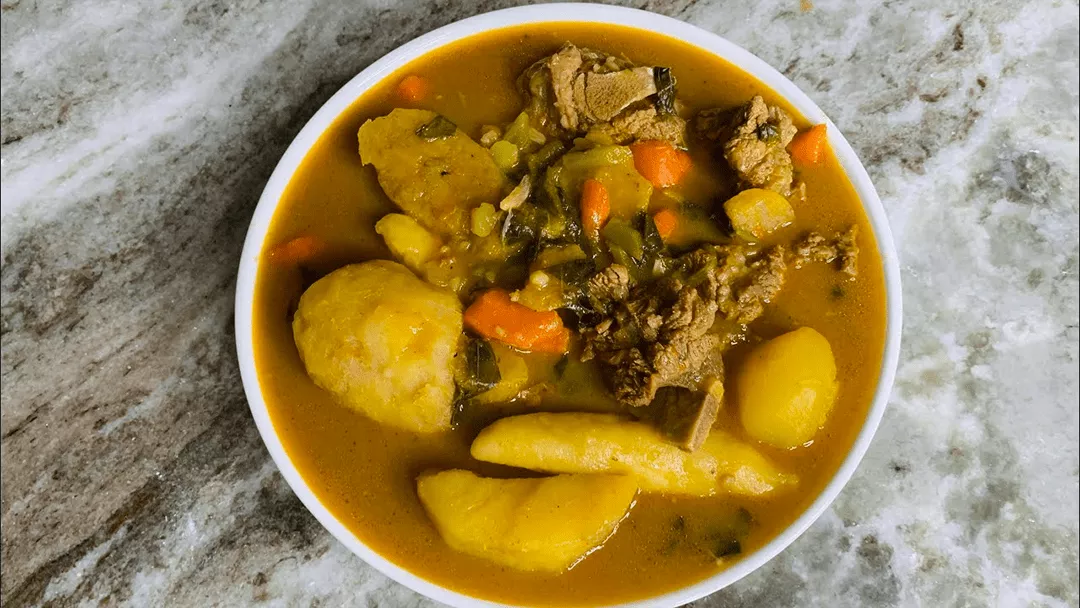
The Christmas meal is a central element of this day. It often includes emblematic dishes such as griot, rice with peas, bananas weighed, potato bread and of course, the traditional soup joumou for some. Families take the time to cook together, strengthening family ties and perpetuating recipes and culinary traditions.

Haïti
Haïti
Haïti

A Day of Generosity and Solidarity

December 25 is also an opportunity to show generosity towards the most disadvantaged. In Haiti, Christmas celebrations are often marked by community initiatives: food distributions, gifts for underprivileged children, or the organization of collective meals.

Churches, associations and even families get involved to help those in need, thus illustrating the Christmas spirit which emphasizes sharing and solidarity. This generosity reinforces the sense of community which is at the heart of Haitian culture.

Haïti
Haïti
Haïti

A Day of Cultural and Festive Expressions

December 25 is also an opportunity for Haitians to express their creativity through music, dance and decorations. Christmas carols, whether traditional or modern, resonate in homes and neighborhoods. Families decorate their homes with lights, garlands, and sometimes even handmade nativity scenes, demonstrating their commitment to tradition.

Children play a central role in these celebrations, receiving gifts or surprises prepared by their parents. These moments of joy and laughter make December 25 a particularly magical day for the youngest.

Haïti
Haïti
Haïti

December 25: A Blend of Faith, Family, and Culture

For Haitians, December 25 is a day when faith, family, and culture intertwine to create a unique moment of celebration. It is an opportunity to reconnect with loved ones, share the values ​​of solidarity and generosity, and celebrate their cultural heritage.

Whether through masses, festive meals, Christmas carols, or charitable initiatives, Christmas in Haïti is a celebration rich in meaning and emotion. For Haitians, December 25 is not just a day, it is a celebration of life, love and hope.

Share
About the Author
Appolon Guy Alain
Appolon Guy Alain
Appolon Guy Alain

Full Stack Developer, Créatif, expérimenté, passionné des nouvelles technologies et de l’art.

See other articles from Appolon Guy Alain
Leave a comment

Recently Posted

Haiti: the Island of Lovers

The ideal place for vacations, honeymoons, excursions, sightseeing tours and much more. This paradise island, located in the south of Haiti, near Île-à-Vache, offers a picturesque setting which makes it a destination of choice. A stone’s throw from Île à Vache, a 128 km² island bathed by the crystal clear waters of the Caribbean Sea, Île des Amoureux is a true gem to explore in Haiti. Just 5.50 nautical miles from the coastal town of Les Cayes, this island is easily accessible. Travelers can reach the town of Les Cayes by car or opt for charter flights arriving at the regional airport. From the port of Les Cayes, a short 20-minute boat trip will take you to this enchanting destination. The fascinating history of Île à Vache adds an extra dimension to your experience. Once a refuge for pirates and buccaneers, this island was nicknamed "Treasure Island". Today, it continues to charm visitors with its authentic ambiance, pristine beaches and crystal clear waters. Whether you’re looking for beach relaxation, underwater adventures, a romantic getaway, an exotic adventure or cultural discoveries, Lovers’ Island has it all. Dive into the clear waters to explore colorful coral reefs, hike through lush vegetation, or soak up the bustling atmosphere of local markets. For couples looking for romance, there’s nothing like a sunset stroll on the beach, followed by a candlelit dinner under the stars. Lovers’ Island is much more than just a vacation destination, it is a true haven of peace where adventure and relaxation meet. Whether you are a lover of relaxation or an adventurer at heart, this island will seduce you with its authentic charm and breathtaking landscapes. Embark on an unforgettable getaway and discover all that Haïti has to offer on this island paradise.

Haïti et son Rôle Pionnier dans l’Abolition de l’Esclavage Mondial

For centuries, the institution of slavery has darkened human history, leaving behind a legacy of pain, oppression and the struggle for freedom. However, in this dark tale, one nation stands out for its courage and determination to break the chains of oppression: Haiti. Located in the Caribbean, Haïti played a pioneering role in the abolition of slavery, laying the foundation for the fight for freedom and equality around the world. The history of slavery in Haïti dates back to the arrival of Europeans on the island, which was then called Santo Domingo, in the 15th century. French colonists quickly established an economy based on sugar and coffee production, cruelly exploiting millions of African slaves deported to work on plantations. However, this brutal system engendered fierce resistance from slaves, whose fight for freedom ultimately led to one of the most significant revolutions in history. In 1791, under the leadership of iconic figures such as Toussaint Louverture, Jean-Jacques Dessalines and Henri Christophe, Haitian slaves rose up against their oppressors in an unprecedented rebellion. This revolt resulted in a war of independence that lasted more than a decade, but ultimately resulted in the proclamation of Haiti’s independence in 1804, making that country the first post-colonial nation ruled by people from slavery. The impact of the Haitian Revolution on the abolition of slavery worldwide cannot be overstated. By breaking the chains of oppression and proclaiming their independence, Haitians have sent a powerful message to all oppressed peoples around the world: freedom is possible, and it is worth the struggle. The example of Haïti inspired other movements for the abolition of slavery in the Americas and beyond, thus helping to shake the very foundations of the institution of slavery. Haiti’s participation in the fight against slavery was not limited to its territory; it also extended to external actions where Haitian men were sent or actively participated in movements for the abolition of slavery in other regions of the world. For example, Haitian President Alexandre Pétion supported Simón Bolívar, the leader of the South American revolution, by providing him with weapons, money and even men, which contributed to the liberation of several countries in America Latin of colonial domination. Haïti also provided support for independence movements in Central America. Haitian fighters, led by General Jean-Pierre Boyer, helped Venezuelan patriots fight against Spanish rule, contributing to the liberation of that region. The Haitian government financially and diplomatically supported movements for the abolition of slavery in countries such as Venezuela, Colombia and Mexico, contributing to the gradual eradication of this institution throughout the region. Although Haïti did not directly participate in the American Civil War, many Haitians and descendants of Haitians played crucial roles in the abolitionist movement in the United States. Figures who were of Haitian origin or of Haitian ancestry, were important voices in the fight against slavery and for equal rights in the United States. The legacy of the Haitian Revolution remains a symbol of resistance and courage for future generations. Today, as the world continues to struggle against injustice and oppression in various forms, Haiti’s history reminds us that the fight for freedom is a universal fight, one that transcends borders and times. Haiti’s participation in the abolition of slavery throughout the world remains a crucial chapter in the history of humanity. Through their courage and determination, Haitians have paved the way for a future where freedom and equality are inalienable rights for all.

Newsletter

Subscribe to our newsletter to stay informed of all our activities and news on Haiti.

Jean-Jacques Dessalines, leader of the Haitian Revolution

In the annals of the history of Haiti, an island located in the Caribbean at the entrance to the Gulf of Mexico and shared with the Dominican Republic, Jean-Jacques Dessalines emerges like a phoenix from the ashes of oppression. Born a slave on September 20, 1758 in the home of Henri Duclos, in Cormier (Grande-Rivière-du-Nord), in the French colony of Saint-Domingue, Dessalines was a Creole of African (Afro-Caribbean) origin. Freed during the 1794 abolition achieved through slave revolts, actually served as an officer in the French army during the French Revolution. At that time, the ideas of freedom and equality were at the heart of the concerns of the inhabitants of the colonies. Dessalines actively participated in the fighting against the Spanish and British forces, alongside the French, in Santo Domingo. Having risen to the rank of Lieutenant General, Jean-Jacques Dessalines turned against the French during the Leclerc expedition, sent to Saint-Domingue by Bonaparte to reestablish colonial authority and slavery during the Haitian Revolution. After the capture and deportation of Toussaint Louverture to France on June 7, 1802, Dessalines assumed a leading role in continuing the struggle for independence. He led numerous battles, including the battle of Crête-à-Pierrot in March 1802, where he galvanized his soldiers with his famous declaration: “Let those who want to remain slaves of the French leave the fort, let those, on the contrary, who want to die as free men, line up around me.” On January 1, 1804, Jean-Jacques Dessalines achieved the long-awaited goal of independence by proclaiming Haïti as a sovereign nation, becoming the second country in the Americas to gain independence from a colonial power. He became the first leader of the newly formed nation and was named Emperor under the name James I. However, his imperial reign was marked by authoritarian and brutal policies, including the massacre of many white settlers and the redistribution of land to peasants that was in the hands of the generals of the independence army. In addition, he organized the hunt for delinquents in the city while implementing rigorous agrarian policies, considering that they represented a threat to the stability of the nation, these controversial actions caused divisions within Haitian society. Dessalines was assassinated on October 17, 1806 following a plot organized by some of his generals in the Haitian army. His death marked the end of his brief but influential period in power. Despite the controversies surrounding his methods, he is recognized as the main architect of Haiti’s independence and his name was honored in 1903 by being attributed to the Haitian national anthem, La Dessalinienne, composed by Justin Lhérisson.Finally, the great visionary man Jean Jacques Dessalines remains an emblematic figure in the history of Haiti, recognized for his role in the fight for independence and the end of slavery in the region.

Recently Posted

History

History

First black nation to free itself from slavery and gain independence from France in 1804 and influenced other liberation movements around the world, inspiring struggles for freedom and equality.

Natural beauty

Natural beauty

Haïti is blessed with spectacular natural landscapes, including white sand beaches, mountains and rich biodiversity.

Heritage

Heritage

Haïti has a rich historical heritage, including sites like the Citadelle Laferrière and the Sans-Souci Palace, listed as UNESCO World Heritage Sites.

Culture

Culture

Haïti has a rich and diverse culture, influenced by African, European and indigenous elements. Haitian music, dance, art and cuisine are celebrated around the world.

  • +
    • Post