contact@haitiwonderland.com+509 36184317

Discover

Shopping Cart

Idea for your breakfast in Haiti

Idea for your breakfast in Haiti

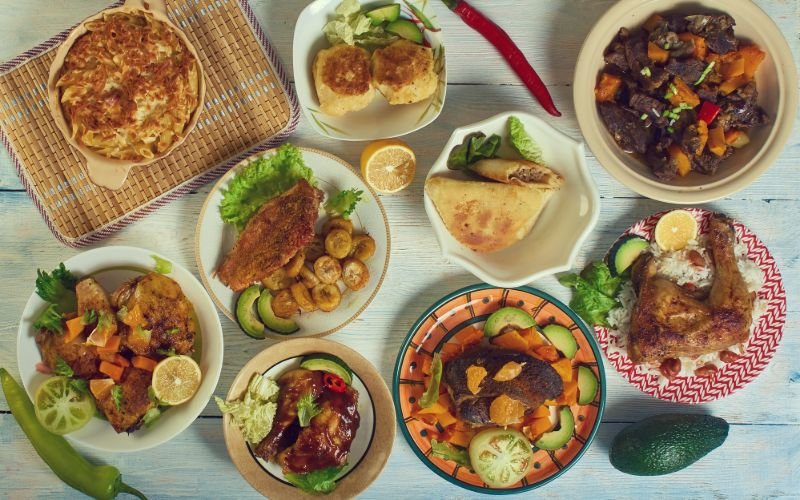
Haiti, a pearl of the Caribbean, not only boasts picturesque landscapes and rich history, but also offers a variety of culinary delights that tantalize the taste buds from the first meal of the day. Haitian breakfast, an exquisite blend of local flavors and culinary traditions, is an experience in its own right. Let’s discover together some ideas to start your day in the most delicious way possible.

Haïti : Bannann a Ze

1. Bannann a Ze: The Perfect Alliance of Egg and Plantain

In the Haitian countryside, breakfast often begins with the classic delights of well-spiced Haitian eggs and sweet plantains. It’s a simple but divine combination that awakens the senses and offers a dose of energy to face the day.

Haïti : Pate kòde
Haïti : Pate kòde
Haïti : Pate kòde

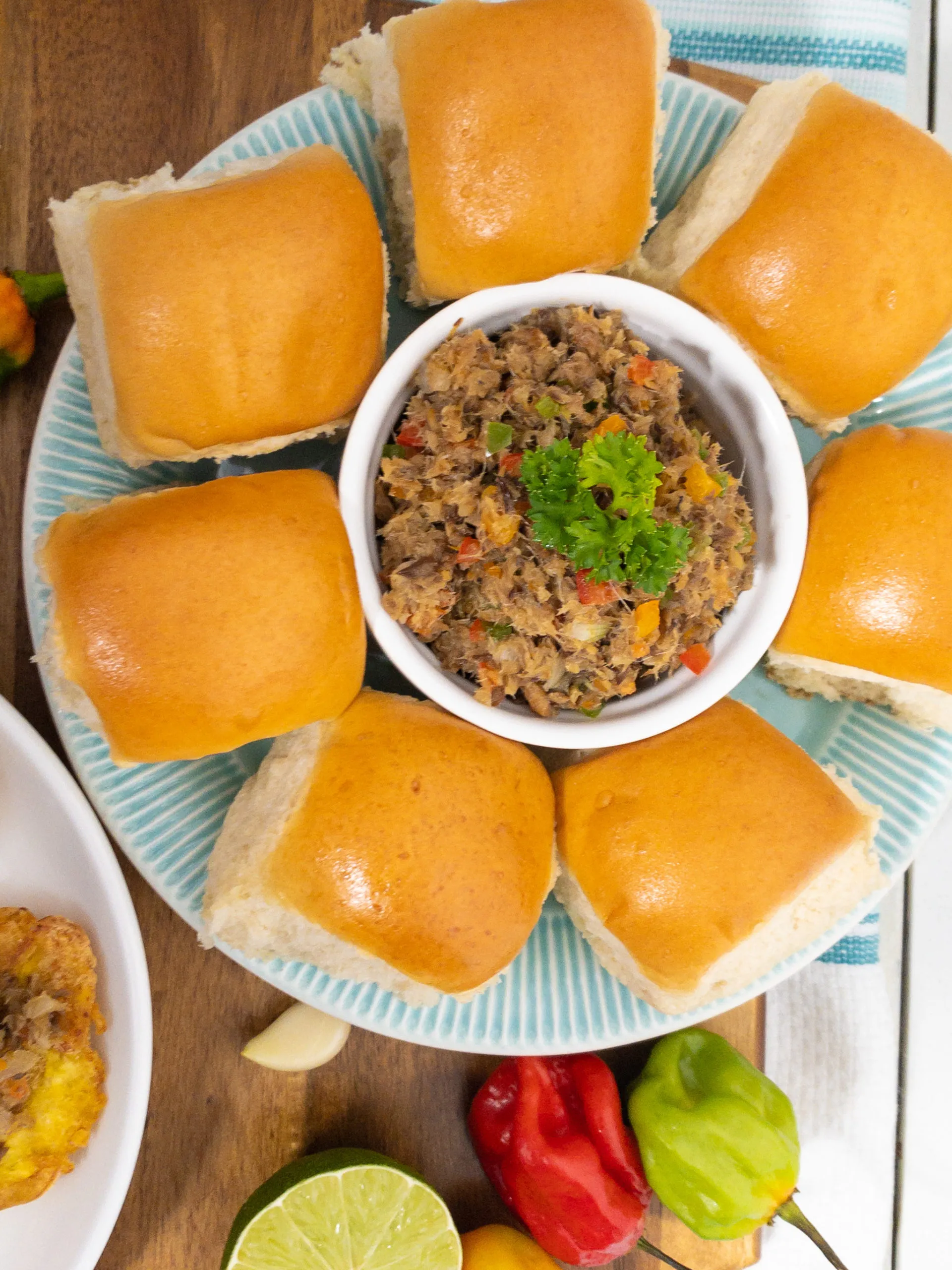
2. Pate Kòde: The Crispy Tradition of the Streets of Haiti

Impossible to walk the Haitian streets without encountering a “Pate Kòde” seller. This traditional delicacy, found in alleyways as well as in upscale restaurants, is a tasty blend of dough, spices, and meat, often chicken. Whichever flavor you choose, each bite is an explosion of authentic tastes.

Haïti : Bannann a pwason

3. Bannann a Pwason: A Healthy and Tasty Balance

This balanced and energetic Haitian dish combines bananas with boiled fish sauce, accompanied by a fresh salad. An ideal option for those looking for a nutritious breakfast without compromising on flavor.

Haïti : Akasan
Haïti : Akasan
Haïti : Akasan

4. Akasan: The Sweet Sweetness of Haitian Tradition

For lovers of sweets, Akasan is an essential choice. This popular and traditional Haitian drink, made from corn, can be enjoyed cold or warm. Its consistency is reminiscent of a smoothie, making it the ideal companion for a morning enjoyment, particularly with bread.

Haïti : Chokola a pen

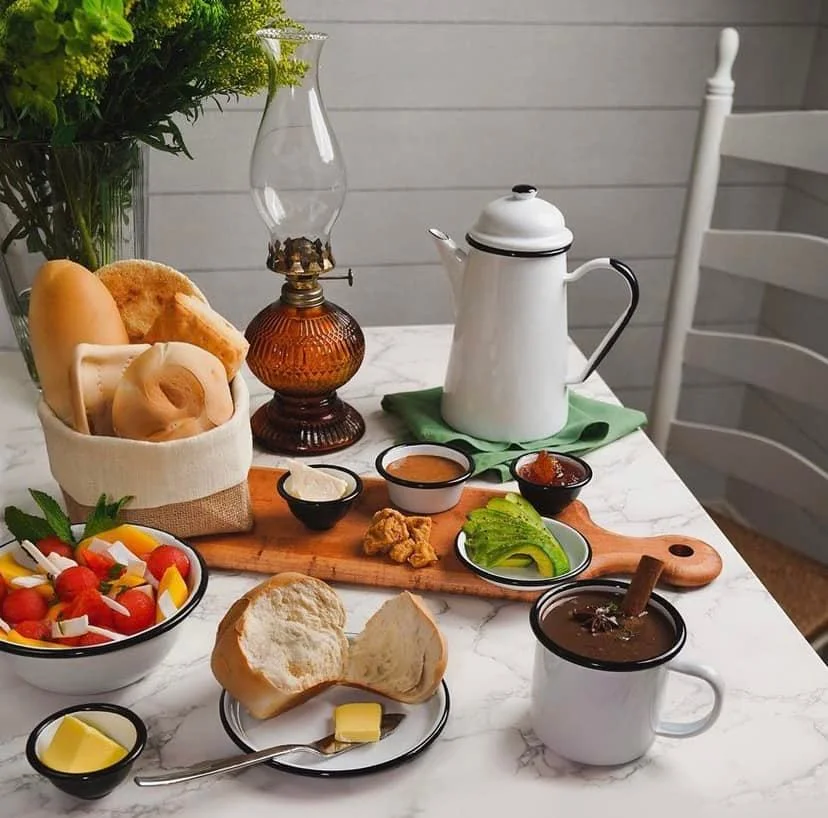
5. Chokola a Pen: Comforting Hot Chocolate and Gourmet Accompaniments

Start your day gently with a delicious Haitian hot chocolate, accompanied by bread and butter or mamba (peanut butter). A comforting option that warms the heart and stomach.

Haïti : Pen a ze
Haïti : Pen a ze
Haïti : Pen a ze

6. Pen a Ze: A Classic for an Energetic Start

There’s nothing like a classic breakfast of bread and omelet, topped with tomatoes, onions and other fresh vegetables. A real delight to start the day off right.

Haïti : Lam Bouyi
Haïti : Lam Bouyi
Haïti : Lam Bouyi

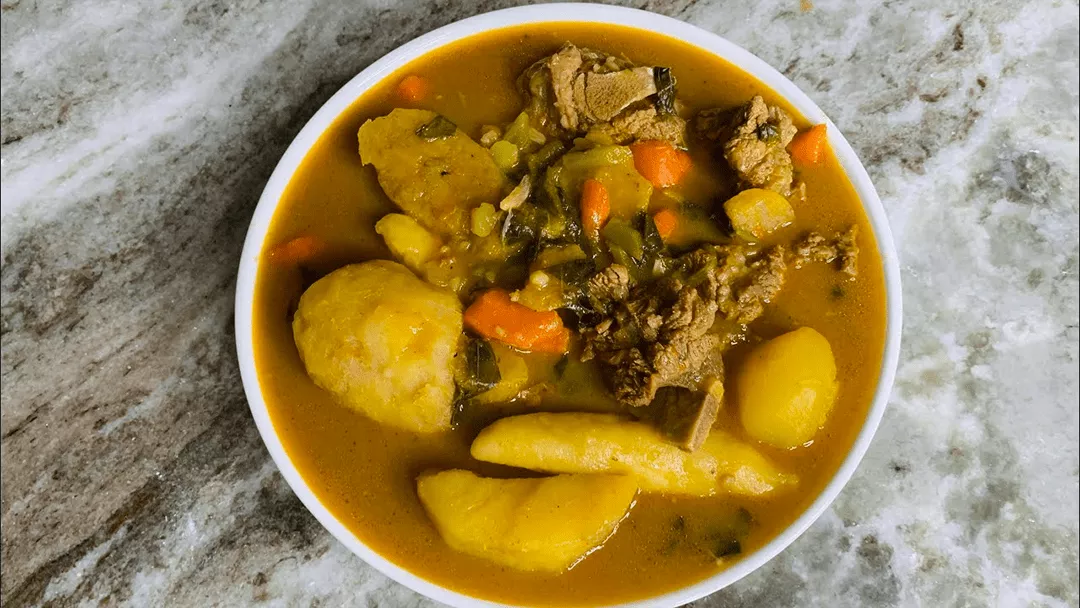
7. Lam Bouyi Sòs Pwason: The Culinary Art of Breadfruit

Lam (Bread Fruit) occupies a special place in Haitian cuisine. Boiled and accompanied by fish in sauce, it is an authentic taste experience. It is also found in popular juices such as Tonmtonm.

Haïti : Mayi moulen
Haïti : Mayi moulen
Haïti : Mayi moulen

8. Mayi Moulen ak Fèy Zepina: Fusion of Corn and Spinach

Originally from Haiti, this preparation made from ground corn mixed with spinach leaves offers a healthy and delicious option for breakfast.

Haïti : Spaghetti
Haïti : Spaghetti
Haïti : Spaghetti

9. Haitian Spaghetti: A Variation Full of Flavors

Haitian spaghetti, or "espageti", is a delicious fusion of pasta, tomato sauce and sausage. This Haitian recipe, enriched with onions, green pepper, chili pepper, olive oil and fresh thyme, will awaken your taste buds in the morning.

Haïti : 10. Bannann à Fwa

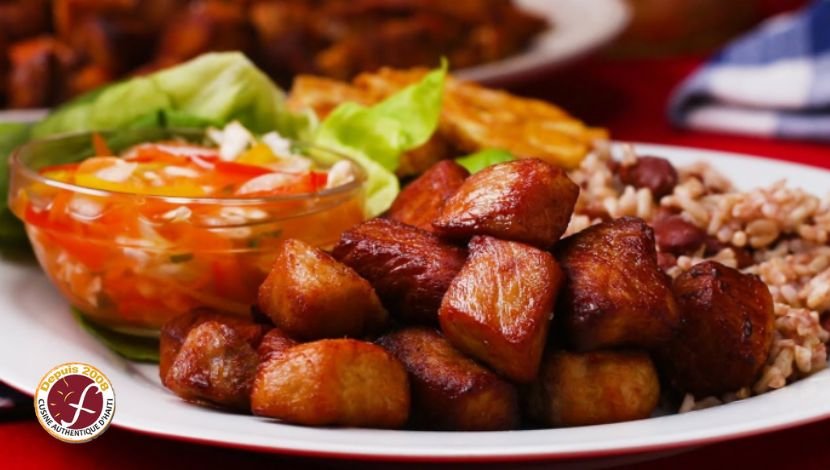
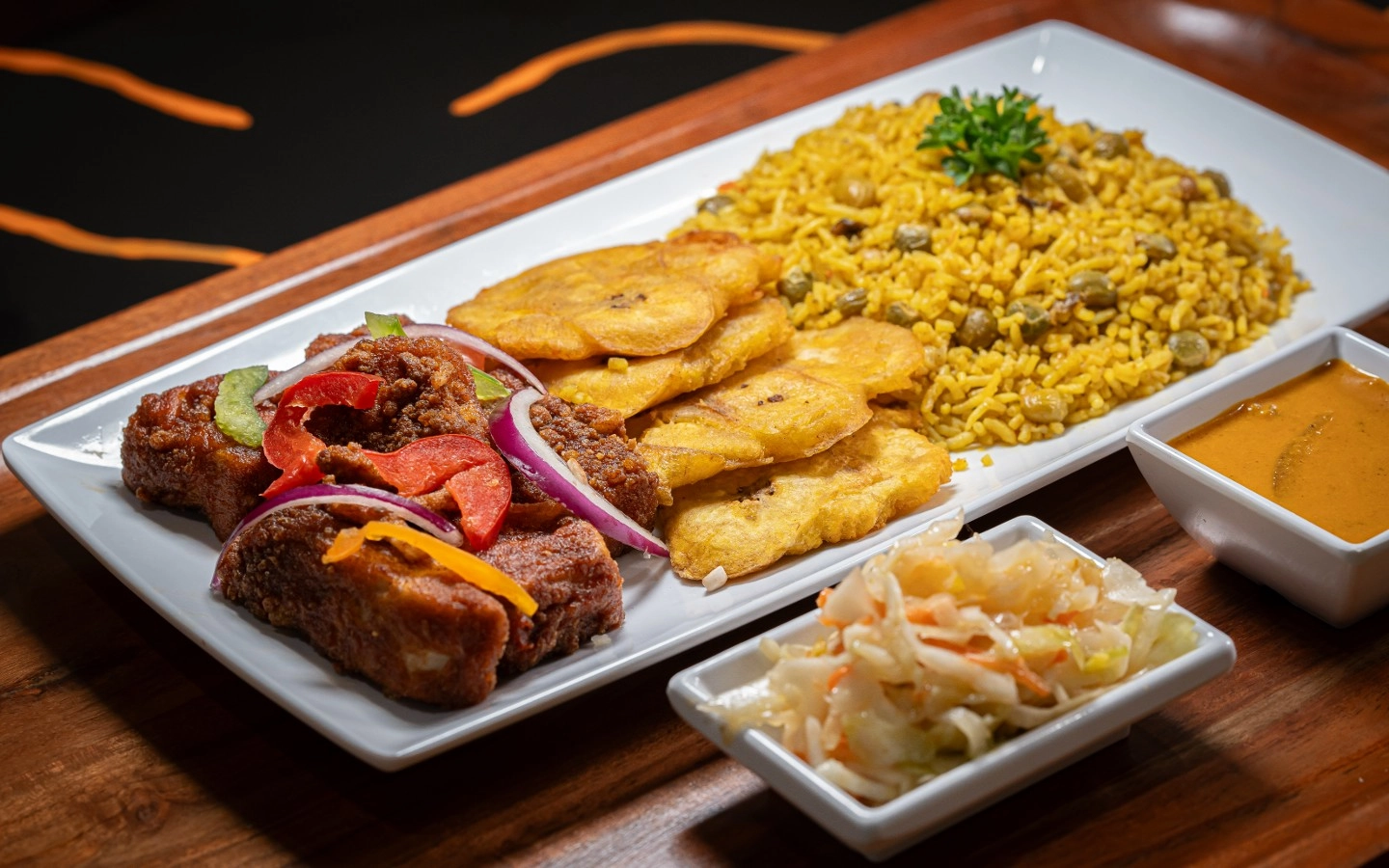
10. Bannann in Fwa: A Balanced Feast

This typically Haitian dish combines bananas with a beef or goat liver sauce, called “sòs fwa di”. In the absence of these meats, one can opt for chicken or turkey livers and gizzards for an equally delicious experience.

Haïti : Pen a zaboka

11. Pen a Zaboka: The Perfect Accompaniment

Pen ak zaboka is a Haitian classic. This combination of bread and avocado is a morning staple, often accompanied by a cup of strong coffee.

Haïti : Kasav a manba

12. Kasav a Manba: The Cassava Cake with All Flavors

This round cassava-based pancake is a versatile choice. Eaten for breakfast or as a snack, it can be accompanied by butter, mamba, jam, avocado, or even filled with coconut, offering an explosion of flavors in the morning.

In conclusion, Haitian breakfast is much more than just a meal. It is a culinary experience that captures the very essence of Haitian culture and tradition. Whether you opt for the rustic simplicity of a Bannann a Ze or the elegance of Pate Kòde on the busy streets, each bite transports you to the heart of Haiti’s vibrant culinary scene. So, let yourself be carried away by these exquisite flavors and make your breakfast an unforgettable taste adventure.

Share
About the Author
Appolon Guy Alain
Appolon Guy Alain
Appolon Guy Alain

Full Stack Developer, Créatif, expérimenté, passionné des nouvelles technologies et de l’art.

See other articles from Appolon Guy Alain
Carla Blanchard Petit-Frere

Good morning
You forgot ragout ak Mayi or banane

December 19, 2024 - 06:18:46 AM
Leave a comment

Recently Posted

Jean-Jacques Dessalines, leader of the Haitian Revolution

In the annals of the history of Haiti, an island located in the Caribbean at the entrance to the Gulf of Mexico and shared with the Dominican Republic, Jean-Jacques Dessalines emerges like a phoenix from the ashes of oppression. Born a slave on September 20, 1758 in the home of Henri Duclos, in Cormier (Grande-Rivière-du-Nord), in the French colony of Saint-Domingue, Dessalines was a Creole of African (Afro-Caribbean) origin. Freed during the 1794 abolition achieved through slave revolts, actually served as an officer in the French army during the French Revolution. At that time, the ideas of freedom and equality were at the heart of the concerns of the inhabitants of the colonies. Dessalines actively participated in the fighting against the Spanish and British forces, alongside the French, in Santo Domingo. Having risen to the rank of Lieutenant General, Jean-Jacques Dessalines turned against the French during the Leclerc expedition, sent to Saint-Domingue by Bonaparte to reestablish colonial authority and slavery during the Haitian Revolution. After the capture and deportation of Toussaint Louverture to France on June 7, 1802, Dessalines assumed a leading role in continuing the struggle for independence. He led numerous battles, including the battle of Crête-à-Pierrot in March 1802, where he galvanized his soldiers with his famous declaration: “Let those who want to remain slaves of the French leave the fort, let those, on the contrary, who want to die as free men, line up around me.” On January 1, 1804, Jean-Jacques Dessalines achieved the long-awaited goal of independence by proclaiming Haïti as a sovereign nation, becoming the second country in the Americas to gain independence from a colonial power. He became the first leader of the newly formed nation and was named Emperor under the name James I. However, his imperial reign was marked by authoritarian and brutal policies, including the massacre of many white settlers and the redistribution of land to peasants that was in the hands of the generals of the independence army. In addition, he organized the hunt for delinquents in the city while implementing rigorous agrarian policies, considering that they represented a threat to the stability of the nation, these controversial actions caused divisions within Haitian society. Dessalines was assassinated on October 17, 1806 following a plot organized by some of his generals in the Haitian army. His death marked the end of his brief but influential period in power. Despite the controversies surrounding his methods, he is recognized as the main architect of Haiti’s independence and his name was honored in 1903 by being attributed to the Haitian national anthem, La Dessalinienne, composed by Justin Lhérisson.Finally, the great visionary man Jean Jacques Dessalines remains an emblematic figure in the history of Haiti, recognized for his role in the fight for independence and the end of slavery in the region.

Newsletter

Subscribe to our newsletter to stay informed of all our activities and news on Haiti.

Recently Posted

History

History

First black nation to free itself from slavery and gain independence from France in 1804 and influenced other liberation movements around the world, inspiring struggles for freedom and equality.

Natural beauty

Natural beauty

Haïti is blessed with spectacular natural landscapes, including white sand beaches, mountains and rich biodiversity.

Heritage

Heritage

Haïti has a rich historical heritage, including sites like the Citadelle Laferrière and the Sans-Souci Palace, listed as UNESCO World Heritage Sites.

Culture

Culture

Haïti has a rich and diverse culture, influenced by African, European and indigenous elements. Haitian music, dance, art and cuisine are celebrated around the world.

  • +
    • Post