contact@haitiwonderland.com+509 36184317

Discover

Shopping Cart

Haitian Otaku Party: A Celebration of Japanese Culture in Port-au-Prince

Haitian Otaku Party: A Celebration of Japanese Culture in Port-au-Prince

Le Haitian Otaku Party célèbre la culture japonaise à Port-au-Prince, offrant un espace créatif à la jeunesse haïtienne passionnée d’otaku.

On Saturday, August 30, 2025, the Haitian capital will host one of the most anticipated events for fans of Japanese pop culture in Haiti. Organized by Tokumei HT Haitian Otaku Events, the new edition of Haitian Otaku Party promises to be a must-attend for anime, manga, video game, and cosplay enthusiasts.

Since its creation in 2022, Tokumei HT has aimed to bring together fans of Japanese culture through festive, creative, and inclusive events. Born from a simple group of friends sharing a common passion, this collective has, in just three years, become an important player in Haiti’s alternative cultural scene.

Haïti
Haïti
Haïti

An Initiative Born from a Need for Representation

“It all started from a simple observation: there were few, if any, spaces dedicated to young Haitians interested in otaku culture,” says Pedjean Corentin, the general secretary of the organization. Tokumei HT decided to fill this gap by offering gatherings where everyone can express themselves freelywhether through a costume, a drawing, or a lively discussion about the latest Japanese series.

In just three years, the initiative has brought together a loyal community. Each event attracts more and more participants, confirming the growing interest in this universe among Haitian youth.

Haïti
Haïti
Haïti

A Day Filled with Imagination

For the 2025 edition, the day will be divided into two main parts. The morning, from 10 AM to 2 PM, will be entirely dedicated to children. They will enjoy manga drawing workshops, anime screenings, and various supervised activities in a family-friendly atmosphere.

In the afternoon, from 2 PM to 8:30 PM, the program will target teens and young adults with video game tournaments, anime quizzes, karaoke, and of course, the much-anticipated cosplay contest. This competition will highlight participants’ creativity as they bring their favorite characters to life in original ways.

Showcasing Local Talent
Haitian Otaku Party will also be an opportunity to showcase many talents. Competitions will be held for video game lovers. The cosplay contest will offer a grand prizea laptop sponsored by GRINDERS TECHas well as other awards for standout participants.

The event is open to everyone, with no age restrictions. Tickets will be available on-site or via the PAMEVENTS platform. Children must be accompanied by an adult for the afternoon session.

A Creative Break from Daily Struggles
Given Haiti’s current difficulties, where opportunities for young people to celebrate are increasingly rare, Haitian Otaku Party offers a breath of fresh air and shows a youth trying to connect with the rest of the world, asserting its existence. It’s above all a chance for manga lovers to gather around a shared passion.

Ultimately, this event is not just a celebration for Japanese pop culture fansit’s also a learning opportunity for those who wish to explore more about Japanese culture.

Share
About the Author
Moise Francois
Moise Francois
Moise Francois

Journalist editor, poet and apprentice lawyer.

See other articles from Moise Francois
Leave a comment

Recently Posted

Newsletter

Subscribe to our newsletter to stay informed of all our activities and news on Haiti.

Haiti: Carnival and Rara: Crossed Perspectives on Culture and Haitian Identity

In our tradition, carnival represents an essential cultural activity. Indeed, for the holding of it this year, the State had drawn from the public treasury not only a huge sum but also a strong concentration of law enforcement to ensure the protection and security of carnival-goers in the area. metropolitan. Despite numerous criticisms and concerns expressed by certain media on the one hand, then on the other hand by the democratic opposition. While it is true that in Port au Prince these concerns had had a no less valuable consequence on the progress of this festivity. It is no less true that this was the case in other provincial towns, as proof in the southeast department the authorities did not record anything as an element of accident or incident during the progress of the carnival unlike Port au Prince. Certainly, socio/economic problems are increasingly worrying, nevertheless what makes us what we are today, a free and independent people is none other than our exceptionality. This deeply expresses our intrinsic characteristic in relation to people. In fact, historically we are a people who laugh and cry, smile and irritate, dance and hit the system, sing and fight so well that "grenadya alaso sa ki mouri zafè ya yo" is the most emblematic song of the slaves for the conquest of our freedom. We do not intend to claim that those who expressed their disagreement with the carnival are showing a historical deficit. However, we leave in the shadows a fundamental question: why is carnival taken care of by the State while the rara is like an abandoned child? The rara is not only a simple cultural tradition but, above all, it is the heritage of our valiant warriors who bravely fought the French expeditionary army, the most powerful of the time. While, this mass cultural, she is still marginalized by state authorities. It is emphasized that social cohesion is the dead point of carnival. On the other hand, this is the strong point of rara. As proof, the Thursday of the Dead in our Voudouesque tradition which represents the opening ceremony for the rara bands is the blatant testimony of this social cohesion. And, in fact, there were circles of people who took divergent directions to attend the opening ceremony of their rara bands. For this opening ceremony the atmosphere was a taste of carnival in terms of color. On the side of Croix Hilaire, for the title champion Ratyèfè full force band, the color of his club was very diverse, a long dress of apricot yellow, mauve white, then white scarf. In terms of performance, this band had completely proven its champion skills thanks to its arsenal of musicians who were not in their testing phase. To tell the truth, they performed their note with surgical precision as a doctor-surgeon in his surgical procedure. The synchronization between the musicians, the instruments and then the fans form a whole and harmonize perfectly well. This band not only has the magic of words and verbs, it seems that they also have the magic to thrill even the most reluctant fans. Moreover, his performance for this dead Thursday was a challenge for his rivals this weekend to the extent that their performances were less good. On the symbol side of light, Grap Kenèp was the wonder of the Thursday evening of the dead. His club dressed in the appropriate color for this evening, purple scarf, purple jersey, then white “kolan”. In a symbolic way, this marriage of color represents Baron in Haitian Vodou. Without a doubt, it was the most beautiful symbolic representation of the evening. In terms of performance, returning from the cemetery we felt a very strong warmth of jubilation, elation, and playfulness for a completely balanced performance. As far as Chenn Tamarin is concerned, it was already 2 a.m. when our team met him, it was a less good performance than what we were accustomed to. On the symbolic side it leaves something to be desired. His news was that he had his own media. Petit-Goave/Culture and Society

The Haitian Carnival: A Festival of Colors, Music and Traditions

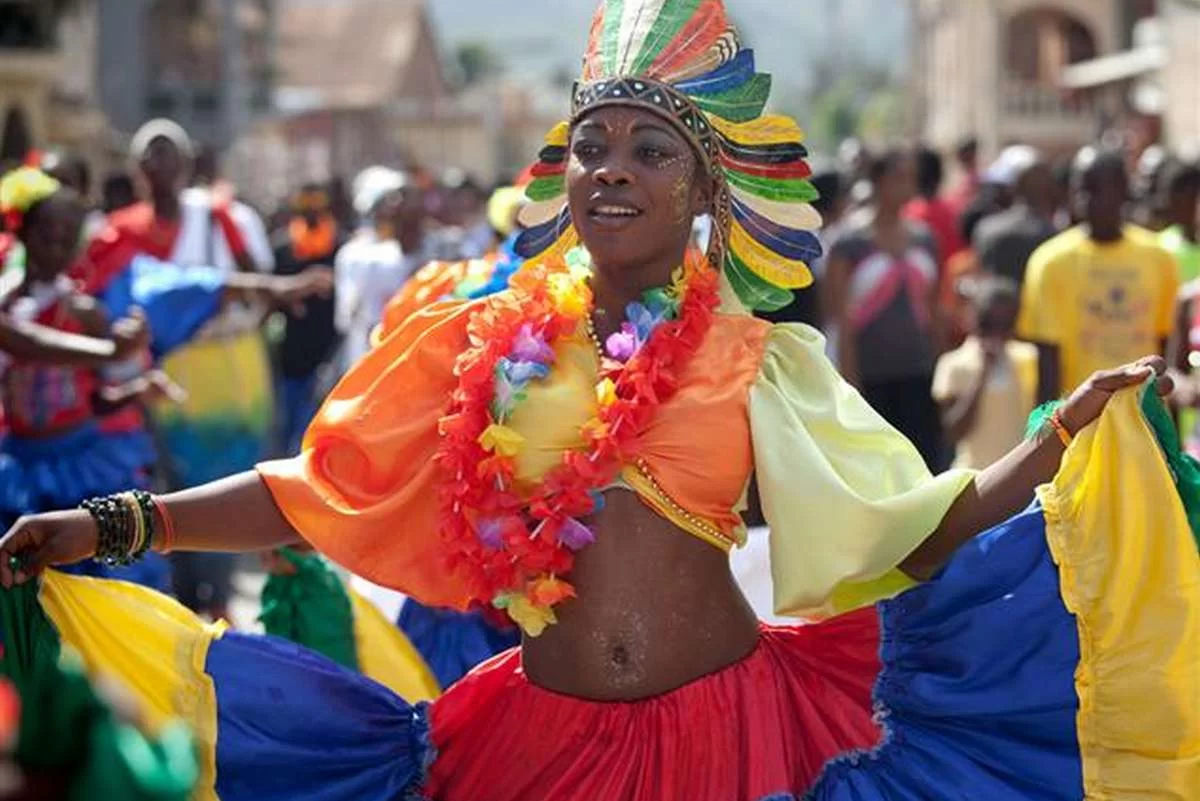
The Haitian carnival, an emblematic and essential celebration of the country’s festive calendar, is much more than a simple party. It embodies the very essence of Haitian culture, joyfully blending ancestral traditions, intoxicating music and a deep sense of community. Each year, this vibrant celebration transforms the streets into a vibrant and colorful spectacle, attracting thousands of participants and spectators eager to take part in this one-of-a-kind celebration. Haitian carnival has deep roots in the country’s history, dating back to colonial times. It has evolved over the centuries, incorporating elements of African, French and Creole culture to create a distinct and captivating celebration. The carnival period in Haïti traditionally begins in January and culminates with extravagant festivities that take place over several days. One of the most striking features of the Haitian carnival is the profusion of colors. Traditional costumes, called "masks", are elaborate and beautifully designed. They feature vivid patterns and vibrant decorations, creating a vivid picture of Haitian cultural identity. Participants, dressed in these elaborate costumes, parade through the streets to the sound of lively music, creating an electric atmosphere. Music is at the heart of the Haitian carnival. The captivating rhythms of compass, rasin, rara and other local musical genres resonate throughout the city, inviting people to dance to the rhythm of the party. Orchestras parade through the streets, accompanying the dancers and creating a unique symbiosis between the music and the graceful movements of the participants. The Haitian carnival parade is not just about the music and costumes; it also celebrates the richness of street arts. Talented artists create giant sculptures, art installations and theatrical performances that tell deep stories of Haitian history and culture. These artistic expressions contribute to the transmission of values ​​and stories that shape the identity of the Haitian people.

Recently Posted

History

History

First black nation to free itself from slavery and gain independence from France in 1804 and influenced other liberation movements around the world, inspiring struggles for freedom and equality.

Natural beauty

Natural beauty

Haïti is blessed with spectacular natural landscapes, including white sand beaches, mountains and rich biodiversity.

Heritage

Heritage

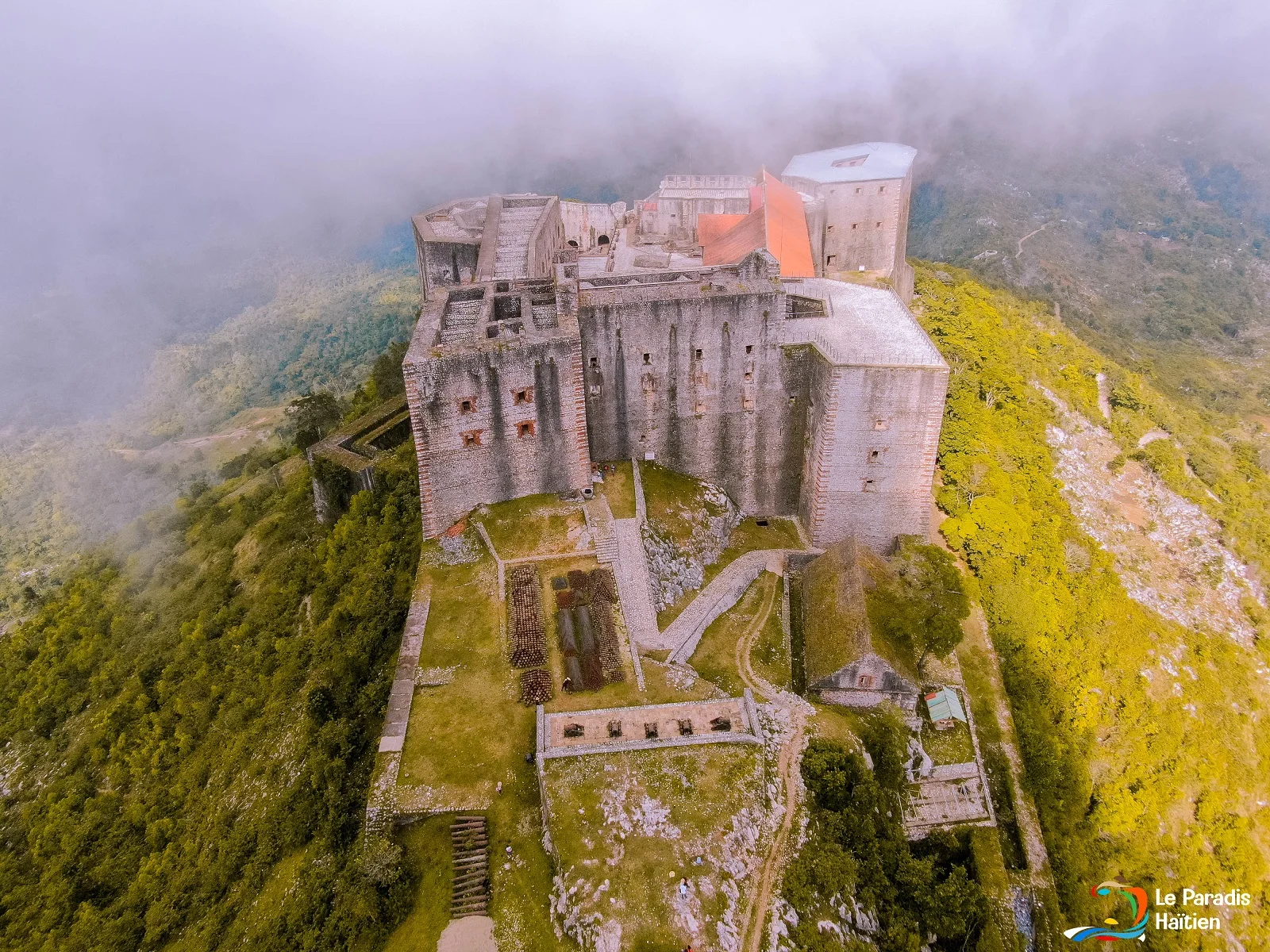
Haïti has a rich historical heritage, including sites like the Citadelle Laferrière and the Sans-Souci Palace, listed as UNESCO World Heritage Sites.

Culture

Culture

Haïti has a rich and diverse culture, influenced by African, European and indigenous elements. Haitian music, dance, art and cuisine are celebrated around the world.

  • +
    • Post