contact@haitiwonderland.com+509 36184317

Discover

Shopping Cart

A successful eighth outing for the Wednesday of the Monferrier Dorval chair
  • News
  • November 09, 2024

A successful eighth outing for the Wednesday of the Monferrier Dorval chair

On Wednesday, October 24, 2024, in the premises of the Office of Citizen Protection, on the road to Bourdon, the 8th Wednesday outing of the Monferrier Dorval chair took place. As a reminder, the Wednesdays of the chair are one of the initiatives taken within the framework of the Monferrier Dorval chair of constitutional law, established on March 12 by the Council of the State University of Haïti (UEH). The rector, Mr. Fritz Deshommes, is the technical director. Professor Henri Marge Dorléans, former Minister of Justice, is the scientific director, and the dean of the Faculty of Law and Economics, Me Eugène Pierre Louis, holds the position of both technical and scientific vice-president. It should also be noted that the two main objectives of the chair are, on the one hand, to promote the memory of Professor Dorval, then President of the Bar Association, who was cowardly assassinated in front of his house, near that of the presidential couple at the time, on August 20, 2020. On the other hand, it is about promoting the work he had undertaken in the country, as a professor of constitutional law, around the need to make a constitutional change to facilitate effective governance and better institutional management of Haiti.

A successful eighth outing

This eighth edition was held around the themes of "Health, Environment and Territorial Planning", with three excellent guests, who mastered the field of their respective interventions as best as possible. They are Dr. Jean Patrick Alfred, Director of the MSPP Study and Programming Unit; Eng. Claude Germain, former Minister of the Environment of the Republic of Haiti, currently Vice-Rector of Lumière University; and finally Mrs. Christine Stéphenson, former Minister of Tourism of the Republic of Haiti, currently Executive Secretary of the National Committee for Territorial Planning. They respectively spoke on the themes of the day.

The doctor’s intervention focused mainly on the need to impose a regulation on what is commonly called traditional medicine. A minimum of science is needed in this sector, which will be able to provide more documentation on this medicinal practice. According to him. He even argued for an alliance between conventional medicine and the latter. He also stressed the need to better manage our waste, worrying about its extreme danger to our health (because it is a source of disease). He cited as examples corpses (which constitute the most dangerous waste for humans), hospital waste, and all other waste from our daily uses. Otherwise, the rest of his speech was devoted to the need to include, in a potential new constitution, and then enforce, access to health for all, to quality medicines and in sufficient quantities.

For his part, Engineer Claude Germain spoke on the theme of the environment. During his speech, he argued in favor of establishing a Haitian environmental code, rather than including articles in a new constitution concerning this sector. Because legislating without being able to enforce seems useless and ridiculous to him. Good environmental management is a serious matter. He recalled the systemic drama that Haïti is exposed to because of the changes due to climate disruption, caused by the harmful energy consumption of human beings on the planet. Haiti, alongside Burma and Honduras, remains one of the three countries most exposed to this danger, according to the final declaration made in Paris in 2015, during the COP 21 on climate. In short, Haïti will need an environmental code that can regulate the Haitian environment in its entirety. The engineer also had to denounce certain harmful practices, such as market gardening in our hills, burning our land before planting, which kill a lot of micro-organisms in our soils, making it increasingly difficult to fertilize our arable plots.

For her part, Ms. Christine spoke on the theme of land use planning, as a necessity for the development of Haiti. Because a country that knows itself is better able to move towards the well-being of its children. During her speech, she also conducted an analysis of Haiti’s territorial potential, which she described as rich and which deserves better consideration in the overall perspective of a land use plan for the development of Haiti. Because Haïti has assets that few countries in the region have, and whose better management should be able to change the country’s trajectory in order to bring it to the well-being of sustainable development.

See as well

A space for free exchange

The chair of constitutional law aims to be a space for exchange where primacy is given to scientific exchange. It is in this sense that this chair has established itself as a place where experts, in an exercise of scientific discussion, propose solutions (solutions concerning their professional fields) to be included in the perspective of a potential constitutional change. All this is accompanied by accessible debates, where the general Haitian public is invited to intervene to make their voice heard, in all its globality and diversity. The goal is to make the debate around the question of constitutional change relevant while being accessible to everyone, in particular, by emphasizing the promotion of the scientific and intelligent speaking of various Haitian experts.

Share
About the Author
Moise Francois
Moise Francois
Moise Francois

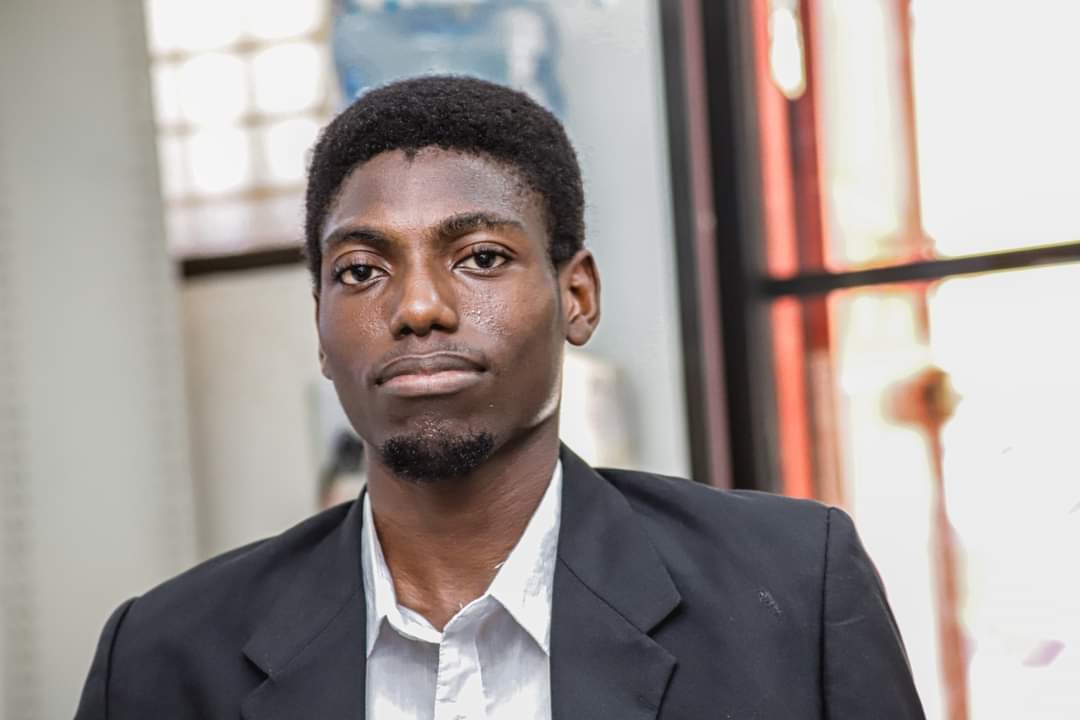
Journalist editor, poet and apprentice lawyer.

See other articles from Moise Francois
Leave a comment

Recently Posted

Newsletter

Subscribe to our newsletter to stay informed of all our activities and news on Haiti.

The Republic of the Stateless?

Haïti is making headlines all over the world. And it’s not good news. The exploits of Haitians rarely generate so much interest, but we always tend to point out the excesses, spill ink to stir up thorns in the side, broadcast on loop to relay the chaos that is raging. There is hardly any media to make amends for the resilience of this cornered people. No one to highlight the fierce resistance that serves as fuel for this people hanging in the gorges of death. And what if it was to a certain extent the only way to talk about this country to finally attract attention? It is July 26, 2024. The Olympic Games have just started in France. The 33rd Olympiad of modern times. Without realizing it, according to Forbes Magazine, Haïti ranks among the ten nations with the best costume, proudly pointing to third place. At the same time, miles away from France, on “The Island of Skillfully Orchestrated Chaos,” Haitians do not even realize how much this recognition borders on irony. A paradox whose unpopular evocation is likely to greatly displease. An aerial image shows the city of Paris in all its splendor, illuminated like the gates of paradise, reflecting all the grandeur of France, all the magnificence it has acquired over the centuries, without forgetting the contribution of the blood shed by the horrible machine of colonization. I close my eyes, I go back in time, I see again this boy left to his own devices, lost without even knowing it, doomed to failure without even understanding it. And then there are the others. Boys in the same situation, or worse. Banished from society, they do not know what life has in store for them. They form the elegant class of the marginalized, in their quality of scoundrels, good-for-nothings, and thugs who spoil the splendor of society. This contrast challenges me, and I wonder for a moment if those who live the chaos from the outside grasp the stakes and the reality of the situation. Moreover, it seems to me that even the majority of Haitians living in the territory have no notion of the fundamental and essential aspects of the situation.

Haiti: The Center department, one of the departments most resistant to natural earthquakes

The Center department, commonly called Plateau Central, is one of the ten (10) departments of Haïti most robust in the face of certain natural phenomena. Before becoming one of the ten (10) departments of Haiti, the Center department was part of the Great North. It is renowned for its natural landscapes, its biosphere climate and its resistance to certain natural phenomena. In addition to its natural productions such as corn, millet and livestock, the Center department is also known for its high mountains which constitute a robust defense against certain natural phenomena such as earthquakes and floods. Composed mainly of high mountains, the department of Charlemagne Peralte and Benoît Batravil is the only one of the ten (10) not to have an outlet to the sea. However, its inhabitants take advantage of the vast rivers, rivers and lakes which cross it . With an area of ​​3,487 km², the population of the Center department is estimated at 678,626 according to a study carried out in 2009. On this same area, the department is divided into four (4) districts and twelve (12) communes. Bordered to the east by the Dominican Republic, the Center department connects other departments of the country such as Nord and Artibonite, and connects the two countries of the island through border areas like Balladère, Hinche and Cerca Carvajal. In the Center department, there are sites that could attract tourists for their natural beauty. In Saut d’Eau, there is the Saut d’Eau waterfall, in Hinche we find the Zim basin, the Péligre lake, the Péligre hydroelectric dam, the Artibonite river, and the Deux river (2 ) Rooms in Thomonde, more precisely in "El Manni", not far from the communal section of Caille-Epin. Thanks to its strong mountains and its natural climate, the Center department remains one of the most resistant departments in the event of an earthquake in Haiti.

Recently Posted

History

History

First black nation to free itself from slavery and gain independence from France in 1804 and influenced other liberation movements around the world, inspiring struggles for freedom and equality.

Natural beauty

Natural beauty

Haïti is blessed with spectacular natural landscapes, including white sand beaches, mountains and rich biodiversity.

Heritage

Heritage

Haïti has a rich historical heritage, including sites like the Citadelle Laferrière and the Sans-Souci Palace, listed as UNESCO World Heritage Sites.

Culture

Culture

Haïti has a rich and diverse culture, influenced by African, European and indigenous elements. Haitian music, dance, art and cuisine are celebrated around the world.

  • +
    • Post