contact@haitiwonderland.com+509 36184317

Discover

Shopping Cart

Cap-Haïtien: 70 Schoolchildren Learn Programming Thanks to Coding Club Haiti
  • News
  • September 18, 2025

Cap-Haïtien: 70 Schoolchildren Learn Programming Thanks to Coding Club Haiti

From Python to JavaScript: How 70 young people from Cap-Haïtien are becoming Haiti's future developers with the NUMECO program.

Friday, August 29, 2025, will remain a memorable date in Cap-Haïtien: The closing of the first edition of NUMECO, a pioneering program that introduced more than 70 schoolchildren to the exciting world of computer programming.

A Springboard for Digital Youth

The NUMECO program, organized by Coding Club Haiti, marked a turning point in Haitian digital education. More than just training, this initiative represents a real investment in the country’s technological future.

Thanks to this initiative, more than 80 students from 11 schools completed an intensive 6-month training program, during which they learned:

Python
The solid foundations of the world’s most sought-after programming language

Web Development
Mastery of HTML, CSS, and JavaScript technologies with Appolon Guy Alain as expert trainer

Digital Entrepreneurship
Business vision and innovation with Toutpuissant Jefferson as trainer

See as well

The 11 schools involved in this adventure

The NUMECO program brought together students from NS1 to NS4 from the following schools:

- Institution Saint-Joseph
- Institut Sacré-Cœur du Cap-Haïtien
- Collège Adventiste du Cap-Haïtien
- Collège Bell Angelot Cap-Haïtien
- Collège Simone de Beauvoir
- Lycée National Philippe Guerrier Cap-Haïtien
- Lycée Dutty Boukman
- Collège Pratique du Nord
- Collège Le Christophien
- Collège Alexandre Dumas Fils
- Collège Le Lighthouse

The goal of Coding Club Haïti is to create a community of excellent, collaborative, and innovative developers capable of bringing local and international projects to fruition while remaining at the forefront of global technologies.

A moment of emotion, satisfaction, and hope

The closing ceremony was an intensely emotional moment. The event culminated with the "Best Website" challenge, a stimulating competition where each team had to create a website for their school. Creativity and innovation were on full display!

The grand winner? The Adventist College of Cap-Haïtien, which brilliantly integrated a virtual reality tour directly into their website. This technical feat impressed the jury and demonstrated the exceptional potential of our young talents.

Conference / Festival Quatre Chemins / 21st edition

Conference / Festival Quatre Chemins / 21st edition

The impact of collective and individual trauma on the personal development of young people in Port-au-Prince While writers, actors, dancers, poets, among others, have gratified us with their performances, the master’s degree student in psychology at the Faculty of Human Sciences (FASCH), Lourdya Blaise, spoke with the audience about trauma. Structured around the theme "Youth and Trauma, analysis of the impact of collective and individual trauma on the personal development of young people living in Port-au-Prince between 2010-2024", this conference gave rise to enriching discussions. During this meeting, moderated by Michaël Formilus, Ms. Blaise showed how the events that have taken place in the country have caused cases of trauma among Haitians. According to the student, citing the American Psychological Association, we speak of trauma as a consequence of trauma. The latter is explained by the fact that we feel threatened, whether it is the person in question or their loved ones. However, she specifies that a collective trauma remains depending on the impact that the event has on the individual. To illustrate her remarks, she mentioned the earthquake of January 12, 2010, considered a collective trauma, insofar as it still occupies our minds. This tragedy reminds us of the disappearance of our loved ones and enormous losses. This is the case of a trauma that becomes a collective trauma. For the student, it should be emphasized that when an event occurs, some people are traumatized and others are not. According to him, the violence of armed gangs is not perceived in the same way, says Ms. Blaise. There are people who have fled their homes but are not traumatized. In fact, some people see traumatic situations as a passing event, she says. The speaker also spoke about collective trauma, which, according to him, preoccupies the mind, even if we no longer experience it. It manifests itself in several forms: lack of sleep, fear psychosis, intrusive thoughts, intense heartbeat, etc. Generally, symptoms related to trauma are hard to die. When it persists, it becomes acute stress. To deal with it, we must talk to other people. If the situation persists, acute stress turns into a phase of post-traumatic stress; in this case, we must confide in a trusted person or go see a mental health specialist, she advises. In her presentation, Lourdya Bazile also drew attention to the psychological state of children in these times. According to the presenter, children are also facing this crisis situation, even if they do not talk about it to their parents. As much as adults, children also plan their future. Faced with flouted school years, they become pensive and worried, she stressed. They withdraw. The child who used to be brilliant can become violent and perform less well at school. Parents are called upon to listen to them and understand them. A good moment of exchange, rich in practical advice. The audience participated fully. In turn, the presenter invites them to breathe better and meditate. "We live in a country where worries mix, we must take time for ourselves, do sports, eat well, make sure that the sleeping space is clean and take time for ourselves. There is more than one way to find calm," recalls the psychologist. Gertrude Jean-Louis

Coding Club Haiti: Catalyst for Digital Transformation

Founded by Appolon Guy Alain, Coding Club Haïti is a dynamic community of passionate developers committed to creating innovative projects with economic and social impact.

This community works to democratize digital learning and create a sustainable technology ecosystem.

I believe technology can be an economic lever in Haiti. I dream of seeing Haitian platforms emerge internationally and bring enormous economic benefits to the country.

,Appolon Guy Alain, Co-founder and President

71 Certificates Awarded: A New Generation of Budding Developers

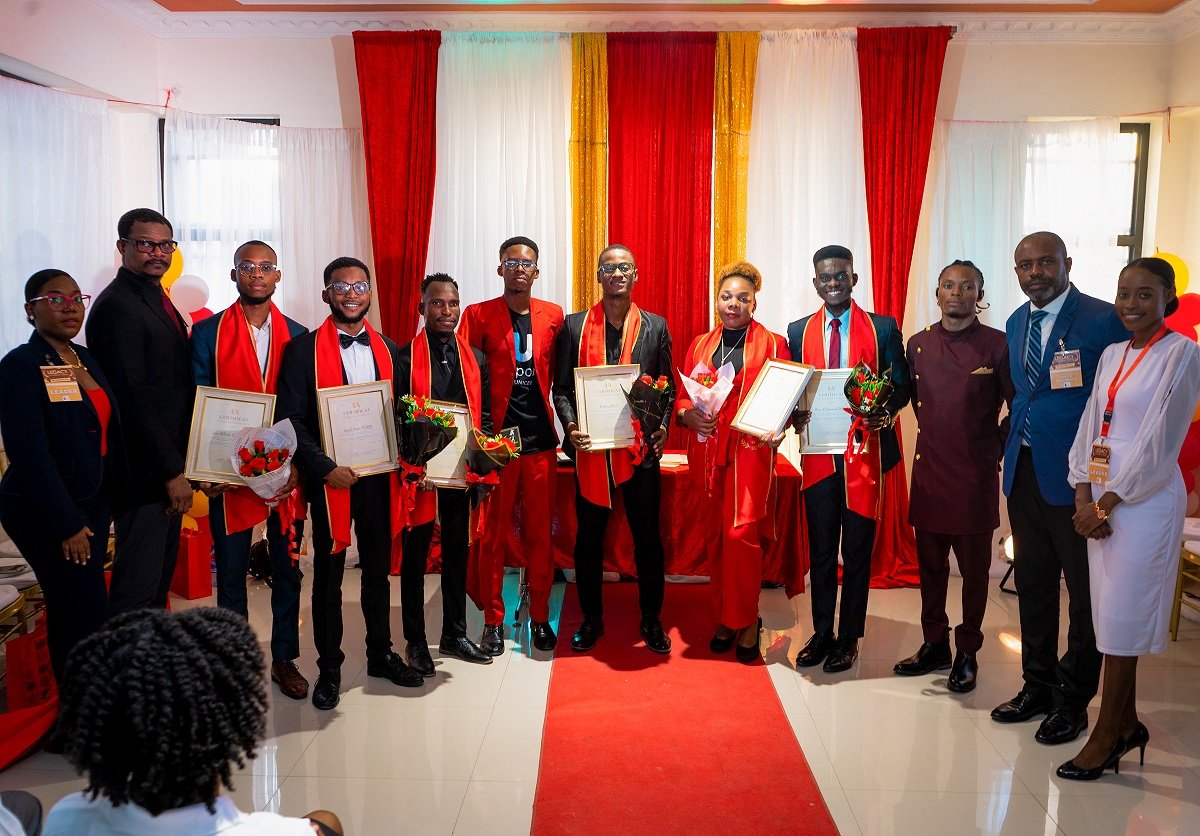
71 schoolchildren received their certificates, rewarding their remarkable commitment and determination. Parents, friends, and school officials witnessed exceptional achievements that portend a promising digital future for Haiti.

Future Vision: Expansion and National Impact

Coding Club Haiti’s ambition doesn’t stop there. For the coming years, the organization plans to:

- Integrate more schools into the program
- Expand the program to various other cities across the country
- Provide personalized support for young talent to bring their projects to fruition

A Tangible Socioeconomic Impact

These budding young developers aren’t just learning: they’re already innovating! Several projects with strong social and economic potential are currently being developed, with the continued support of Coding Club Haiti.

August 29, 2025, will be remembered as the day Cap-Haïtien laid the foundations for a truly Haitian digital revolution. NUMECO is not simply a training program: it is the first chapter in a transformation that will place technology at the heart of Haiti’s socioeconomic development.

Towards a digital future for Haiti

With NUMECO, Coding Club Haïti is laying the foundations for a sustainable technology ecosystem, training the next generation of Haitian developers and opening new perspectives for the future.

August 29 marks the end of NUMECO, but also the beginning of a future where technology will be at the heart of Haiti’s socio-economic transformation, not through grand speeches, but through concrete projects,

, concludes Toutpuissant Jefferson.

Are you an educational institution interested in NUMECO? A company interested in supporting this initiative? Join the movement shaping Haiti’s digital future!

Share
About the Author
Haïti Wonderland
Haïti Wonderland
Leave a comment

Recently Posted

Newsletter

Subscribe to our newsletter to stay informed of all our activities and news on Haiti.

Recently Posted

History

History

First black nation to free itself from slavery and gain independence from France in 1804 and influenced other liberation movements around the world, inspiring struggles for freedom and equality.

Natural beauty

Natural beauty

Haïti is blessed with spectacular natural landscapes, including white sand beaches, mountains and rich biodiversity.

Heritage

Heritage

Haïti has a rich historical heritage, including sites like the Citadelle Laferrière and the Sans-Souci Palace, listed as UNESCO World Heritage Sites.

Culture

Culture

Haïti has a rich and diverse culture, influenced by African, European and indigenous elements. Haitian music, dance, art and cuisine are celebrated around the world.

  • +
    • Post