contact@haitiwonderland.com+509 36184317

Discover

Shopping Cart

Did You Know? Haïti is Home to the Largest Fort in the Caribbean

Did You Know? Haïti is Home to the Largest Fort in the Caribbean

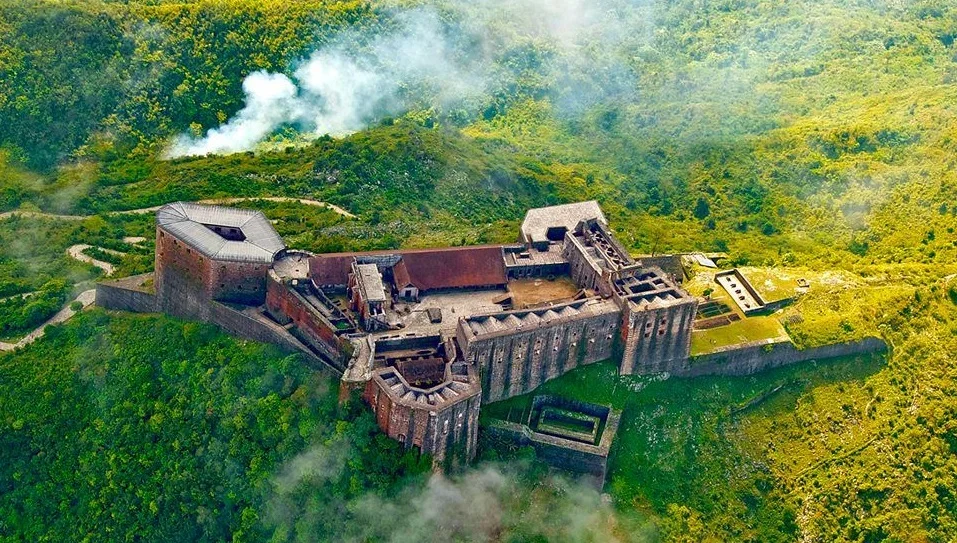
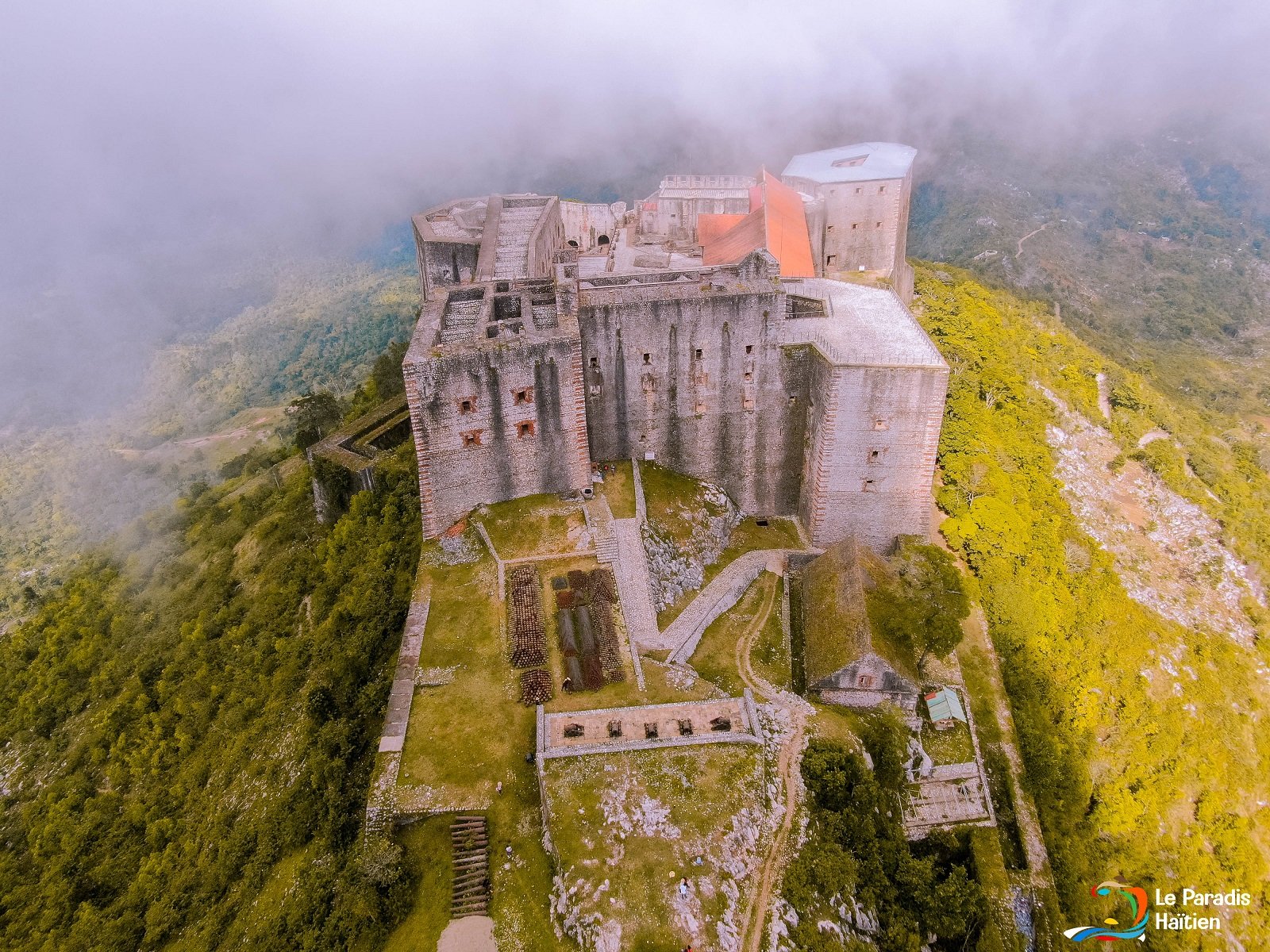
When we think of Haiti, we often think of its rich culture, heroic history, and breathtaking landscapes. But did you know that Haïti is also home to the largest fort in the Caribbean? The Citadelle Laferrière, located in the Nord department, is an architectural masterpiece and a symbol of freedom that attracts thousands of visitors each year. This historic monument is a national pride and a testament to the resilience of the Haitian people.

Haïti
Haïti
Haïti

A Fortress Born of Freedom

Built between 1805 and 1820 under the orders of King Henri Christophe, the Citadelle Laferrière was a strategic response to the threat of a possible return of French colonial troops after Haiti’s independence. Situated 900 metres above sea level, on top of a mountain in the Milot region, the Citadel majestically dominates the surroundings, offering panoramic views of the valleys and, on a clear day, the Atlantic Ocean.

With its 130 metres long, its walls 40 metres thick in some places, and its capacity to accommodate up to 5,000 soldiers, this fortress is a true feat of engineering for its time.

Haïti
Haïti
Haïti

A symbol of resistance and ingenuity

The Citadel was not just a simple defensive building. It was equipped to withstand long sieges:
- It housed more than 365 cannons, some of which are still visible today.
- Tons of munitions and provisions were stored there to support the troops in the event of a prolonged attack.
- Building materials, such as lime and rocks, were transported by man and mule over steep paths, demonstrating the incredible determination of Haitian workers.

Haïti
Haïti
Haïti

A UNESCO World Heritage Site

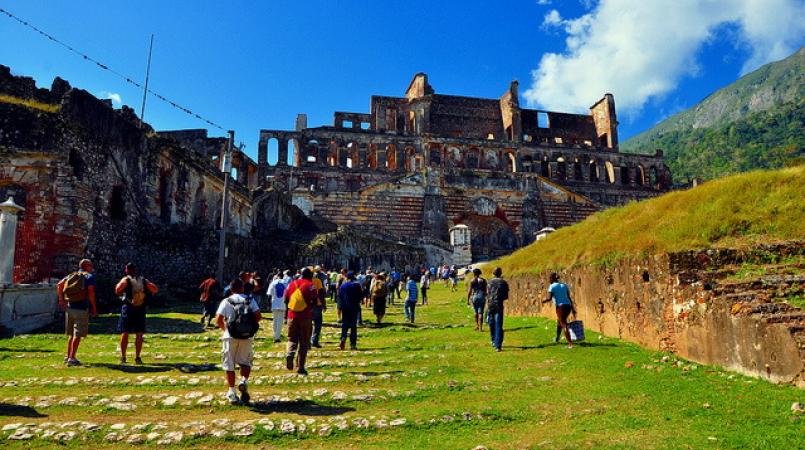
In 1982, the Citadelle Laferrière was inscribed on the UNESCO World Heritage List, as part of the National Historical Park, which also includes the Sans-Souci Palace and other historical remains from the Christophe era. This international recognition underlines the importance of the Citadelle not only for Haiti, but also for the world history of the struggle for freedom.

Some key figures

- Surface area: The Citadelle covers approximately 10,000 square meters.
- Altitude: It peaks at 900 meters, offering a spectacular view.
- Workers: More than 20,000 people participated in its construction, including former soldiers and peasants.
- Cannons: More than 365 cannons from various European countries are stored there.

Haïti
Haïti
Haïti

A must-see tourist site

The Citadelle Laferrière is today one of the main tourist attractions in Haiti. Visitors can access the site on foot, on horseback or by car, through trails winding through the mountains. Once at the top, they are rewarded with breathtaking views and a dive into the country’s history.

Each year, thousands of local and international tourists come to explore this architectural marvel, learning more about Haiti’s central role in the history of the struggle against oppression.

Did you know?

- The Citadelle is sometimes nicknamed the "Eighth Wonder of the World" because of its grandeur and historical importance.
- The cannons and cannonballs of the Citadel come mainly from Napoleonic battles, captured by the Haitians after their victory over the French.
- The Citadel was designed to be a last refuge: even if destroyed, its ruins would serve as an eternal symbol of Haiti’s freedom.

Haïti
Haïti
Haïti

A monument to preserve

The Citadelle Laferrière is not only a symbol of national pride, but also a reminder of the ongoing struggle for independence and human dignity. Preserving this iconic site is essential for future generations, so that they can understand and celebrate the legacy of their ancestors.

If you haven’t visited the Citadelle Laferrière yet, it’s time to plan a trip. And if you have already, share your experiences and photos in the comments to inspire others to discover this unique gem!

Share
About the Author
Appolon Guy Alain
Appolon Guy Alain
Appolon Guy Alain

Full Stack Developer, Créatif, expérimenté, passionné des nouvelles technologies et de l’art.

See other articles from Appolon Guy Alain
Leave a comment

Recently Posted

Vertières, Fort Mazi: Beyond historical truth;

If you look up the word vertière in a French dictionary, you will not find it for fear that the world does not know this place represents the Achilles heels of the most powerful European army. What’s more, this one had just successfully won the eastern campaign. French historians of the time erased this geographical location from the radar of history because they did not want to tell the story as it is in the sense of explaining the first great humiliation of the expeditionary army French by bands of slaves who were totally ignorant in the art of waging war, much less in the handling of weapons. However, these illiterate wars routed the Napoleonic army, the most powerful at that time, using the means at hand. This expeditionary army, after having brought Europe to its knees, would experience its first rout by slaves in this geographical location, located in the Northern department of Haiti. Funny story, this city is not on the list of French words even though given its historical importance, it should be at the heart of universal history, far from putting an end to the invincibility of the undefeated army army. So as not to offend the white masters, no political leader has ever asked why vertière does not appear in any French dictionary? However, they celebrate this battle with great fanfare every November 18. What historic hypocrisy among our leaders! After Vertière many other historical places are strangled by historians in order to hide the extremes of atrocities of the French colonists on the slaves. It is in this context of historical strangulation that “Fort Mazi” is not mentioned in school history textbooks. This is located in Petit-Goave, 2nd municipal section, Arnoux locality. We came across this mega fort, during a mobile clinic entirely financed by the Ernest Junior foundation, a charitable foundation which works in the social sector, particularly in the field of art and music. According to residents , the oldest in this locality, this fort was built on at least 20 squares of earth by the settlers. It was a huge military complex divided into compartments, outposts, turtle rooms, rooms for treating colonists, a large Catholic church, and a cemetery. However, we never talk about this fort so much so that it is ignored by history teachers in the town of Petit-Goave. Certainly, the desired disappearance of this fort under the radar of history buries the atrocities, the barbarities, the most inhumane punishments of the colonists on the slaves. Looking closely at reality, everything seems true that it is the largest fort ever built during the period of colonization. Moreover, it probably seems the most fortified in relation to its importance. Remember that Vertière only exists in Haitian school history textbooks while Fort Mazi does not appear, much less in French dictionaries or history books. This explains why this fort was a secret place in which the settlers practiced crimes and atrocities that went beyond human understanding. Is it not a clear desire of historians to hide what this immense fort built on at least 20 tiles of earth really was? Discover the history of Haiti: A fascinating story to explore! : https://haitiwonderland.com/haiti/histoire/decouvrez-l-histoire-d-haiti--un-recit-fascinant-a-explorer/81

Newsletter

Subscribe to our newsletter to stay informed of all our activities and news on Haiti.

Carrefour: Kay Jèn Yo s’ouvre aux enfants

Dans le cadre du programme de promotion des droits et de l’épanouissement de l’enfant "Timoun se moun" piloté par l’organisation Action Communautaire de Transformation et d’Intégration Formelle (ACTIF), Kay Jèn Yo organise, du 18 au 24 août 2025 (9h am - 1h pm), "Espas Lajwa", un camp d’été qui cible trente (30) enfants de 7 à 15 ans. Une grande panoplie d’activités éducatives, créatives et ludiques sont programmées pour le plus grand bien des enfants. Ils auront droit à des ateliers de : peinture, crochet, macramé, langue des signes, théãtre, lecture, échec, etc. Dans un contexte aussi traumatogène où la violence est monnaie courante, de telles initiaves sont d’une importance capitale. " Les enfants ne sont pas imperméables au stress et autres pathologies que peut provoquer la situation morbide qui sévit dans le pays actuellement", souligne Blondy Wolf Leblanc (Gabynho) DG a.i de ACTIF. "Espace Lajwa se veut donc, un refuge, un lieu où les enfants peuvent s’exprimer en toute sécurité, un espace sécurisant où ils peuvent exprimer leurs émotions à travers plusieurs médiums", précise-t-il. Plus loin, l’animateur socioculturel encourage d’autres structures à travers le pays à prendre des initiatives de ce genre au bénéfice de la santé mentale des enfants. Espas Lajwa est quasiment gratuit. Un frais de participation de 150 gourdes est requis pour la semaine. Quid Kay Jèn Yo Issu du projet "Pran Swen Tèt ou", Kay Jèn Yo est un projet de l’organisation ACTIF supporté par La Perfection École de Haute Couture visant à combattre la violence par l’engagement communautaire à travers des programmes de formation professionnelle et artistique. Situé au numéro 18, imp. Thoby, rue Desdunes, Mahotière 79, Kay Jèn Yo est ouvert du lundi au dimanche (9h am - 6h pm). Sebastien Jean Michel

Recently Posted

History

History

First black nation to free itself from slavery and gain independence from France in 1804 and influenced other liberation movements around the world, inspiring struggles for freedom and equality.

Natural beauty

Natural beauty

Haïti is blessed with spectacular natural landscapes, including white sand beaches, mountains and rich biodiversity.

Heritage

Heritage

Haïti has a rich historical heritage, including sites like the Citadelle Laferrière and the Sans-Souci Palace, listed as UNESCO World Heritage Sites.

Culture

Culture

Haïti has a rich and diverse culture, influenced by African, European and indigenous elements. Haitian music, dance, art and cuisine are celebrated around the world.

  • +
    • Post