contact@haitiwonderland.com+509 36184317

Discover

Shopping Cart

Everything You Need to Know About the Map of Haiti

Everything You Need to Know About the Map of Haiti

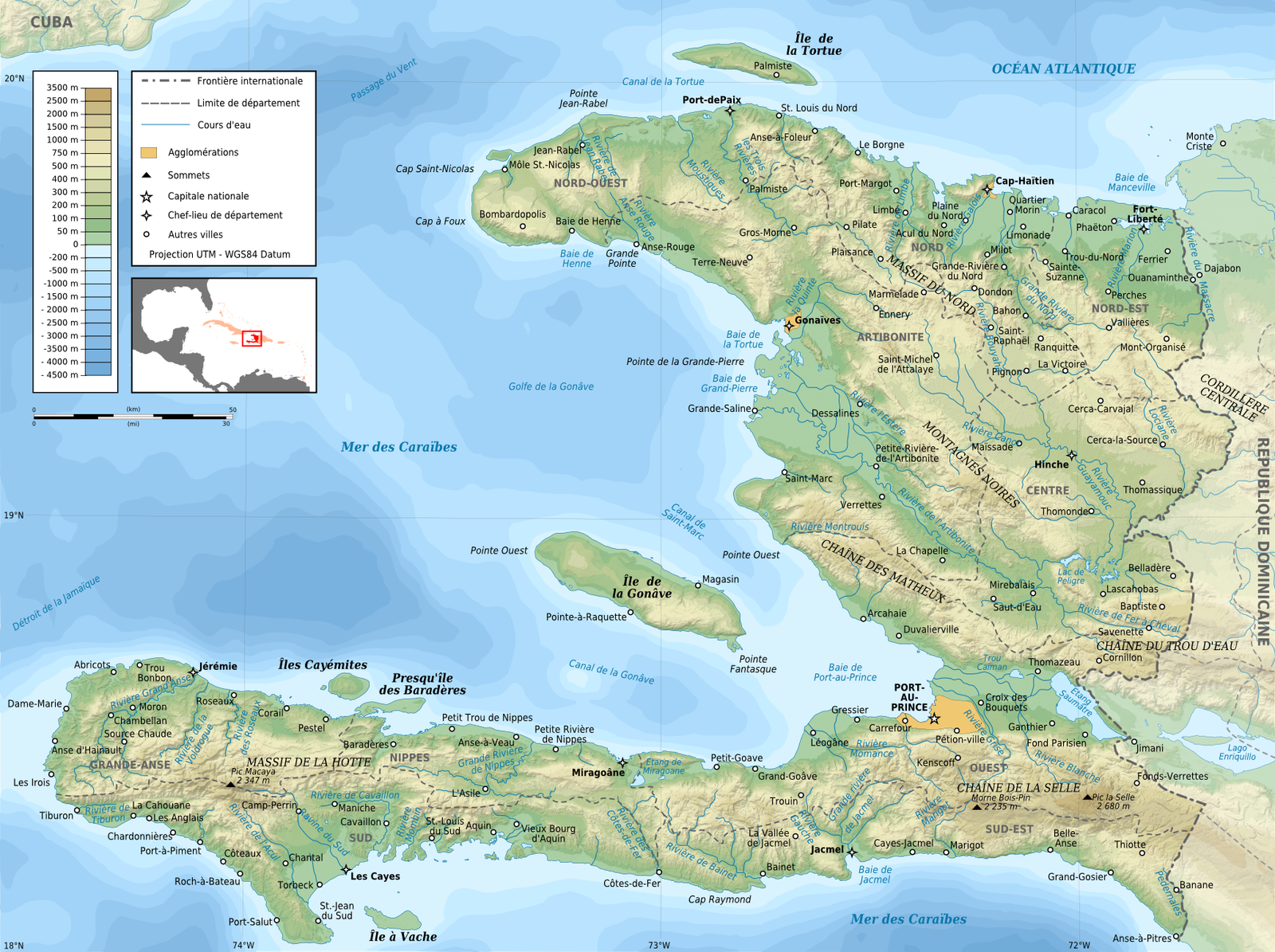
The map of Haïti is an essential tool for understanding the geography of the country, its political organization, and its different regions. Whether for travelers, researchers, or those interested in the history of Haiti, this map provides crucial information on the location of cities, mountains, coastlines, and borders. This article explores the map of Haiti, its key elements, and what it represents for the Haitian people.

The Geography of Haiti: A Global Overview

Haïti is an island nation located in the Caribbean, on the island of Hispaniola, which it shares with the Dominican Republic. The map of Haïti shows a territory that extends over approximately 27,750 km², making Haïti the 3rd smallest country in the Caribbean region.

The country is divided into 10 departments, which are themselves subdivided into districts and communes. Haiti’s geography is marked by mountains, coastal plains, and impressive biodiversity. The country has a particularly mountainous relief, with the Massif de la Selle mountain range, which peaks at more than 2,600 meters above sea level, offering spectacular landscapes.

Maps of Haïti allow you to visualize these mountains, valleys, and rivers that mark the territory, while highlighting the coastal areas and neighboring islands.

Haiti’s Departments: A Journey Through the Country

The map of Haïti reveals the administrative structure of the country through its departments. Haïti has ten departments:

1. Artibonite
2. Centre
3. Grand’Anse
4. Nippes
5. Nord
6. Nord-Est
7. Nord-Ouest
8. Ouest
9. Sud
10. Sud-Est

Each department has a capital, which is often a major city where much of the economic and cultural activity is concentrated. For example, Port-au-Prince, the country’s capital, is located in the Ouest department, and is also the largest city in Haiti.

The maps detail not only the capitals of each department, but also the main roads connecting these cities, making it easier to get around and understand the country’s territorial organization.

Haiti’s Borders: Sharing the Island of Hispaniola

The map of Haïti also highlights the country’s borders, particularly its long land border with the Dominican Republic, which occupies the eastern part of the island. The border, which stretches for approximately 380 kilometers, is a crucial element in diplomatic and commercial relations between the two countries.

To the south, Haïti is bordered by the Caribbean Sea, while to the north, it faces the Atlantic Ocean. The map also illustrates small neighboring islets such as Île de la Tortue to the northwest, an important historical site for Haitians.

Modern maps often show maritime boundaries, which are essential for understanding geopolitical issues related to natural resources and navigation.

Haiti’s Coasts and Beaches: Unparalleled Beauty

The map of Haïti highlights its magnificent coastline that stretches for more than 1,700 kilometers. These beaches line the island and are among the most beautiful in the Caribbean. The west coast, which overlooks the Caribbean Sea, is dotted with beaches like Jacmel and Port-Salut, known for their white sand and crystal-clear waters.

The map also shows the presence of important tourist sites, including resorts and national parks, which are essential to Haiti’s tourism industry.

Major Cities: Focal Points of Haitian Life

In addition to Port-au-Prince, the map of Haïti highlights other important cities in the country, such as Cap-Haïtien in the north, which is a key economic center and strategic port. Les Cayes in the south is another port city, and Jacmel in the southeast is known for its cultural heritage and historical role in the Haitian Revolution.

The maps help locate these important cities and better understand their role in the country’s economy, politics, and culture.

Roads and Infrastructure: Key to Development

Maps of Haïti also show the country’s main infrastructure, including roads and transportation networks. Roads connecting major cities and departments are essential for the movement of goods and services. However, the quality of infrastructure remains a challenge, with roads sometimes damaged due to weather and lack of maintenance.

Modern maps also highlight progress made in modernizing infrastructure, as well as development projects to improve connectivity between different regions.

Maps: An Educational and Tourism Tool

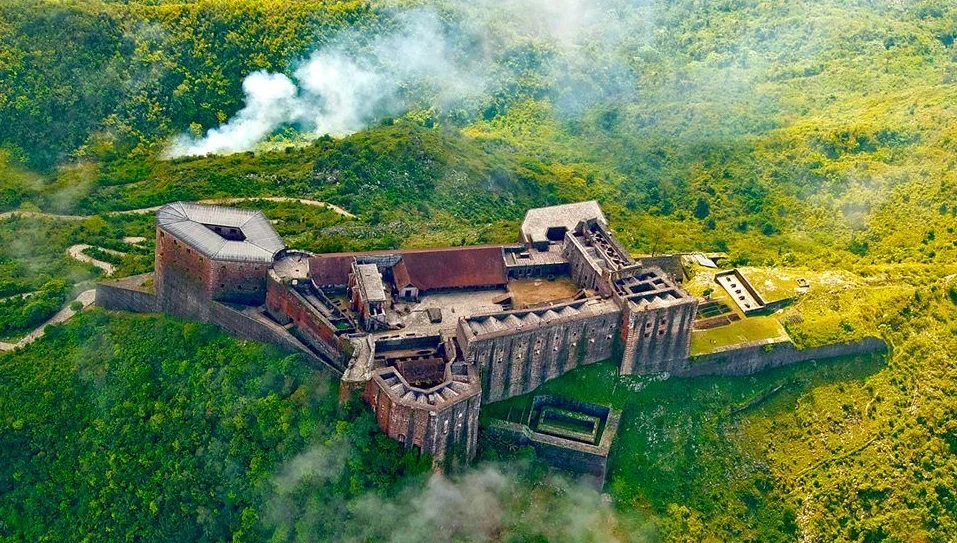
Maps of Haïti are not only navigation tools, they also play an important educational role. They are used in schools to teach the geography and history of the country. Tourist maps allow travelers to discover the natural and cultural riches of Haiti, whether it is its heavenly beaches, its majestic mountains, or its historical sites such as the Citadelle Laferrière.

Maps are therefore essential to raise awareness of the importance of Haitian geography and environment, and to promote tourism through valuable information.

A Fundamental Tool to Understand Haiti

The map of Haïti is much more than a simple geographical document. It is a fundamental tool to understand the structure and beauty of this country, while offering an overview of its history, resources and challenges. Whether for Haitians themselves or for foreigners who wish to discover Haiti, the map of the country remains an essential guide to appreciate the geographical, cultural and historical richness of this Caribbean nation.

Share
About the Author
Appolon Guy Alain
Appolon Guy Alain
Appolon Guy Alain

Full Stack Developer, Créatif, expérimenté, passionné des nouvelles technologies et de l’art.

See other articles from Appolon Guy Alain
Leave a comment

Recently Posted

Beven brings Haïti among the elite of world slam

This Thursday, November 14, 2024, the young slam artist Youven Beaubrun, Beven by his stage name, qualified Haiti, for the very first time in its history, for the final of the Slam World Cup. This competition, which brings together the best slam artists on the planet, took place on African soil, more precisely in Togo. In a country held by the throat, a country that is dying from start to finish, under the dangerous feat of a certain armed part of its youth, Beven’s extraordinary performance in this competition resonates with the echo of a whole piece of the country, in the thirst for beauty. Beven is the symbol of a youth that refuses to give in to the chaos that surrounds the face of its motherland. Art, slam being his field of specialization, is used in the best possible way to make hope resonate. And to continue to believe that a country that made 1804 cannot afford the luxury of sinking so hard in the face of human history. "It is with pride that I advanced in this competition. Especially with the crisis that is going through the country at the moment. My qualification for the final is an eternal sign of hope, which confirms the fact that not everything in this country will end in death," the young slammer told us before going to compete in the final. The final took place on Saturday, November 16, 2024, where Beven had his chance to represent his wounded land well on the doorstep of a world victory, a victory that if it had taken place, would have been initialed in the name of an entire people, in the absolute race against a great chaos that dreams only of suffocating it. Although he failed to win this cup (finishing in sixth place overall), the Haitian slam champion had time to inspire an entire country during his great journey in this competition. This is only a postponement, next time victory will be achieved for sure.

Newsletter

Subscribe to our newsletter to stay informed of all our activities and news on Haiti.

Haiti: A look back at the First Rara Weekend in Petit-Goave

Haitian culture is a true treasure, woven from the creativity of its artists, its rich heritage and the diversity of its cultural expressions. Among these cultural gems, the rara stands as a true national emblem, uniting Haitians through its captivating rhythms and centuries-old traditions. During the first Rara weekend, this very essence of Haitian culture shone brightly, revealing palpable social cohesion. Despite the absence of law enforcement, tranquility reigned in Petit-Goâve, testifying to the ability of citizens to come together in peace and conviviality. However, media attention was mainly focused on the first plain, leaving a certain imbalance in the coverage of the festivities. Ratyèfè, three-time reigning champion, once again captivated minds with his talent and artistic mastery, offering an unparalleled spectacle. But his rival, Lambi gran dlo, was not to be outdone, displaying a determination to compete for first place. The event was also marked by unfortunate incidents, reminding us that despite the beauty of tradition, tensions can arise. Clashes between fans of different groups tarnished the festive atmosphere, highlighting the need for careful management of celebrations to avoid such excesses. At the heart of this musical competition, where each group aspires to recognition and victory, a complex picture of rivalries and alliances emerges. Chenn tamarin, although appearing asleep in the first moments, shows signs of waking up, ready to shake up the established order. On Sunday evening, Lambi gran dlo honored the memory of one of its loyal supporters, while Grap Kenèp was the scene of violence between fans, recalling the fragility of social cohesion when passion runs wild. In this whirlwind of emotion and competition, it is crucial to keep in mind that it is the journalist who must look to the events, and not the other way around. This is how we draw up the first ranking for this first weekend: 1. Ratyèfè 2. Lambi grand dlo 3. Chenn tamarind Beyond the results, it is the preservation of unity and mutual respect that must remain at the heart of these celebrations, making the rara not only a musical festival, but above all a symbol of the wealth and resilience of the people Haitian.

Haiti: Ministry of Tourism

In its quest to revitalize its tourism industry and highlight its natural and cultural riches, Haïti relies on a key player: the Ministry of Tourism. As a government entity dedicated to the promotion and development of tourism, this ministry plays a crucial role in transforming Haïti into a leading tourist destination. One of the main objectives of the Ministry of Tourism is to strengthen the attractiveness of Haïti to international travelers. To do this, it develops innovative marketing campaigns, highlighting the country’s pristine beaches, fascinating historical sites, rich culture and exquisite cuisine. These efforts aim to change the perception of Haïti and generate interest among potential tourists around the world. In collaboration with private sector players, the ministry is committed to supporting and promoting local tourism businesses. By encouraging entrepreneurship and innovation in the tourism sector, the ministry helps create jobs and stimulate the local economy. The Ministry of Tourism also attaches great importance to the preservation of the environment and cultural heritage of Haiti. It implements policies and initiatives aimed at protecting the country’s natural sites, national parks and historic monuments. By encouraging sustainable and responsible tourism, the ministry ensures that future generations will also be able to enjoy the beauty and cultural richness of Haiti. Finally, the Ministry of Tourism works closely with other national and international organizations to promote Haiti’s tourism development. Through strategic partnerships and exchanges of best practices, Haïti benefits from the expertise and support necessary to strengthen its tourism sector and increase its competitiveness in the global market. Haiti’s Ministry of Tourism is a key player in transforming the country into an attractive and sustainable tourist destination. Through its continued efforts to promote tourism, support local businesses, and preserve Haiti’s natural and cultural heritage, the ministry is paving the way for a bright future for the country’s tourism industry.

Recently Posted

History

History

First black nation to free itself from slavery and gain independence from France in 1804 and influenced other liberation movements around the world, inspiring struggles for freedom and equality.

Natural beauty

Natural beauty

Haïti is blessed with spectacular natural landscapes, including white sand beaches, mountains and rich biodiversity.

Heritage

Heritage

Haïti has a rich historical heritage, including sites like the Citadelle Laferrière and the Sans-Souci Palace, listed as UNESCO World Heritage Sites.

Culture

Culture

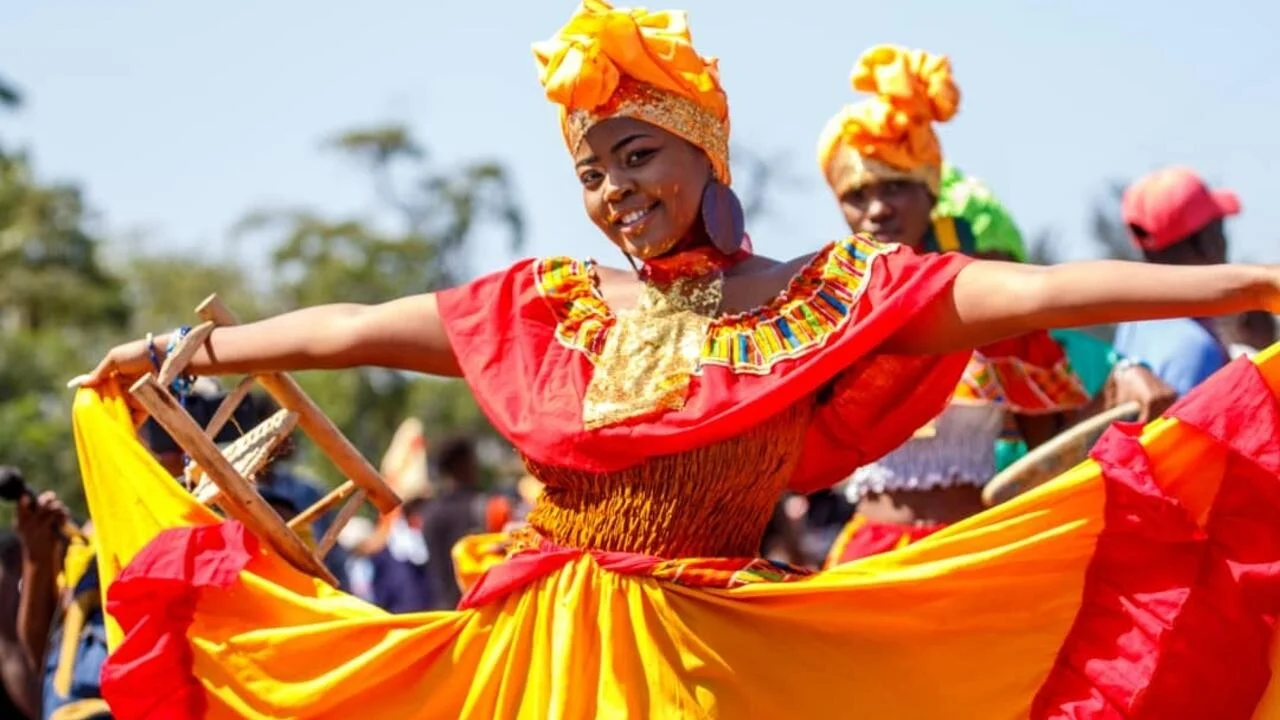
Haïti has a rich and diverse culture, influenced by African, European and indigenous elements. Haitian music, dance, art and cuisine are celebrated around the world.

  • +
    • Post